
Tag Archives: Acupuncture malpractice Insurance

AACCollins010820025HDy Thumb

Are You Ready for 2025? Sam Collins


Click here to download the transcript.

Disclaimer: The following is an actual transcript. We do our best to make sure the transcript is as accurate as possible, however, it may contain spelling or grammatical errors. Due to the unique language of acupuncture, there will be errors, so we suggest you watch the video while reading the transcript.

Happy New Year and greetings to my friends and colleagues. This is Sam Collins, the coding and billing expert for acupuncture, the American Acupuncture Council, and more notably, you and the profession. I’m here to help you to make sure that you get information that keeps you up to date and moving and there’s nothing better to get knowing what’s going on than let’s get ready for 2025.

Click here for the best Acupuncture Malpractice Insurance

So let’s go to the slides. Let’s talk about are you ready? for 2025? Are you really setting yourself up? Realize this is that first week, so everyone’s back in. Let’s get things ready. Let’s be proactive, not reactive. So the first thing I will tell you to do, you want to start thinking if you’re doing any insurance, but for that matter, even cash, we’ll get into it.

Get a Quick Quote and See What You Can Save

Are you prepared? For insurance, I would say prepare for understanding What’s going on for plans in 2025? Is anything changing? It’s time to go back through to see what’s new for certain plans. Now, keep in mind, if I have one person that works for a company and has insurance A, another patient that comes in from the same company with the same insurance, I don’t have to go through all of that if I do one thorough way of going through that policy on one person, so long as everyone has the same policy.

So the first thing I want to look at is, What’s going on with deductibles? Has there been any changes for 2025? Did it increase, decrease, stay the same? By example, though acupuncturists don’t directly bill Medicare, you’re involved now. The Medicare rates, of course, did make a nice increase. We’ll get into that.

But the Medicare deductible did go up 17 to 257, which means if Medicare went up, might other plans. Yeah, that’s a hit and miss, but check. One thing I’ll point out though, that a lot of times acupuncturists are not familiar with, however, is that deductibles may roll over, meaning that they will not have a new deductible at first of the year if that person saw a doctor in the last quarter, and what this means is, let’s say by example, you don’t go to the doctor at all.

You’re a patient, and in December you go to the doctor, you have a $1,000 deductible, you have to go and you meet that deductible. Then January 1st sits and you’re like, oh my God. I gotta pay the deductible again? I just they don’t punish someone in that way. Most plans will have some type of rollover for a person who’s seen the doctor within the last part of the year.

So it’s worth checking. Often that may not be the case, but it’s worth looking into. So I would check to make sure. Most importantly, We want to know deductible so we can make patients aware of what they’re going to pay. And keep in mind, we also want to check on not just deductible, but what’s happened with any coverage.

Has there been any changes to the benefits? Is the acupuncture benefits better, worse, or the same? By example, a lot of people have said, Sam, I heard that the Medicare Advantage Plans were getting rid of acupuncture. They were not. So long as the person has the standard one that has what we call gosh, I gotta think of the term, but it’s where you’re going to have just a acupuncture benefits that are there all the time.

Realize all plans under Medicare have the regular benefits, meaning, MD supervision, but for those that have routine acupuncture, it will cover for pain management. Look to see if any of that’s changed. Many of them may or may not have it, so always check. Don’t assume. Regular Medicare did not update.

You will still need for regular Medicare Part B medical supervision. Do check though, because this is something that’s occurring with some of these Medicare Advantage plans and others, is the requirements for pre authorization. Many of the Medicare Advantage plans continue to have it, but the ones under United, at least some of the plans, and others under Humana, will require pre authorization, which means they all allow you to do the first visit, but then you have to request more after that.

Not that it’s that hard, it’s all online, but it’s just something to know. You don’t want to bill out assuming it’s being paid and they later say, oh it requires pre authorization, because often they will not do a retro authorization. So do check to make sure what are the coverages, what are the changes, are the number of visits the same.

Are they combined with anything? Is there any limits? And this is something to keep in mind. The limits to acupuncture benefits under insurance are limited to what are they covering under the diagnosis they allow. By example, Cigna has probably a 500 code list of things they cover. Aetna has a list that’s about 25.

So you can see clearly one more that’s going to have a little bit more or possibly more. So know what those plans cover. Don’t assume. Some plans will cover fertility. You want to check to make sure it does it. And here’s my point. Get as much information about beforehand so we can make sure that we understand what’s going on with what are we going to bill and how we’re going to be paid.

Because one thing to look at is what’s going on for fee schedules for this year. And I want to talk about just your common CPT codes. I don’t care about things you don’t do. Most acupuncturists, of course, are going to do exam codes, E& M codes. Acupuncture, of course. And then maybe a handful of therapies.

What I care about are those codes. Here’s some really good news. The relative values For the first set of acupuncture, both manual and electrical have increased substantially. For most of you, if you’re billing the VA, this literally means you’re getting about a 20 percent increase in that allowed rate.

That’s pretty significant, which means that may roll over into other plans because plans that use Medicare, which include VA, Personal Injury Work Comp, et cetera, will be increasing. Now, the downside to this, of course, It’s not going to affect your ASH. It’s not going to affect your Optums. Now, if you’re part of ASH, certainly if you’ve been in a while and you’re a tier six, I will be looking for, have I done a protocol to ask for a raise?

That’s something to be thinking of, but do take a look and think of, wait a minute, how much it’s increased. Now be careful. Relative values tell you what to charge from one code compared to the other. So I want everyone to start a little bit differently. Literally, you’re going to see a large increase. in the first set.

If you want to get more details of that, I’m going to tell you. Come to our seminars with the American Acupuncture Council right at the end of the month. Keep you updated there. If you’re a network member with me, just get in contact with me. I’ll get you set up. But really, this is a significant difference for you, particularly when it comes to things that are related.

VA, of course, but everything else related, which is going to be and so forth, which means prepared to understand. W for this year? What type do we have in place? Make are always aware of your think of what’s the numbe ask beyond if you can hel

Make sure you get something new for the year. Now, if someone’s on an ongoing care plan, they started in December, I’m not concerned, but someone coming in new this year, always have them sign a new and updated financial agreement so there’s no surprise. That’s why we have the No Surprise Act. Make sure they’re aware of what their costs are going to be for what services are covered.

And maybe some services that are non covered. By example, on some ASH plans, they don’t cover massage, which the patient can be charged for. Therefore, we got to make sure they’re aware of it. The bottom line is, just like for you, if you go someplace, you want to know the cost, make sure your patients are aware of their cost as well.

Which means, are you doing anything financially with How do you set up properly for a cash discount? Outside of California and Minnesota you got to be very careful. They allow some big differences but for most states you can make a 5 to 15 percent so if your rates raise up that should be the same thing for cash.

But what about prepays? I do think prepays should be something that every office offers. I’m not going to say it’s absolute that every patient’s going to want one, but I’m going to tell you some patients are. And it’s a good way of creating another revenue stream because people can see it as affordable.

And remember, prepays allow you to discount more than a 5 to 15%. Now what about your assignment of benefits? Remember, patients need to sign a new assignment in the new year. They want one up to date. If you’ve not seen someone in a long time even, Make sure they’re signing a new assignment. What is the assignment?

That just tells the insurance company, pay the doctor. This is something many of you may have gotten letters asking you about that for the VA. Not a big deal. Should always be on file. I would just make it at first of the year. As patients come in, they sign a new assignment January 1. Which means we’re always offering compliance.

Our compliance when it comes to HIPAA. What have you looked there for a while? Have you seen, is my privacy notice up to date? Does it have everything that I do? Which by example, Almost everything is open. What if you say, Hey, I want to make phone calls to remind you about appointments. There’s nothing wrong with that, but in order to do because that may not be private, the patient has to give permission that, oh yes, you can call and leave a message, because that line may or may not be private.

So keep that in mind that if I’ve not done anything to update, have I looked at it? Do I have all the things in place? Do I have business associate agreements? Who am I working with, whether it’s a billing service or an electronic record company? Are they all HIPAA compliant? They should be, but make sure you’ve got things in place protecting ourselves.

Now, what about your office policies? Things that you do in the office. There’s nothing wrong with updating those. And I would say two things to look at. Do you have a no show policy? Some offices like to have those. If a person doesn’t show up, do they get charged? Outside of the VA, you may do so do keep in mind, if you have a no show fee, make sure the patients are made aware beforehand.

What about credit cards? There’s nothing wrong with obviously taking credit cards, debit cards, but can you charge extra? You can, but let’s be careful. It’s not a percentage. You could have a fee that says, if you choose to use a credit card, there’s an additional 1, 2, 5 transaction fee, depending on the amount.

Now, and what I mean by that is, you’re going to charge 5. If they’re only charging 15, that seems a little steep, but what I’m getting to is having a fee. What it has to be a separate from the charges. You can’t say the more you charge, the more of the fee, but there could just be an allowed rate.

That’s allowed so long as patients are told beforehand. Make sure, of course, too, you have consents on file. If you’ve not seen a patient in a while, if you’re seeing them from, an ongoing plan from, November, December to now, I think we’re okay, but if they’re coming in with a new care plan, they need a new consent.

Okay? Make sure also that you have the difference between covered versus non covered. Okay? The patients know what is covered, but what is not covered, I want to make sure they understand that’s going to be out of pocket. They’re going to understand that. I want to make sure if we’re doing cash or prepay, the compliance is we have things on file so that no patient comes back and says, I’m upset because I don’t feel it was fair.

Now you may think I never do insurance. I’m not worried about that. Realize. You can get complaints and other things from the board based on this if a patient makes a complaint. Put things in order. Have them to make sure all the agreements are there. And do remember, it’s always documentation, whether it’s going to be financial agreements or what you’ve done for treatment.

And again, I don’t care cash or insurance. If it is not written down, it didn’t happen. So make sure the documentation has what’s going on. A quick review of what you done. You know what a SOAP note is? The S. A review of the chief complaint. and how the patient is changing as a result of care. Is it better or worse?

In other words, it’s what they’re telling me, subjective. The objective is, what did you find? The tongue was coated. The pulse was wiry. There’s muscle spasm, loss of range of motion. And then your assessment is nothing more than your diagnosis. And then from there, your treatment. So for acupuncture, and this is the area we run into the most problems when we deal with audits.

Remember, if you have insurance through the American Acupuncture Council, you have audit protection. So if you’re audited, they’ll help defend you, but it’s hard to defend because if you don’t document what you’ve done for acupuncture, please make sure you’re documenting the time you spend face to face with the patient, as well as the points of each set.

And remember that 15 minute, or if you will, 8 minute rule that follows. If you’re doing therapies are fine. Just make sure that the therapies are documented properly. What am I doing? Where am I doing it? You can’t just check off if I did infrared heat. But tell me, oh, I did infrared heat to the lumbar spine for 15 minutes.

Again, not very complicated, if you will, but document it in a way that it can be seen when what was done. And again, if it’s timed, make sure time is there. When you’re doing an exam or E& M code, are you making sure that if you’re billing a 99203 or a 202, is that clearly the value? A 202 would mean that you spend at least 15 minutes, a 203, 30, or at least one complaint or multiple complaints with strain and sprain.

Make sure that if you’re billing a code, know why. If you’ve never attended a seminar with me, I’m going to encourage you to go, what is the requirements for E& M? I think a lot of times people really misunderstand that. And I’m going to emphasize time. Acupuncturists do spend a lot of time. Document it.

There’s a value to you. That’s getting you prepared for 2025. Document what you’ve done and ultimately the patient getting better. Your practice thrives off of people understanding and having access to you. The understanding Is this going to help? Then they come in and go, wow, that did. There’s a value to that.

Make sure people understand that. For me, the biggest difficulty for acupuncturists is getting yourself out there. Being prepared for 2025 would be, if I have back pain and I’m looking for an acupuncturist, how am I going to find you? Have you set up a network of people that refer? Does your website do it?

Does the signage in front of your office when I pass by, does it let me know what’s going on? Practices thrive based on, of course, patience. And we thrive based on you. We’re here to be your resource. The American Acupuncture Council, of course, more than the malpractice side, I deal with the network side.

We’re here to help you. One on one, a resource. By example, are you aware of what’s happened with the fee schedules? I’ve given you a little bit of that. What about new codes for phone calls and telemedicine. That’s changing for this year as well. It’s more than what we could do in this short time, but I just want to make you aware, be proactive, not reactive.

I look forward to all your success. I hope to see you all at a future seminar. Until then, my friends take care.


Click here for the best Acupuncture Malpractice Insurance

Get a Quick Quote and See What You Can Save

Acupuncture for Hot Flashes Associated with Menopause

Acupuncture for Hot Flashes Associated with Menopause

Is acupuncture effective for treating patients suffering from hot flashes associated with menopause?

Vasomotor symptoms associated with menopause ( hot flashes and related symptoms such as night sweats) affect 75% to 80% of women.

A review of studies of acupuncture for hot flashes and related symptoms associated with menopause analyzed combined evidence from an earlier review of 15 studies (over 1,100 participants) and 4 newer studies (over 600 additional participants).

The analysis found acupuncture was better than no acupuncture at reducing the frequency and severity of symptoms.

Healthcare continues evolving to less-invasive, natural, and drug-free methods, with acupuncture now being a first-line complementary healthcare choice.

Remember, the American Acupuncture Council ( AAC) offers an unparalleled track record in acupuncture risk management.

There is a reason acupuncturists have trusted AAC with their business for 50 years.

Not an American Acupuncture Council member? Get a Quick Quote and find out how much you will save! Click here!

IVF

Effects of Acupuncture on Pregnancy Outcomes of IVF

Need more proof of the benefits of acupuncture for IVF outcomes in women with a history of unsuccessful IVF attempts?

Infertility affects millions of Americans in the United States at some point in their life.

Acupuncture and other modalities of Chinese/East Asian medicine have been used in women’s health for centuries.

Many studies have reported that acupuncture improved pregnancy rates among women undergoing IVF.

27 studies with over 6,000 participants found a benefit of acupuncture for IVF outcomes in women with a history of unsuccessful IVF attempts, and the number of acupuncture treatments is a potentially influential factor.

Remember, the American Acupuncture Council ( AAC) offers an unparalleled track record in acupuncture risk management.

There is a reason acupuncturists have trusted AAC with their business for 50 years.

Not an American Acupuncture Council member? Get a Quick Quote and find out how much you will save! Click here!

Elite Versus Preferred Program

Elite Versus Preferred Program

American Acupuncture Council: Elite Versus Preferred Program

Is there a difference between the Elite and Preferred programs offered by the American Acupuncture Council?

The answer is YES!

The Elite program is a special program that provides you a discounted coverage costs for incorporating an Arbitration Agreement and Informed Consent into your standard office intake documentation.

The Elite program is widely accepted, and very effective at eliminating false claims that might be brought against you.

The Preferred program is the American Acupuncture Council standard program and requires no special changes to your normal office procedures.

Remember, the American Acupuncture Council (AAC) offers an unparalleled track record in acupuncture risk management.

There is a reason acupuncturists have trusted AAC with their business for 50 years.

Not an American Acupuncture Council member? Get a Quick Quote and find out how much you will save! Click here!

American Acupuncture Council Will Fight For You

American Acupuncture Council Will Fight For You

American Acupuncture Council Will Fight For You

Does the American Acupuncture Council fight for its members?

The answer is YES!

No one expects a problem, but if a claim occurs, the American Acupuncture Council is the fighter you want in your corner.

The American Acupuncture Council’s reputation for being tough on claims is top-notch!

Every year, the American Acupuncture Council defends its members, produces dozens of malpractice dismissals, and commands thousands of dollars in court-ordered sanctions against abusive plaintiffs.

Remember, the American Acupuncture Council (AAC) offers an unparalleled track record in acupuncture risk management.

There is a reason acupuncturists have trusted AAC with their business for 50 years.

Not an American Acupuncture Council member? Get a Quick Quote and find out how much you will save! Click here!

Attachment Details AACCouture12112024HD Thumb

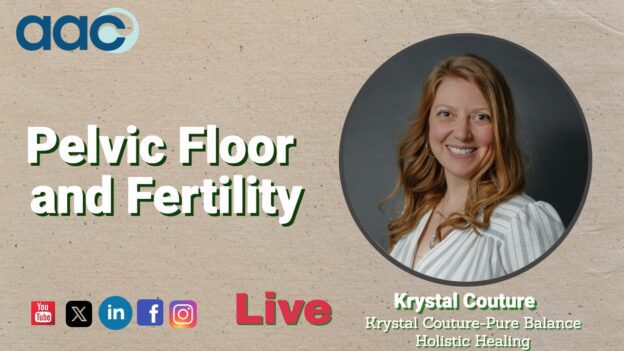
Pelvic Floor and Fertility – Krystal Couture


In today’s vlog, what we’re going to be chatting about is the pelvic floor and its connection to fertility.  So let’s get into it.

Click here to download the transcript.

Disclaimer: The following is an actual transcript. We do our best to make sure the transcript is as accurate as possible, however, it may contain spelling or grammatical errors.  Due to the unique language of acupuncture, there will be errors, so we suggest you watch the video while reading the transcript.

Hi everyone, and welcome. I’m Dr. Kristal Lynn Couture, the Pelvic Accu. My passion is sharing pelvic care with acupuncturists. Around the globe really diving into the sacred medicine of the pelvis and using our unique viewpoints as acupuncturists to treat the pelvis in a holistic manner. This is why I’m so excited that my entire series on the pelvic floor,

and Women’s Health is brought to you by the AAC, the American Acupuncture Council. I just want to take a moment to thank them and share my appreciation and gratitude for the American Acupuncture Council for sponsoring yet another video. In today’s vlog, what we’re going to be chatting about is the pelvic floor and its connection to fertility.

So let’s get into it.

The table of contents for today’s workshop includes chatting about fertility in Western medicine. In order for us to have an interplay with Western medicine as Eastern practitioners, it’s super important for us to have an understanding of what’s happening physiologically in the body. And that means understanding the male and female feedback loops that occur with the body.

the reproductive hormone system. We’re also going to chat about fertility in Chinese medicine, of course. We’re going to get deep into our chat about Tian Gui today, as well as revisit Yin and Yang. We’ll have a look into the differences between Eastern and Western philosophy when it comes to looking at fertility.

within our clients. We’ll also look at the connections or potential connections between the pelvic floor and fertility. And we’ll look at a couple of studies and perhaps ask some questions that could infuse energy into future studies. And then finally, we’ll chat about how to provide support to your clients that are coming in now with potential pelvic floor and fertility issues.

So here we go. Let’s begin with fertility in Western medicine. As I mentioned, in Western medicine, we’re really dealing with the hormone reproductive physiology, which is really determined by the hypothalamic pituitary gonadular axis and the reproductive hormones, of course. There are both positive and negative feedback loops in females and in males.

The stages of conception include the healthy sperm production, high quality egg production, and high quantity egg production, successful transport during ovulation of the egg to the fallopian tubes, transportation of the sperm to the fallopian tubes, and then of course the sperm penetration of the egg, which would yield fertilization, and then finally that implantation of the fertilized egg.

into the thickened uterine lining. Okay. So let’s begin with these feedback loops. They might be a little confusing when we first have a look at them, but the key is to remember that whether a female or a male body, we are looking at this relationship and interplay between positive negati positive feedback loops, which encourage stimulation, and then negative feedback loops, which are the inhibition.

So let’s get our bearings around us. First off, GnRH is gonadotropin releasing hormone. This is released by the hypothalamus to stimulate the anterior pituitary gland. So you’ll see in green on your screen, the hypothalamus followed by the anterior pituitary gland. What happens here? in the first phase is that the pituitary hormone, inter pituitary is going to release luteinizing hormone and follicle stimulating hormone to stimulate spermatogenesis and testosterone secretion by the testes.

Great. Everything is in balance, right? But the body has a natural system. The body is always seeking homeostasis. And this is actually something I learned in school in Western medicine before I learned it in Eastern medicine. The body always wants balance, right? If your ankle is off on one side, your hip eventually is going to go off or your knee in the opposite side, because the body is seeking homeostasis.

Balance. The same is true of hormones. So the body in males has a natural negative feedback loop which halts the overproduction of testosterone and the overstimulation of spermatogenesis. So in this negative feedback loop, what we can see, so that’s marked by the red on the side of your screen, is that we have inhibin and we have testosterone, which are going to inhibit the secretion of GNRH to hypothalamus.

And then the, that will then, of course, inhibit LH and FSH by the pituitary gland. We also do have a little micro, feedback loop, which is that the Leydig cells will also stimulate spermatogenesis within the testes. So this is the basis of what the male feedback loop looks like in relation to hormones.

And we’re really looking here at a quantity game. We’re looking at the perfect quantity and that’s why we’ve got positive in the negative feedback loop. In females, the feedback loop looks similar, but it is slightly more complicated in that we’re not just looking at a perfect quantity, we’re also looking at the cyclical nature and that’s based on what the uterus is doing, right?

So again we have our hypothalamus, we have gonadotropin releasing hormone Then we have the anterior pituitary and then of course in this case we have the ovaries and the follicles and the uterus and endometrium. All are part of this hormone feedback loop, right? The endocrine system. The pituitary, the Gland is going to release LH and FSH, so luteinizing hormone and follicle stimulating hormone, to stimulate several follicles to grow during that follicular phase, right?

Pretty, it’s named pretty aptly actually. So luteinizing hormone, follicle stimulating hormone, several follicles begin to develop within the ovaries. Check. That’s our positive feedback loop in this phase. of the menstrual cycle. The negative feedback loop in this phase is that the dominant follicle is going to begin to produce estradiol, which is the most common type of estrogen in the body.

This can inhibit the GnRH, FSH, and LH production and this is going to cause the endometrium to begin to thicken. So we can start to see how this process is very unique and Very complex interplay of hormones. A lot of things can go awry here. In our next phase, we have ovulation. During the ovulation phase, we’re going to see that we have two positive feedback loops.

Same system is set up, and and in this phase, what happens is that luteinizing hormone and follicle stimulating hormone actually just stimulate that one follicle That is primary to mature. On the other side of the equation, we have the growing follicle continuing to produce that estradiol. And at this phase it begins to stimulate the G-N-R-H-F-S-H and LH production, and then the LH will serve to promote the.

to trigger the ovulation, right? So we can see that this is an overall negative feedback loop becomes a positive feedback loop. In phase three, we’re going back to a positive feedback loop and a negative feedback loop. So luteinizing hormone in this phase is going to stimulate the formation of a corpus luteum from the follicular tissue that is left behind after ovulation.

Okay, so that occurs within the ovaries. The corpus luteum is going to secrete progesterone, so now we have another hormone in play, and we see, if we look at my last presentation, or any of the hormone graphs that are out there, we can see that progesterone peaks at this time in the cycle, right?

When we have progesterone peaking, this is going to then inhibit GNRH, it’s going to inhibit follicle stimulating hormone and luteinizing hormone production. This maintains the endometrium. As the corpus luteum degrades and progesterone declines, this initiates the sloughing of the stratum functionalis.

So we have a basic understanding of these feedback loops. The key that I want you to remember here, even if you don’t have a total understanding of it or can’t remember it throughout the entirety of the cycle, is that This interplay can easily be jostled, right? We can impact the hormones in the body, we know, by stress, by lack of activity, by lack of proper nutrition, right?

So there are so many factors that can impact any of the phases of the body. this cycle and these feedback loops. Excuse me. Sorry about that. So that’s the key and that’s where Chinese medicine comes in to really have an impact because we come in with our needles and they’re like in our herbs and they’re like little lasers to target the exact parts of the body that need extra support.

So let’s just look for one sec at ovulation to implantation, and we can really see in this image, if we look at the ovary and then into the uterus, we can actually really see that this is about an eight to nine day process from the oocyte being produced to fertilization occurring and then migrating through the phases of cell development.

So we go from that first cleavage to the two cell stage, four cell stage, and we develop over time into the eight cell stage. And then we start to see the formation. of the inner cell mass, and we start to see how that blastocyte is immigrated into the wall of the uterus, right? And that, of course, is the implantation.

So again, this is another complex part of what’s happening in the total picture for female fertility. Now, if we have a look at Chinese medicine we’re looking through a whole different lens here, a whole different world. And perhaps the two uniting is the key to creating successful fertility in women and in men.

Ching Hsu, who’s a gynecologist during the Qing Dynasty, emphasized the unique difference between the blood And the menstrual blood. Blood is traditionally known to Ho House the Hun, and to nourish, of course, the tendons, the sinew, the skin, the eyes, and the hair, the Ian Gu or Heavenly Water. is considered to be the menstrual blood, which is derived from the kidney water and the female hormones of estrogen and progesterone.

The liver is the link between the two. Thus, the tonification of the kidneys is what is one of the most important things to consider when we’re working with fertility in Chinese medicine. Now I made a little bit of a graph here to help explain what we have going on. So if we look at this graph, we can see that we have kidney water and the impact of minister fire activates kidney water to become tian gui.

And then we have the link between tian gui and blood with the liver as the communicator between the two and the connection between the two. So let’s talk about minister fire first. Prenatal fire formed at conception on the du and the ren access. So minister fire actually exists before menstruation commences.

Some texts say that it is the kidney yang that turns the tian gui red. It’s just something to play with there. At 14, the ren opens and the chang flourishes, and this is what matures that tian gui. So the minister fire also serves to worm the uterus and balance the yin. which yields potentially conception.

It’s a pretty exciting process when we really look at it from this viewpoint, right? The Ming Men is the root of the Yuan Qi and the residence of both water and fire. The Yin of the five Zhang cannot nourish without it, and their Yang cannot develop without it. Without it. So what we’re saying here is we have this interplay.

Once again, I’m using that term. We have an interplay of water and fire where fire is not trying to overcome water and water is not Extinguishing the fire. And this is really existing within that role of the kidneys. So our system from Chinese medicine and Western medicine, we see some harmonization here, and we also see different and unique viewpoints.

And these different and unique viewpoints play to the physiology and the energy or the nature of the system. And that’s important to consider as we move forth with our chat here. So in my last presentation on menstruation, I shared this slide of yin and yang, and I’m going to share it again here so that we can remind ourselves of how important the yin and yang water and fire balance is within the body as we look at fertility.

So during the menstrual cycle phase, we have yang at its peak and yin at its minimum, then yang and yin cross, they intersect and the follicular phase begins where yin becomes yin becomes prominent Yang starts to become less prominent. And here we have the ovulation phase when each of these is at its maximum.

Then the yin becomes yang, right? And we start to see again, cross or intersect during the luteal phase. The yang begins to rise and the yin begins to fall. When we look at this and blow this up, blow up menstruation, we have During the menstrual phase, we have menstruation. The yang is going to peak and then drop in the qi and blood are going to be moving downward.

We know that, right? Because we have the discharge of menstrual blood or tian guai. The heart is going to be the one who is discharging During this phase, the invigoration of blood is going to be important to move all of the Tiangui out of the system. Next we have the follicular phase. During the follicular phase, the yin and blood in the system, are relatively empty.

Yin grows and crosses yang. And in this phase, the kidney tonification and blood nourishment is really important since we know that we’ve got this emptiness within the system, right? Building back, right? This is a constant Building and releasing. Building and releasing. We have, and there’s two builds and releases.

There’s the release of blood or Tian Gui, and there’s the release of the ovum, Yang and Yin, right? So the, these are really cool to play with this interplay with. So in ovulation, the Chong and the Ren and the Du are going to be fully activated. They’re going to be online. The Yin is going to be at its maximum.

The Qi and the blood are moving upward. In this phase, tifying the spleen to hold the blood is important when we’re thinking about fertility and also strengthening the Chung in the run. Now in the luteal phase, the yang is ra rising relatively rapidly and it’s warming the uterus needs to warm the uterus to prepare for that implantation.

Of the egg, of the follicle, right? The qi moves during this phase, so it’s important to both invigorate qi and blood. Now, what are the differences between western medicine viewpoints and Chinese medicine viewpoints when we’re talking specifically about fertility? In western medicine, we are looking at that endocrine function.

We are looking at the Hypothalamus, GNRH, and those feedback loops into the anterior pituitary and then those feedback loops to the reproductive organs. We’re looking at hormone balance. We are looking, hopefully, at organ function. And then we are looking predominantly at egg function. Quantity and sperm quantity and many of the interventions that western medical fertility doctors provide are to specifically increase quantity of egg and quantity of sperm.

This is a mechanical approach and it is a numbers game. If you’ve worked with clients for fertility, you are commonly seeing labs being run and they’ll look at the numbers being measured. A huge part of this. In Eastern medicine, we have a different viewpoint. We are looking at patterns. We’re looking at that yin and yang balance.

We’re looking at excess and deficiency. We’re looking at heat and cold. We’re looking at interior and exterior factors, right? We’re also looking at system function within the collaboration of the elements and the meridians. Then finally, we start to look at the systems in more specific ways. So we’re looking at the kidney water, the tian gui.

We’re looking at the liver blood. We’re looking through a cumulative and holistic lens. At the whole body and the patterns of the whole body, the entire symptom profile, the entire presentation of the client on the level of body, mind, spirit, and emotions is part of what we’re looking at when we’re trying to establish fertility.

We’re looking at the quality of the foods and the quality of the prenatal gene. So there are some significant differences here. Again, when the two are combined, is the collaboration going to be a unique solution to creating fertility in our modern world? And I think there’s a lot to be said for that. I think that collaboration is the key.

If, and here’s the if we don’t start talking to and educating our clients and our children as a collaborative, not just as acupuncturists, as a collaborative sooner about how they’re taking care of their bodies, what’s happening in their bodies, helping them to understand their own menstrual cycle and their own fertility.

If we are building health before the age of 14, before menstruation even arrives, before the maturation of sperm arrives, then isn’t fertility going to be easier in the first place? I don’t know, just a thought I have. Okay, so our unique perspective in Chinese medicine. The TCM approach to infertility treatment integrates the menstrual cycle as a simple, non invasive, sensitive, motivational, diagnostic tool to understanding a woman’s fertility status.

So that’s the nature that I talk about. It’s the nature of the body is what guides us to determine fertility, which is really about overall health in the system. Let’s chat here about the pelvic floor and fertility. While the pelvic floor And there’s a few studies that indicate this. While the pelvic floor is not likely a cause of infertility, there are seriously a few factors to consider.

One is that if there is pain in the pelvis and tension in the pelvis, One may be less willing to engage in sexual intercourse because of that pain and dysfunction. That pain or dysfunction may put them into strange body positions throughout the day, throughout, their life, but also throughout intercourse.

So again, that can really limit sexual intercourse. the ability for the body to conceive. If there’s pelvic floor dysfunction and dysfunction, I left it broad here because we could think about pelvic floor dysfunction as incontinence for example of bowel or bladder. If someone is experiencing incontinence, it’s going to be very difficult for them to be comfortable with engagement in intercourse, which can make it very difficult to conceive, right?

So there’s an indirect implication of how the pelvic floor can impact fertility here. But now we get a little bit deeper. If there’s congestion or there’s emptiness within the pelvic bowl, I think that can directly impact. Conception, right? There’s blood, which could be stagnation. It could be that the blood is not holding.

It could be that the blood has no motility. If the blood is, if the tiangui, or the blood itself, has stagnation, it’s not holding, or there’s no motility, I think it’s going to be very difficult for one to conceive. If there’s dampness or dryness, again, those fluids are not moving the way that they need to.

And if the fluids are not of high quality and they’re not moving the way that they need to then that can create potentially a block with pelvic floor which can impact fertility. There can be some physiological blocks as well such as accumulations like fibroids, endometriosis, we can have prolapses, there can be Altered spinal segment positioning, or SI joint positioning, and certainly these physiological blocks can also prevent one from being comfortable in the phase of connecting to themselves, connecting to what’s happening in their body, and being open to conception.

When we are in pain, and maybe this is a great research study, I hadn’t thought about that until now. When we are in pain. We are releasing different hormones, right? We are releasing a different set of hormones. So does the body have enough energy to then be at peak while it’s releasing peak reproductive hormone release while it’s working through the release of substance P?

I don’t know. That’s a good one. Injuries to the pelvic bowl are going to be another region. If there’s a trauma, if someone had a fracture, a ski accident, something like that car accident that impacted the pelvis in some way, or the sacrum in some way, that can definitely be a factor that’s going to at least contribute to fertility.

And then of course, energetic blocks. I think energetic blocks are definitely a contribution to fertility and many of those exist within the pelvic floor because the pelvic floor has many sinew connections. It has all of the meridians, most of the meridians running through it. The conception vessel and the governing vessel, which if the CVGV is blocked in general, I think it’s very hard to achieve conception through that state.

And I’ve really found that in my practice. And then finally, the spirit or the emotions. The pelvis is the root of the body. If the root of the body is holding emotions of trauma again, do we have enough energy to then conceive within the body? What does it take? So there’s a couple of studies out there that are sorting, starting to touch upon a connection directly between the pelvic floor, and fertility.

So in this study in BMC Women’s Health in 2024, this is like one of my favorite studies because it’s the first one that really starts to investigate this relationship. So this study for the first time investigates the causal relationship between reproductive factors and pelvic floor dysfunction.

The results suggested a causal relationship between some reproductive factors, but there were significant differences between female genital prolapse and stress urinary incontinence. So we’re starting to see that these physiological factors are impacting reproduction. In another study in alternative therapy health medicine in 2015, there were 13 192 female participants treated in a clinic between 2002 and 2011.

So this was almost a 10 year study, which is pretty amazing. And they had various diagnoses of infertility, including blockages of occluded fallopian tubes, hormone dysfunction, endometriosis. And some of the women were actually going to the hospital. through IVF. So the study was not specific. It was very general.

So we have to keep that in mind as we look at the results. In the intervention in this case, the clients underwent whole body patient centered treatments using protocols of manual PT which focused on restoring the Mobility and motility of the structures that affect the reproductive system. So specifically they worked on those concomitant tissues around the pelvis including, the back, the gluteals, the abdomen, etc.

The manual therapy represented an effective, conservative treatment for women diagnosed as infertile due to mechanical causes, independent of specific etiology. This is another big, important study. Basically, it’s saying that with a very minimally invasive approach, utilizing manual therapy, and no other interventions, utilizing manual therapy, we can impact what’s happening in the structure of the body, which can positively impact fertility.

So that’s an important correlation to consider. But is there some missing data? And I think there is. Unfortunately, there are really no data. Just few studies that link the pelvic floor to fertility, and until this one in 2024, there were almost none that were done on fertility as a whole. Some on interventions, specifically like PT or exercise or acupuncture, but none in direct connection between what is that correlation of pelvic floor dysfunction and fertility or infertility, right?

I think there are some questions. What types of pelvic floor dysfunction are correlated with infertility? What percentage of both males and females with pelvic floor dysfunction are also struggling with their fertility? Does a weak pelvic floor contribute to miscarriage? Likewise, does a tight pelvic floor contribute to miscarriage?

So is pelvic floor muscular dysfunction going to be contributing to one’s ability to hold conception? And are there specific gestational stages during miscarriage that are more likely to be associated with pelvic floor issues? I think these are important parts when we look at fertility and the pelvic floor as a whole.

So what can we do? Here are some pillars of pelvic patency, keeping the pelvic floor in an optimal state of nourishment and function. One is client education, and that is all encompassing. That can include helping the client to understand their body, to understand a little bit about what’s happening to their body.

During the phases of menstruation to help male clients understand what is happening physiologically during ejaculation, educating our clients on conception is really important. This is something that is missing in their childhood, but if they’re coming to see us in their fertile ages and they’re trying to conceive, this is the first line that we can start with is education.

We can also begin to educate them on patterns that we see within their body. If they are drinking smoothies and eating salads every day and they have a cold and damp uterus that’s a contributing factor, right? We understand those patterns. So helping the client to understand the patterns that are going on in their body and alter their nutrition or other factors, lifestyle factors, to help their body, give their body the optimal chance of success.

For healing, that’s a great way to start. Can also begin to educate our clients on posture as well. If we’re talking about mechanical issues within the pelvis that lead to pelvic floor dysfunction, educating clients on posture. And this could be as simple as if they have a desk job that every 20 minutes they stand up Do a little stretch and then sit back down right so that they can be in a place where their spine load is changed and they’re not stuck in a sitting position.

That anterior posterior tilt of the pelvis that they’re stuck sitting in is going to contribute to what’s happening within the pelvic bowl. Breathing. Breathing is so important. Encouraging our clients to get into the diaphragm with their breath, to take intentional breathing, to take intentional breaths is super duper important for the vagus nerve.

And the vagus nerve has fibers that go all the way down. to the pelvic floor. So it’s really important to work in breathing. And the pelvic breath is specific to recognizing that so often when our clients are experiencing leakage in particular, generally speaking, this is true as well. But if we think about leakage as our example, If they’re having leakage, very often it’s on the exhale.

So they are sneezing, coughing, or laughing, and then that produces leakage. Those are in exhale, right? So the pelvic floor is actually functioning in that state, in the reverse pattern of what we want. On the exhale, we want the abdomen, we know this if we’re yogis or therapists in general, we want the abdomen to be coming in.

We also want the pelvic floor to be coming in and out on the exhale. That’s the excretion of air. That’s sending the air into the world, right? That’s the excretion. On the inhale, we want to fill and we want to relax the abdomen. We want to relax the pelvic floor. So encouraging our clients to understand the pelvic breath is very important.

Finally, movement. Movement of qi and blood is particularly important to the health of the pelvis, right? Staying out of phases of stagnation is key and also encouraging our clients to move according to their cycles is really important. At the beginning of one cycle during, the menstrual bleeding phase, the tian gui release phase, it’s important to consider that clients might be a little bit more tired.

They’re not going to be at their peak of exercise during ovulation. They might feel great. They might feel like they can handle more exercise, more weight in the gym, a longer endurance activity, whatever it might be. And that’s okay. And it’s important for them to understand that their body feels different throughout these phases.

And that’s okay. as long as they find some way to move their body. Acupuncture. We are master technicians at working through patterns and helping to resolve the pain. imbalances. So acupuncture can really support our clients in treating those sinews, in opening blocks, and in nourishing the reproductive system in the exact way that it needs based on that presentation.

And of course, dissolving Accumulations is key too. And finally, if you’re into manual therapy, which I am, I love manual therapy. It’s a big part of my practice. Utilizing that manual therapy to help restore balance and establish embodiment. And this, if you’re not trained in pelvic floor work, it doesn’t have to be specific to the pelvic floor.

It can be within those concomitant structures. Don’t downplay working on the abdomen, working on the back, working on the butt, working on the anterior hips. in order to support our clients going through fertility.

Okay, so here’s a little bit about my series with the AAC, the American Acupuncture Council. If you’ve seen me before, you’ve probably seen my pelvic floor intro, as well as my pelvic floor and menstruation workshop coming up soon. We have a workshop on pregnancy. on postpartum and on menopause all in relation to the pelvic floor.

Again, I want to thank you for being with me today and I want to thank the AAC, the American Acupuncture Council, for hosting me through this series and sharing these blogs so that acupuncturists around the globe can get into the sacred medicine of the pelvis. Thank you so much for being with me and I really look forward To seeing you soon, take care.


Click here for the best Acupuncture Malpractice Insurance

Get a Quick Quote and See What You Can Save