Category Archives: Live Event

AACTTPBrown03102021 Thumb

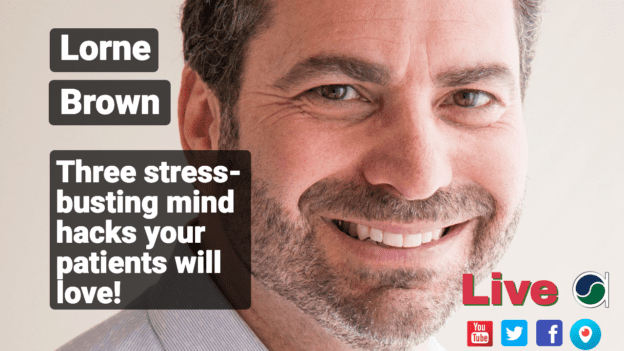
Three Stress Busting Mind Hacks Your Patients Will Love – Lorne Brown


We’re looking to create an environment to support the body’s innate ability to heal. Um, the body has this capacity to self-regulate. We call it balance. And when it’s doing this well, um, we have health and vitality.

Click here to download the transcript.

Disclaimer: The following is an actual transcript. We do our best to make sure the transcript is as accurate as possible, however, it may contain spelling or grammatical errors.  Due to the unique language of acupuncture, there will be errors, so we suggest you watch the video while reading the transcript.

Thank you. Um, again to the AAC for having me on their series called To The Point. My name’s Lorne Brown and a little bit about myself. I’m a doctor of traditional Chinese medicine. So my clinic is in Vancouver, British Columbia, Canada. It’s called Acubalance Wellness Center. I’m the founder of healthy seminars where we offer online continuing education. I’m the chair of the integrated fertility symposium. And I’m the author of this book of my past experience called missing the point why acupuncturists fail and what they need to know to succeed. And I’m a passionate about learning and passionate about consciousness work. And today I wanted to share with you, um, three mind hacks that your patients will love and you’ll love as well. If you incorporate these into your daily life. Um, my background also that I didn’t mention a moment ago is I’m also a trained clinical hypnotherapists.

So I really love working with the mind. Now, the reason I think this was real valuable tools to share with you for you yourself personally, and for your patients is because our whole goal often is to support the body’s innate ability to heal. Right? We understand this as Chinese medicine practitioners, that our bodies have this innate ability to heal. We’re not trying to override it. We’re not trying to suppress symptoms. We’re looking to create an environment to support the body’s innate ability to heal. Um, the body has this capacity to self-regulate. We call it balance. And when it’s doing this well, um, we have health and vitality. And when we ha when we catch a cold or we have an injury, we rebound, we recover. And if our body Lee loses this ability to self-regulate to a disability to heal, then we get a cold or we get, um, an injury.

But then we see this with our patients. They don’t heal, they don’t recover. And so these three mind tacks, I’m going to share with you how they’re going to support the body’s innate ability to be heal. And often I’ll share with my patients, you know, cause I want to educate them on why they’re going to use Chinese medicine and how those will benefit them. So I’m explaining some of our philosophies, um, how we see the body. And so one of them is your body has an innate ability to heal. And I often say, if you get a cut, you don’t sit there and stare at your hand and say, he’ll he’ll he’ll know, your body knows how to do this on its own. It can do this. And if you get a really serious kind of big gash, you may need stitches, but the stitches does not create the healing.

What that thread does is it creates an environment to support the body’s innate ability to heal by bringing the tissue together. It creates an environment which allows the body to do its job, to heal. And I often say Chinese medicines like that, red, we’re going to create an environment to support your body to heal. So the reason these three mind hacks are crucial in life. When we feel stressed, we often call this like cheese stagnation. Um, some people in the conscious world call this resistance or friction. You know what it feels like when you’re out of balance, you’re feeling stress. It doesn’t feel good. You can tell. And when you are in flow and she is flowing, you feel inspired. Your, your chest feels open. And like, there’s this expanse to you versus this tight contraction. So you have this built-in mechanism when you are off track and we call that stress or cheese stagnation.

And so when you think about our autonomic nervous system, this is the part that’s doing the healing, right? This is the part where you bite an Apple, but you don’t think about what digestive juices need to be released. You don’t have to think about what nutrients get absorbed and what waste gets eliminated. This is part of the subconscious mind is the body, the autonomic nervous system. When you sleep at night, your blood pumps, your heart pumps, I should say, in your blood circulates, you don’t have to think about that. And so really this innate ability to heal our goal, if we’re thinking of the body like a garden is if there’s weeds, we want to pull these weeds out. So the plant can do its things. We may pull away obstacles. And one of them is this stress, this chiefs technician. This is really key, especially in our time, people are living in stress.

They’re watching the news and this is putting us into the fight or flight, um, uh, nervous system, the sympathetic nervous system. And when you are feeling stressed, your energy is being mobilized for survival. And if your energy is being mobilized for survival, then this energy, these resources are no longer available for healing and creativity. And so by using these three simple mind hacks, you’re going to tell your body that it is safe. And it’s going to go from that sympathetic fight or flight where it’s mobilizing for survival or to fight. And we’re going to put it into the parasympathetic nervous system, the rest and digest the breed and feed system where healing, where healing can happen. And when we think about our medicine, it sets us up so beautifully because we understand the mind body connection. It’s bi-directional. So your physical being your physical can impact your mental, emotional, and the mental emotional can impact your physical it’s bi-directional.

And if you’re going to use these tools for yourself, um, I will share with you that you will also start to find more success in your life because by getting yourself into alpha brainwave. So parasympathetic alpha, brainwaves, sympathetic high beta overwhelmed brain brainwaves. When you’re in the alpha brainwaves, you get to tap into parts of your mind. That’s not normally available to you. These areas of creativity, that research is showing in these cool ideas. Ideas can just pop into your head that you get to grab and run with. And we mentioned that when you’re in the parasympathetic, you’re going to free up your resources for healing. Because if you’re in the sympathetic, in that high beta overwhelm, then your energy is being mobilized and it’s not available for healing because it thinks it needs to survive, but there is no survival benefit when you’re usually in this there, you’re not about to get eaten by wild animals.

So often this stress response that we have, we’re thinking about something that’s happened to us. We’re worried about something that we think may happen to us, but you really, there is no survival benefit to be engaging this stress response right now, it’s not going to help us, um, jump out of a moving car for example. And so we have to relearn or have to train our bodies to regularly elicit the relaxation response and by doing so, your patients will get more benefit from your treatment because our goal is to support their innate ability to heal. And so if we are teaching in these simple tools and they’re coming to your treatment for dietary therapy, Twain, acupuncture, mocks are herbal. They will get so much more from your treatment. If you also teach them these tools and who doesn’t want to feel good. So in my experience, patients on the table, and it takes a minute or two to teach them each one of these.

So every session I teach them one out of the three and I have many more I’m teaching you today, three of them and with the needles in and resting on a table. And then I give them this little mind hack that they can take home with them. Well, just on the table, they feel amazing. So the healing is amplified. It makes them want to continue the treatment because who doesn’t want to feel good. And they’re going to get so much more of the treatment because you put the needles in today. But if you’re not going to see them for a week later, you want to have that momentum. And if they’re using these simple mind hacks, then they’re going to benefit from this. And we remind our patients. It’s never, the it’s never the stress or the condition that causes the problem. It’s not, COVID, it’s not your clinic being closed.

It’s not a divorce that’s happening. It’s not bad weather. There’s always everything that happens is neutral. And then we give it meaning. So then we have a perception. It’s always our perception of the event that causes stress, not the actual stressor. It’s our perception, how we perceive what’s happening. And as soon as we have that perception, then we get a mental, emotional response. And it’s either positive or negative based on what’s happened. Often the response is based on programming. I say subconscious programming. So you see the world through the lenses of your subconscious program that you inherited, whether it’s negative or positive. And then you kind of have these electrical changes in the heart and the nervous system, which will affect your immune and hormonal response, which then affects a physiological effect. So your thinking leads to emotions. Emotions are, um, our end results of chemical reactions and these impact your DNA, your genetics, they turn on and off genes epigenetics. So your thoughts and feelings, positive thoughts and feelings, negative thoughts, and feelings can impact your biology, your gene expression, and turning you on towards health or turning your ons more towards disease and learning to elicit these relaxation responses throughout the day on a daily basis. As we mentioned, frees up your resources, your energy for healing and for creativity. So here’s the three, and then we’re going to practice them. And so I’m going to explain to you why I use each of these and why they’re kind of my favorite three.

And then I’m going to encourage you to

Work through these with me. The intention I’ll set out is that these are simple. They are powerful, and they are effective. Everybody likes the powerful and effective. This simple, ironically simple often has the risk of being ignored or dismissed because they are so simple. You know, in our life, we, things need to be difficult. We need things to be complicated. And my practice, why I think I kind of skip around the room is I don’t do complicated. So if you like complicated as a patient or as a student of mine, you don’t tend to gel with me. We don’t resonate because my frequency is about simple. I want things to be as simple as possible. And so, um, these are going to be very simple. So the first one we’re going to talk about is just called shaking it out. And there’s been some research on this. There’s some, um, books written on this and an interesting enough, um, I, the, the author of the book, I think it’s the tiger tail, but it it’s skipping my mind. Um, but that does not matter. Um, I’ll still teach you the technique and why we want to shake it out. When you go into this fight or flight, you’re in high beta, you’re in overwhelm, you’re in the sympathetic nervous system. The energy is being mobilized. This is a massive

Amount of energy. And

They, there are stories of mothers lifting cars off their children. And then the next day they can’t budge the car. This is an amazing amount of energy. And if you’re stressing yourself out through your thinking, again, there’s no survival benefit. You get all this energy because your body’s going to respond as if you’re being attacked by a wild animal. And you have all this energy, but it doesn’t get discharged in the wild with animals. Cause this is where this was observed. When an animal has a stressful experience, it’s fighting. So it’s discharging the energy it’s fighting or it’s running. And often what they’ve observed in the wild is animals. After there’s been a stressful experience, they see them shaking, twitching, everything out. And this is a way of discharging this excess energy. Because if you hold it in your cells, it leads to disease. We need to discharge Y yoga, chigong running exercises, healthy for you.

You’re discharging the energy. And so you can purposely do this. And so if you’re at your computers there, I invite you to stand up. Um, I know that I take myself probably a little bit out of camera, but I’ll come back to the whole Sarah. But if I was going to stand up, I’m going to move myself back and you really want to kind of pound yourself, like pound your heels to the ground and shake it, or really shaken up Twitch to edge. And you want to do that for about three minutes. I do this for patients sometimes before we put the needles in just because they’ve had a stressful experience, they’re telling me their stressful story and we just get them to shake it out like a duck. It was a story I share with my, when my son was a toddler, he was really stressed out.

And so you can do this. If you have young kids, um, he was upset about something and he was having his tantrum again. He was a young kid here. This is like before age of five and I’m listening to him and I say, Hey, let’s shake it out like a deck. And we start to shake and he’s crying. He’s looking at me and I go, come on, let’s shake it out. Let’s shake our tooshie sir, shaking our tooshie. And he starts shaking. He starts because children are in the moment. They’re great. They’re not like us. They don’t have all this baggage yet. And within 30 seconds, he is shaking, shaking his tail, his duck tail, and he is laughing. And he’s out of that experience. Same thing for us as adults. It’s a great, great way to create a change in state and to discharge the energy, to get you out of that high beta sympathetic and getting yourself more into that parasympathetic.

So remember I said simple, powerful, effective. Is that not simple? So I hopefully you have, um, stood up and you’ve tried this out just now just shake it out for three to five minutes, mind hack number two, the breath. I love the breath because it’s always with us and it is free. And the reason the breath is so important is again, as part of the autonomic nervous system. So as you’re listening to this lecture, um, you’re not thinking, Oh, I need to inhale and I need to exhale. I need to inhale. I need an exhale. It happens all on its own. You don’t have to really think about it. You sleep at night. When you go unconscious, you continue to breathe. You do not have to think about it. Your heart’s part of your autonomic nervous system too. And if I asked you to slow down your heart or stop your heart for four seconds, most of you, maybe one or two of you, of your super monks, um, cannot do that.

Um, I’m assuming none of you on here can do that, but your breath, you can control your breath. And so, although your breath is part of your autonomic nervous system, you do have some voluntary control over it to a degree. And by changing your breathing, you can communicate to your nervous system that you are safe because when you go into that survival mode, that fight or flight is your eyes. Pupils, change, blood flow changes, your breathing changes. And if you can, in the moment, start to change your breathing. It’s a mind hack. And if the body’s breathing a certain way, it tells the nervous system, Hey, we’re safe here because remember most of the stress responses we experienced, there is no survival benefit. It’s like, you know, when you pass a car on a highway and you accelerate, they say current enthusiasts, that that’s actually beneficial, healthy for the vehicle to clean up the exhaust or the engine.

I don’t know, I’m not a car enthusiast, but they say every once in a while, it’s really good to bring those RPMs to the read every once in a while. It’s good for your, your, your car. But if you drive a hundred miles, um, with the RPMs and red, you’re going to damage your car. So the sympathetic nervous system is not bad. It’s just that we’re in it too often. We’re driving a hundred miles with the RPMs of red and that damages the body. And so every once in a while, it’s okay. So going back to our breath, we can communicate, we can put on the brakes basically, and we can tell the body we’re safe. And there’s some literature suggesting that when you do the deep belly breath, um, it’s somehow stretching and impacting the Vegas nerve, which engages the parasympathetic nervous system, the rest and digest the breed and feed nervous system.

And they have shown through heart rate variability research, where they’re looking at the variability and the heart, looking at the autonomic nervous system. That is the exhale that’s engaging the parasympathetic nervous system. So the breathing technique that I have used, I first learned, and it’s a version of box breathing that I learned from Dr. Andrew Weil, who is a integrative MD. We spoke at a conference together many moons ago, um, at UBC. And he taught her version of this. And I’ve modified it because of the research of the long exhale is engaging the parasympathetic. So you breathe in through your nose for a count of four. Your mouth is closed. You’ll hold your breath for a count of four. And then you exhale through your mouth for a count of eight. We want the exhale to be twice as long as the inhale, because the exhale engages the parasympathetic nervous system.

The time at the roof of your mouth juice behind your front teeth. So do 26 area because we want to create that orbital circuit of the rent in the Duma. Okay. So that’s why we want to have her tongue up there. Also, I always like practical reasons because some patients don’t buy into the channels and the meridians. And so if your tongue is at the roof of your mouth, um, then it keeps you from clenching your jaw. When you are stressed, you often will punch your jaw. And if you put your tongue gently at the roof of your mouth, your lecturer close your teeth, we’ll have a little bit of separation in that will relax your jaw as well. The rhythm is up to you. If you practice this for a while, you can really have a slow rhythm of in, for four hold for four Oh for eight.

Um, I start my patients that are pretty quick rhythm because it can get them out of breath and be uncomfortable if, if the rhythms too slow at the beginning. But with, with practice, you can definitely slow it down. They say it takes about at least three of these in, for four hold for four, for eight for your brain to start to realize it’s safe. So do four to eight of these with your patients, um, sitting or laying down. And again, let’s do this together now. Um, and I’m going to add a few things to the breath that you can do as well. So I usually ask that you take a breath and just get rid of the, your mouth close into the nose. One, two, three, four, hold two, three, four. Now exhale through your mouth. One, two, three, all the way out. Five, six, seven, eight, inhale through your nose, big belly breath, three and four, hold two, three, and four.

And now slowly exhale through your mouth. It’s a gentle exhale. Like you’re almost blowing out of a straw. It’s not a forceful, it’s a very gentle, slow for count of eight and breathe in one, two, three, and four, hold two, three, and four. And as you let go, just release any tension, any worry on the exhale. As you count out to that age, just letting go of any tension. And this time as you’re breathing, I invite you to close your eyes and breathe in peace and calmness on the inhale for a count of four. And then as you hold just marinate and Bay in this calmness and peacefulness your choosing, and as your exhale, just surrender and let go of any tension, any worry and stress. And again, breathe in peace and calmness on the inhale, holding, just take it in and now surrender and let go.

Any tension, any worry on the exhale at all, the way on the eyes closed is always beneficial because when your eyes are open, you’re into an external, you’re looking at your external environment, more of a sympathetic or a high more beta brainwaves, and an inner experience. More alpha, alpha brainwaves are detached relaxation. So if you can close your eyes and start to create that inner experience, you’re just going to help elicit the relaxation response a little bit easier. Now, often what I will do is I’ll get people I’ll check in and people will notice, Oh, I feel a little dizzy, or I’m starting to feel a little different. It’s a mind hack your body can’t help itself, right? Because you’re changing your breathing rhythm. And when you breathe this way, your body tends to know that it’s a safe, relaxed time. Let’s do it again.

We’re going to add another, um, a feature to this another little mind tack. Um, so this is two, two eight two B I gave you. One is, shake it out to eight is the breath and imagining peace and calmness on the inhale and releasing tension on the exhale. This is to be part of the breath. So again, exhale and through the nose. One, two, three, four, as you inhale and hold two, three, four, and exhale out for count of eight, two, three, all the way out this time, you inhale. Keep her islands close. And as you inhale, roll your eyes up as if you’re looking through your forehead on the inhale, don’t strain that it hurts. But look as imagine if you’re looking at a moon, um, through your forehead is your eyes are up eyelids down and hold that during the whole. And as you exhale, keeping your eyes closed, lay your eyes, rest comfortably on the exhale all the way on for [inaudible].

Now roll your eyes up. One, two, three, four, eyelids down eyes up on the hold, two, three, four. And now as you exhale, let your eyes rest comfortably. And as I continue to talk, keep breathing in for four, rolling your eyes up, holding, keeping your eyes up, and then on the exhale, let your, um, your eyes rest. As you exhale the air, keeping your eyes closed the whole time. The benefit behind this, again, it’s another mind hack. When your eyes go up, if you notice your eyes are lids, you’re closing, your eyes are up. You may sense a little bit of a tremor, twitching your eyes, right? Well, this kind of mimics REM when you’re in REM sleep, how your eyes go up and there’s that bit of that, that Twitch. Again, it’s a mind tag, the body’s memories like that. Pavlov’s dog experiment, where you rang the bell for the dog.

And it was salivating. Even though there was no food there, hopefully you’ve heard of this experiment is quite old and well-known well, if you start to breathe and roll your eyes up, it takes you from a high beta into low beta unit to alpha because your body, when you do this every night, your body thinks it’s safe. It’s sleeping. You’re not asleep. If your body does not think it’s safe, your subconscious, our nervous system will have you alert. So if you are doing this, the breath remember engages the parasympathetic. We know through heart rate variability study, and you had the eye roll up. Um, then that also starts to bring you into the alpha brainwaves. And it’s just your body can’t can handle it. And not that it can’t handle it. Your body just responds to that kind of behavior. So if you do this, your body’s like, Oh, I’m safe.

I can turn off the alarm system. I’m safe, engaged parasympathetic. Now let’s do the third, um, uh, mind hack that your patients will love. And I’ll encourage you to do that as well. And it’s a form of open focus and the research comes from Les Femi, and we’re going to wrap up here. Less family did some research, trying to engage alpha brainwaves. He studied shamans. He studied Buddhism, different cultures, and he had people, uh, hooked up to the, uh, uh, the, I think there, the EEG machines, um, on their head. And I’m sorry if I got the term wrong again, a little brain lapse here, but he was measuring the brainwaves. So he’s going to see what’s going on and he couldn’t get into, um, he couldn’t get into alpha. And when he finally surrendered, um, and let go, um, he went into alpha brainwaves.

He just turned it. They just turned out automatically. So it shows you these techniques. A lot of this is about surrendering and basically getting to present moment to getting into alpha in his research though, what he also shared is what he talked about. Narrow focus and open focus when we have our eyes open and we’re focusing on the external environment and we’re very, narrow-focused, um, we’re more into the beta brainwaves. Um, and if we go high beta we’re into overwhelmed, medium, low you’re good focus, and alpha is a form of open focus. So it’s best done with your eyes close. And if you can start to sense your body parts, this is a form of awareness and open focus. So for you guys, again, I invite you to close your eyes and just do some nice breathing in. You. Don’t have to do the four, four and eight, but a nice in deep inhale belly raise and a nice, slow exhale.

And without looking at touching or moving, can you tell you have a right hand, just bring your awareness and notice if you can tell you have a right hand. Excellent. And can you tell you have a right thumb without touching, moving, or looking at it? Just, can you sense that you have a right thumb? What about a right baby finger? Just notice it, bring your awareness now to your left hand. Can you tell you have a left hand without moving or looking at it? What about our right foot left foot? How about your right ear low? Can you sense? Can you bring it up awareness to know that you actually have a right here, a little bit attached to your head, and if you’re really stressed, you’re not, it’s going to take a while to feel these things. If you’re in a high beta, this is an open focus in our awareness.

And again, it’s another mind hack because if you start to sense your body, then you are going from externally referred, looking into your environment and you’re going inside. And the practice of going inside is an open focus. And it’s more of a low beta alpha theta brainwave activity. And now you’re engaged in the parasympathetic nervous system. And from here in my practice, I jump off and do belief change work because once I can get them into alpha, then they are now in that suggestible stage, they’re in that state of ability to heal. And you’ve now allowed the innate ability to heal to you’ve amplified it. And so just like when you’re putting your acupuncture needles and by the way, acupuncture for most induces the alpha feta, they get that Accu buzz. So you’re inducing that already. For some, some patients, they get stressed. Don’t, don’t like acupuncture, you’re inducing high beta.

So some people don’t respond to our noodles, you know, this right majority do. And if you bring in the, the, um, the shake it out, if you bring in the breathing technique, if you bring in the open focus and it only takes moments, then you are going to enhance their, um, innate ability to heal their ability to self-regulate. And then if you encourage them to do this several times a day throughout the week, they are going to benefit so much more from your treatments because the autonomic nervous system is going to have more energy and resources available to them and their creativity. It’s amazing what happens to creativity. And this is why meditation is so becoming so much more popular amongst entrepreneurs is we’ve learned that by quieting the mind and engaging the alpha brainwaves, um, we can tap into areas of creativity and you don’t need to go to burning man and take psychedelics to tap in there.

Like some of the billionaires have done, um, um, in the past you, and now you can do without the residue of those drugs. You can sit there and tap in and tap into creativity, um, areas that aren’t normally available to you. And bottom line, you just start to feel happy who, who doesn’t want to feel happy, have that peace in comments anyways, that’s the wrap for today? Um, check out my website@healthyseminars.com. Um, I have lots of online courses, um, there, and also you can check out my website, lornebrown.com for more of this conscious work. And I want to remind you next up on to the point is Jeffrey Grossman. So please make sure you tune in and, um, hopefully you’ll pick up a copy of my book, missing the point and thank you for listening and please practice these three mind hacks. Your body will love you for it. And so will your patients

 

AACTTPCallison-Lay03032021

Introduction to the San Jiao Channel Sinew (Jingjin)


So we are going to discuss a St Joe’s sinew channel today, a little bit of the typography, a little bit more of the anatomies to start off with, and then we’ll, um, have a chance to talk about a representative injury of the channel. So that’ll give you a little preview of what’s to come in the next 20 minutes or so,

Click here to download the transcript.

Disclaimer: The following is an actual transcript. We do our best to make sure the transcript is as accurate as possible, however, it may contain spelling or grammatical errors.  Due to the unique language of acupuncture, there will be errors, so we suggest you watch the video while reading the transcript.

Hello, everyone. Welcome to the American Acupuncture Council podcast. My name is Matt Callison. Hi, I’m Brian Lau. We’re from Accu sport education and the sports medicine acupuncture certification program. Uh, we want to chat with you today about the San Jiao channel. So can we get into that first slide please? Alright, so go ahead, Brian. Yeah.

So we are going to discuss a St Joe’s sinew channel today, a little bit of the typography, a little bit more of the anatomies to start off with, and then we’ll, um, have a chance to talk about a representative injury of the channel. So that’ll give you a little preview of what’s to come in the next 20 minutes or so,

Matt, were you going to say something? I was just going to introduce that you did a great job.

All right. So this’ll actually also give a flavor of what we teach in the sports medicine, acupuncture certification, each module, we haven’t anatomy, palpation cadaver lab. Uh, so there’ll be some elements of the anatomy that we’re going to be teaching and actually have a class you’re watching this live there. We’re going to be starting tomorrow, uh, for the upper extremity. So the San Jo channel will be one of the many channels that we’re looking at, obviously for the upper extremities. Um, and, uh, some opportunity to look at some, uh, dissection that we’ve done, that we’ll be presenting in our class. Uh, so we’ll remind about this, but if you are watching this around other people, we’ll give you a heads up before the dissection stuff comes on and give a couple thoughts on that, but you just want to make sure that there’s nobody, uh, around you that might be, um, you know, it might be disturbing for some people, if they’re not medical providers and they’re not used to seeing cadaver images. So we’ll give ample warning before those videos come on.

All right. So let’s go to the next slide and we’ll start looking at some of the entry, uh, anatomy for the channel sinew of the Sanjay channel. So this is from a translation of Vietnamese scholar Vanji, uh, from, from the link Shu chapter 13. And if you kind of glance through it, uh, you can see that it gives a description of the typography. It’s kind of vague, you know, the, uh, very open to interpretation and, and vague some of the anatomy descriptions and the link shoe from chapter 13 for the channel send news channel, send sinews have maybe been a little bit less, um, explored than the primary channels and some of the other secondary channels, like low connecting, et cetera. So the channel send you is probably in the history of Chinese medicine. Haven’t been explored as thoroughly, and we’ve been doing a lot of work within the sports medicine acupuncture program to, um, further define and be a little bit more specific on the anatomy of each channel, uh, including which structures are involved with, with channels, how they link with other channels in terms, um, parents, you know, like internal, external related channels, how they communicate and work with those, how they work mid David died, et cetera.

So just to be a little bit more, um, specific with the anatomy and a little bit more specific with some of the functional anatomy in particular, so you can kind of glance through and see some, some aspects of the original description at least translate in English and this translation. So anything dad, Matt? Yeah,

This is good. Let’s go into the next slide there.

Yeah. So yeah, here we have, uh, our interpretation of the, um, San Jo send you channels. Sometimes we referred to them as sinew channels, channel sinews, DJing, Jenn musculotendinous channel, a lot of different translations DJing. Jen would be the, um, the opinion version from the Chinese. So here’s our interpretation of that. The sand shout send new channels a little bit, um, harder to interpret as it gets higher up into the traps and starts, uh, including some of the, um, the cervical fascia. And we’ll go over that when we get to it. But if you just glance through the list, that’s pretty channel like we have the fingers, finger extensors on the back of the, uh, kind of posterior surface of the forearm. Uh, deep to that, uh, included is the super Nader. Uh, then the medial head of the triceps, the triceps are three muscles, but there’s two that are superficial belong had in the lateral head are more superficial.

And then deep to that is a shorter tricep muscle, which is in a different sort of compartment. I’m still a tricep, but it’s a deeper one and that’s the medial head. And that’s part of the San Josten new channel, the more superficial as part of the small intestines, any channel then as that travels up and connects with the lateral intermuscular septum that goes into the deltoids into the superficial deep cervical fascia, superficial layer, upper trapezius, SCM dye, gastric, and up into the scalp. We’ll go through that in a little bit more detail in the next several slides and that you were going to add something to this also.

Yeah, I think it’s important for us to remember that each one of these muscles in these tissues are all interconnected. So this is why when we can treat something, put an acupuncture in distal, how it can signal along that model of fascial chain and soften or change pain at a proximal area. For example, if somebody has pain in the SCM, how we can treat some of these different tissues, a distal from the SCM and start working towards softening that SCM. And is that, uh, the bottom line here is that each one of these tissues are fascially connected and they can be able to carry signals. So I think that’s, that’s good. So we’ll move on to the next slide.

Yeah, sure. Yeah. That’s a good point, Matt, because then that includes, um, both channel points that can regulate tension in the sinew channels, but also, uh, points that are off channel and maybe include, uh, she points or muscle motor points and et cetera. Yeah, let’s go onto the next.

Yeah. Good. Okay, good.

So if we kind of look at the forearm, we have a more superficial layer of the San Angeles and new channel. And like I kind of already alluded to that. Is it going to start at the, uh, the hand with the tendons of the extensor digitorum commuting as muscle? So that’ll travel then up the posterior part of the forearm, and it’s going to attach to the lateral epicondyle, uh, that fascial linkage. And that was referring to then from the lateral epicondyle goes right into the lateral intermuscular septum. A lot of people might not be familiar with the lateral intermuscular septum. It’s highlighted in green in this image that I, we put the highlights in, but the image itself is from an anatomy Atlas from a German author Tillman. So you can see that little thin green line, just, just between the biceps and the triceps.

So this lateral intermuscular septum is the kind of fascial September wall between the biceps and the triceps, and it can transmit force. And in this case for the San jab sinew channel, it’ll transmit force up into the deltoids, particularly into the middle head of the deltoids. So that’s a more of an overview of that superficial aspect. Um, but also, uh, the medial head of the triceps can put tension into the lateral intermuscular septum. So there’s a lot of communication between the medial head of the triceps lateral intermuscular septum, uh, extensor digitorum communis. So those are all facially linked.

Good. All right.

So I guess we can go on to the next one

Next slide.

All right. So we have two more images from the same Atlas. So the first one on the left, we have, you can kind of see the little tools that are there to move apart. Um, and we’re going to see this on that cadaver video that we did. So in any of these types of things, everything’s so facially connected that you’d have to have a scalpel to kind of tease the way that fascia so that you can then come and move away those compartments, and then see deep, uh, below in this case, the extensors, the wrist extensors, especially extensor digitorum communis. And what you’re seeing is the super Nader, which then on the image on the right is a much cleaner image, cause it has all of that other stuff taken off. So you can see kind of the relationship on the picture of the left and then the deeper structure of the super Nader, uh, on the picture, on the right, also part of the sand Jassen you channel, and it especially links, you know, everything has a fascial linkage. This one has a fascial linkage that has a name, uh, into the lateral intermuscular septum. And that’s a radial collateral ligament. So you can see the image on the right really nicely shows that radial collateral ligament that has splashes spreading over the super Nader and then up above it, into that lateral inner muscular septum.

Yeah. Excellent. So let’s go back. Let’s say somebody

Has that sternocleidomastoid pain just to be able to keep it consistent. We could create the supernate or we could treat the lateral intermuscular septum. We could also treat San Jo one. We could treat the extensor digitorum communis and all of those points would end up affecting that part of the SEM that is affected by the sand Jobson channel.

Yeah. Yeah. That’s the hems is interesting too because, uh, the San Justin channel particularly seems to affect the GLA vicular head and then there’s any trigger point people, uh, listening and you might know, Oh yeah, the curricular had kind of refers oftentimes pain into the ear. It can be a headachy, uh, pain into the forehead and different places, but it often refers into the ear and can cause, um, positional vertigo. So then, you know, for me, I started thinking, well, geez, what, what would that make sense for the sand Dow channel to have some kind of effect in the ear and any, and any acupuncturist here? Of course they, yeah, of course you have John three, Sandra five, there’s a lot of, uh, relationships, the points on the San job channel with the, uh, with the ear. So that’s one that has, has an interesting correlation, but it, you know, like Matt, the sand supinate or other ones could be really involved.

I was just thinking San Joe seven, also being the sheet cleft point of that channel is the motor point for the extensor and dices. So that would be another point there too. Yeah.

And that one’s in the channel. We have that one listed in the list above, but it should be

All right.

We’re ready to move on to the next slide.

Sure. All right. So from the

Deltoids and especially the sand Dow channel has a relationship to the middle deltoids that then, uh, deltoids then go to the spine of the scapula and the chromium. And they pick up the, uh, superficial layer of the deep cervical fascia. Because if you look at the trajectory of the Sanjenis in your channel, it kind of comes from the back and it goes up the neck and then binds to the jaw. There’s really no muscle that has that trajectory that way, I guess the [inaudible] more superficial might, but it’s, it doesn’t seem to make sense for the San Joslin new channel. But if you look at this fascial layer of this superficial layer of the deep cervical fascia, it does have that trajectory and binds and connects them to the mandible, to the sort of angle of the mandible and then, um, ramus or the body of the mandible.

Um, so it sort of follows that trajectory and it wraps around the trapezius and wraps around the sternocleidomastoid. So it’s very intimately involved with both the upper trapezius and the sternocleidomastoid the digastric is in this region also. Uh, so if you think about the channel as being more of that cervical fascia, um, it might cross and include muscles that aren’t going in the, in the trajectory, in the pathway of the channel, but still has tensional relationships with the SCM seems like particularly the clavicular head of the SCM and then the upper trapezius and upper trapezius is a big muscle. Uh, I would say that particularly relevant are those fibers of the, uh, upper trapezius that go from the, a chromium to C seven, which are what you would be needling if you needle the motor point, uh, in maths book book, the motor point index it’s referred to as the part two fibers that many people needle from sand gel, 15 kind of angling upwards into gallbladder, uh, 20, 21, excuse me

Now, which is nice, that new technique is safe. It’s you, you’re not going to create a pneumothorax with that and linking the shower Yom channels, which is nice. Something that we take the teach in the smack program is acupuncture as an assessment. And this is going back, let’s go back to the SCM clavicular pain, so to speak, maybe somebody who’s having a cervicogenic headache is going to the side of the head in the sand jaw channel. We’ve provided already a list of different points that we could use that would help to say change range of motion, or start to decrease that headache. So acupuncture is an assessment. If somebody has that type of headache and maybe they have limited range of motion, they have a forward head posture. If we put the acupuncture needle into the extensor digitorum communis motor entry point, and then had the purse move to see if that actually changed the cheat within that San Jo myofascia channel, or we could use of course, San Jo one San gel seven, the lateral intermuscular septum. So we’re providing a number of different tissues that you can use for either a proximal injury or a distal injury using acupuncture as assessments. Really nice because it’s just giving you some ideas of what points actually make the greatest effect on that orthopedic evaluation on that range of motion on that pain, then you would take that needle out. And then when you’re actually going to be needling, the patient you’ll include that needle back in as part of the point prescription. Okay. Hope that was clear.

You already saw immediately that it had an effect on the dysfunction. Yes. CSS.

Yep. All right. So do we now go into the next conversation about the cervical fascia?

So this is a image that’s put together from this, uh, professional softwares. I go body, uh, they don’t have that little lines that are drawn. I, I painstakingly put them through, uh, through a illustrator like program, but, um, but cause I wanted to show the fascia because these programs, these 3d programs are very clunky and not as a muscle like the deltoids and traps and they’re like putting Legos on, um, which is not how the body is when you see the cadaver dissection. Obviously you’ll see this very clearly. So I put those white lines on the sort of show the fascia coming up from the middle deltoids, sweeping through the, uh, upper trapezius going across the SCM I say across, but it actually both the, um, STM and the traps are embedded kind of surrounded in that superficial layer of the deep cervical fascia. So it goes on both sides of the SCM and then goes to the mandible and links up with some of the fascia and the jaw and up into the temporality, uh, fascia, which would include the temporalis muscle.

In that case, you can also see those little, uh, your muscles that move, uh, and stabilize that region of the, uh, of the ear. Um, but the temporary, temporary Alice fashion, uh, the temporary, temporary Alice muscles. Interesting because that’s another point. And I think Maddie, you have the send the motor index as, as having, you can treat the motor point for headaches and various reasons, but this one has a, um, empirical use of, of, uh, reducing tension in the upper trapezius ipsilateral is another. Yeah. And you can see through the fascia, how that would be, be very much linked and help communicate that, that the attentional relationships between the two. So, you know, the take home, there’s a lot of things that are surrounded by this fascia, but really clinically the upper trapezius, especially those fibers that are kind of horizontal connecting to C7 as part two fibers and the [inaudible] head of the SCM that you haven’t, you can access from the motor point kind of in the region of stomach nine and angling through the muscle, but you can also get really good access to it through sand gel 16 and angling from Sanjay 16 cross Valley into the posterior portion of the SCM and, and, uh, um, connecting into that clavicular head.

We have a video on, um, the YouTube channel sports medicine, acupuncture, YouTube channel that shows both of those, um, both, uh, both the needle directions for the motor point and through that Sanjay 16.

All right. So the next slide is going to be, sorry, Brian, go ahead.

I said, I think that’s the, a it for the intro. Yeah. And I think we’re getting ready for the cadaver. Why don’t you set this up that? Sure. Yeah. So let’s just make sure that again, some people, if they do see this, um, passing by your computer or sec are really not going to enjoy it very much. It can actually really affect them deeply. So let’s be really careful of where we’re observing the following video, which is going to be of a cadaver dissection. Um, let’s make sure that there’s no screenshots, no sharing of the recordings and no downloading, please with this, we don’t want to share this kind of information. This is just for us medical professionals to be able to learn from. So then can we now see the video please? And then I believe there’s,

So we’re look at the sand house in your channel, starting with the forearm. We have the extensor digitorum communis exposed extensor digitorum, communis in a different fascial compartment. Then the extensor indices, so different fascial compartment than the extensor indices. Here we go. And a different fascia compartment. Then the extensor digit I minimized. So indices digitized minimize. So we’ll put those back into place so we can see them in relationship extensor, digitorum communis comes up. The arm attaches to the lateral epicondyle it also communicates into the lateral intermuscular septum, but has a communication into the medial medial head of the triceps, which there’s a little part of it on the lateral aspect there, medial aspect of the triceps also puts tension into that lateral intermuscular septum. So San Jo has more to do with the medial head of the triceps all the way up communicating with the deltoids. We feel that that communicates more through the middle fibers of the deltoids and then into that portion of the upper trapezius that attaches to C7. So those part two fibers of the upper trapezius and another point we’ll be able to do a little bit more dissection and start to look underneath these structures to see the, a super Nadir, which we’re starting to see a little bit of the super Nader right there, part of the sand gel channel.

All right, great. So let’s get to the next slide. All right. So some of the common injuries associated with this particular manufacturer, Jean Jim will be distal the EDC tenure synovitis. So the, on the wrist itself, the tendon that is going to be in the middle of San John for an extra point zone Tron. This is a common area for risk tenure, synovitis of the extensor digitorum communis and also super Nader syndrome. So the super Nader being deep to large intestine nine, and we’re going to actually talk quite a bit about the SuperNet. We’re going to highlight it in this podcast because it’s a great mimic for lateral epicondylitis. Um, this particular podcast also, um, will parallel the blog that we have on the sports medicine, acupuncture website, sports medicine, acupuncture.com, where we discuss supinate or syndrome. And we’ve got a couple of videos also, including a mild fascia release technique.

That’s very effective for helping to release the Supernanny. And we’ll talk about that in a little bit more. So another injury that you can get in the Sandra Jean Jean will be lateral epicondylitis in particular, when the extensor digitorum communis is involved, which it commonly is. However, with lateral epicondylitis, we also have the extensor carpi radialis longus and brevis, and those will be more in the large sinew channel. So the lateral epicondylitis will be the EDC or the extensor digitorum communis involvement. Then we have our tricep strain, which can occur around San Jo 10 and actually go all the way, even the lateral, following that Sanjay channel toward the Antonius, the medial head of the triceps, which is involved or categorize within the San jar. Gene gin is one of the more frequent muscles out of the three triceps that become strained. That can cause, um, a tendinopathy there around San Jo 10. Then of course, as we discussed earlier, any kind of muscle tension headaches, they might be contributed from that cervical fascia and also the, um, um, looking at the clivia head, the SCM. So let’s, let’s focus a little bit more now on the super Nader syndrome. Like I said, which it can, it can mimic lateral epicondylitis because it does attach to the lateral epicondyle. So let’s go to the next slide, please.

So the supernate or being in the deep layer that you saw in Tillman’s images. So if we took the extensors off on this image, you’re going to see that supinate or that you also saw on the cadaver dissection. So the radial nerve, as it comes down from C5, C6, C6, C7 follows along the sand job channel around large intestine 11 region. It actually bifurcates. So the superficial radial nerve travels along the large intestine channel. And then the other bifurcation is the deep branch of the radial nerve. It’s also called the poster interosseous nerve. So deep radial nerve and post interosseous nerve is synonymous that posterior interosseous nerve dives down through the supinate or through this fibers canal card that called the arcade of fros. Now with overuse in the super Nader, either being in a lock long or a lock short position, it can entrap that poster interosseous nerve and cause a parasthesia along that sand jaw channel, but it can also mimic lateral epicondylitis. So lateral epicondyle can actually be a little bit tender in that region, but most of the pain is going to be around large intestine nine region. Let’s go to the next

Slide.

So this is from a previous dissection that we’ve had. You can see that the radial nerve is there on the left, the, the blue ribbon there, which is actually a surgical glove, just cut up tied around. So you can see that bifurcation. So the elbow is going to be where that blue glove, that blue little ribbon there that’s the bifurcation. So you can see that post interosseous nerve traveling through the super Nader muscle and then exits and follows along the sand jaw channel. If that muscle, like I said, from overuse and traps, that nerve, and that can cause a parasthesia within that region within the sand jog channel will cause pain, raw, large intestine, large intestine, nine large intestine, 10 deep, but it can also cause around lateral epicondyle. So it could mimic lateral epicondylitis. So a differential diagnosis is going to be needed. Lateral epicondylitis will not have a parasthesia if there is pain at the lateral epicondyle and there is a parasthesia, especially traveling in the super Nader region, San Angelo channel, then you think super Nader syndrome probably want to say anything about that, or should we jump right into assessment

Simple. And it’s not as relevant for super Nadir syndrome, but that a superficial branch of the radial nerve then travels down the ally channel. As Matt said, it goes deep to the brachioradialis. So you can kind of see on that left edge of the slide, you can kind of see the brachioradialis pulled off to the side. So then that, that, uh, branch of the nerve goes deep to the brachioradialis. Just that that’s all just to add that in.

Okay. Cool. All right, let’s go to the next slide. Let’s talk about some assessment. So when a patient comes in with lateral elbow pain with possible parasthesia into the lateral forearm, along the course of the San Angelo channel, you’re starting to think more supinate or syndrome than true lateral epicondylitis. Now palpation of the supernatural muscle will be very tender and possibly listed parasthesia. You want to compare symptoms to the supernatural muscle on the opposite side, that’s always going to be very important. The supinate or manual muscle tests repeated four to six times will often create pain in the large attest nine region Garcia, Tencent 10 region, maybe even lung five. And it might extend along to the lateral epicondyle as well. So we’re going to actually go over that manual muscle test, a mills test and cousins tests. Those tests are for lateral epicondylitis. So therefore if you use mills tests and cousins tests and they do elicit pain at the lateral epicondyle then possibly there is some extensor involvement as well. However, if there’s parasthesia please think about the [inaudible].

Now the patient may also report that the forearm and hand feel weak, heavy, or also uncoordinated because of this nerve entrapment. It can cause muscle weakness. So let’s go to the next slide if we would please. All right. So cousins tests and mills tests, most people already know what those are. If not, it’s very simple to be able to YouTube that Google it. Um, it’s, they’re, they’re common tests. Now, the supinate or manual muscle test is not so common by putting the patient into this particular position. And you’re going from a supinated position. You’re going to try to break them out of super nation and going into nation. Now, if you do this four to six times, if the person does have supinate or syndrome, many times, it it’ll become sore in the large intestine and larger test 10 region. And it may also start to elicit that parasthesia so you can use this manual muscle test as confirmation.

All right. So let’s talk about where the actual motor entry points are, the radial nerve into the supernatant. Next let’s go to the next slide. Okay. So there’s two, one’s going to be approximately one to one and a half soon distal, and one soon, our half a soon radio to lung five. So if you take your finger and put it on a lung five, please, in that cubital crease, you’re going to be on the radial side of the biceps tendon in the elbow crease lung five. Now move about one to one and a half soon distal toward the wrist. Now go half assume to the radial side, deep to this region here is going to be one of the motor entry points onto the SuperNet or which we’re going to have a video. That’s going to describe this a bit more in detail. Now, if you can go too deep to larger test and nine, so large intestine nine is going to be three soon down from large intestine 11.

All right. So we’re going to separate the breaker radiologists and the extensor digitorum, uh, uh, extensor digitorum readouts, longest separate those tissues to large intestine nine press against the radial bone, which is usually a great sensation. And that will cause quite a bit of sensate caught quite a bit of pain in that area. That’s going to be another motor entry point for the super Nader. So let’s take a look at the next video, which is going to describe location and then also the needle technique. And then after that, we can take any questions that you guys may have, or we can have some, uh, closing comments,

The supernate or muscle has two motor points. One’s going to end up being distal from lung five on the other. One’s going to actually be located a large intestine nine. So let’s take a look here. So from lung five, we know that’s going to be in the cubital crease here on the radial side of the bicipital tendon. If we drop inferior one to one and a half. So, and just depending on the size of the patient, and then we go to the radio side one soon. Now, palpating you’ll feel the break your radiologists, when that break your radiologists at this location, you’ll divide the brachioradialis and you’ll fall right into a space. Now from this space here, we just keep massaging that tissue, keep massaging that tissue. Okay. Separating the brachioradialis. Okay. Now I can have the patient who, which is in supine. He’s in super nation right now.

He’s going to go into pronation and now going into superannuation, and I can feel that tissue popping up. I’m going to adjust my finger. I feel a little bit more here from super nation now into pronation. There we go. Okay. So then the needle technique would be looking at the supernatant from this location, which is one, one and a half and a half soon lateral separating the space between, between the brachioradialis and opening that tissue up toward that bone. So you’re going to be kneeling perpendicular, and you saw how I found that super near by going to pronation and supination to the skin directly toward that radius. Now let’s be mindful that the brachial artery is going to be traveling along that pericardium channel. So I want to make sure that we’re not kneeling deep in the pericardium channel in this region. So the needle technique for this particular point, be right toward that radius.

Now we can also need the supernate are based on large intestine, nine large intestine nine. We find large intestine 11, which is going to be at the end of the transverse cubital crease to large intestine five. We know that this is going to be 12 soon. So large intestine nine is going to be three soon inferior because the space between 11 and 10 is too soon. So from large destined five to large intestine 11 let’s divide that in half. There’s our six Mark. All right. So then now if we divide 11 and the halfway point and half, that will be three soon, which will be large test and nine large destined nine, three soon down from large intestine 11. So again, let’s feel for that break here, radiologists, I can quickly do a little manual muscle test or resistance test for the breaker radiologists. I’m going to have the patient just press up against me here and that break your radiologists a little bit harder, buddy. And that break your radius pops right up here. All right. So then now I’m just going to separate between the brachioradialis and the extensor carpi radialis longest and press right into that radial bone, which is going to be pretty darn tender for him. And I can feel that re the supernatural muscles start to pop up. When he goes into super nation, pronation is lengthening super nation. There it is right there. I’m going to needle here, large intestine nine directly toward that radius.

So we’ve located large intestine 11, we’ve located large, large intestine nine, which is three down from 11 we’ve identified where the brachioradialis is. Now we’re going to just slide our finger right into that crevice between the brachioradialis and the extensor carpi, radialis longest separate that tissue there, separate the tissue, and I can feel that radius. All right. So then now moving into superannuation, I feel the muscle popup pronation. I feel it sliding. I feel the muscle pop-up into super nation. All right. So the needle technique is going large intestine nine directly towards

The radius. And then we propagate

This muscle is innervated by the poster interosseous nerve or the deep radial nerve, which is a branch. The superficial nerve goes to the large intestine channel and the deep branch comes down to the posterior interosseous nerve or deep radios synonymous, which then goes into the arcade or fros for the super Nader syndrome. And that’s a lecture that we have in this particular program and this particular module, this is going to be super Nader at large test nine. Let’s take a look at how we’re going to needle the super Nader from the, uh, lung channel.

[inaudible]

Lung five, we dropped down one and a half. We moved to the radio side a half, maybe three quarters of sun. Sometimes it’s one soon, depending on the size of the patient, feel for the radius, that’s going to be your key. Now we’re going to separate the brachioradialis here. All right. So on this side of the brachioradialis Okay. And I can have the patient pronate and supinate, and I can fill the muscle pop-up with super nation. We insert directly toward the radius

[inaudible] and propagate.

Okay. So the two motor points for the SuperNet, and that’s how we would treat that. But of course, that’s just treating the supernatural. We’d have to include more points to be able to soften that, that Sanchez senior channel, and also look at the person’s posture as well. Um, those were just two points to be able to be the super Nader. Again, we can go into extensively SCORM communis [inaudible] St. John for lateral intermuscular septum, the medial head going into the curricular head of the SCM to help, to connect to the entire San Jiao channel with that. Then of course, giving exercises that will help with the pronator, Terese and opera off in the supernatural. Many times the pronator chairs will be in a locked short position. I need to be stretched and the supernatural will be strengthened, but of course there’s never an always with all of this.

So it has to be assessed properly with that. And the pronoun Terry is part of the pericardium sinew channel. So it makes sense to treat that for both reasons. Yeah. Good. So internally and externally related of course. Awesome. Well, that’s it for our sand job channel quick question. Just cause I think other people might have it too. Um, and I think you said it you’re treating both of those points or is there a clinically a reason why you treat one or the other of them? Um, or is it really both for supinate or syndrome? I like to treat both of them because it is such a, a long muscle with a number of different attachments to it. So usually I’ll try to be able to get both because if I miss one, then I’ll probably get the other yeah. Got it. Yeah. Good question. Thanks for saying that.

All right. Well, Brian, was there anything else that you want to close this out with? No, no. As usual, of course, thanks to American Acupuncture Council, having the opportunity, do these webinars. Yeah. Thank you everybody for attending. We really, really appreciate this. And also, Oh, you just see that coming up. Lauren Brown is going to end up being here next week. If you have not heard Lauren speak before, he’s very energetic. He’s very knowledgeable. He’s a great person as well. So that’s going to be a good show for next week. Um, Brian, thank you very much. It’s always a fun time with you and thanks everybody. Really appreciate it. Have a great one. Bye-bye

[inaudible].


AACTTPYen02242021Thumb

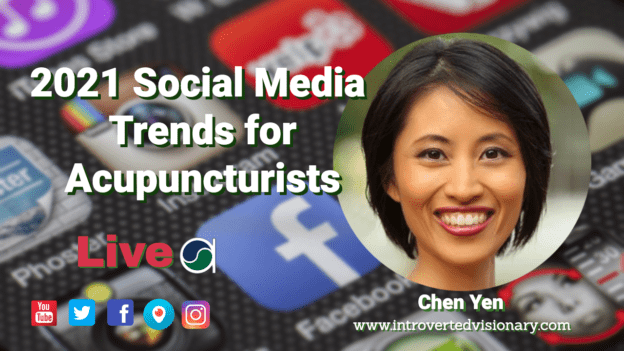
Social Media Trends 2021 for Acupuncturists – Chen Yen


What do I need to do on social media to actually get new patients you been posting? And you’re wondering how come I’m not necessarily getting that many likes or interests and definitely not getting as many new patients from it as I would like.

Click here to download the transcript.

Disclaimer: The following is an actual transcript. We do our best to make sure the transcript is as accurate as possible, however, it may contain spelling or grammatical errors.  Due to the unique language of acupuncture, there will be errors, so we suggest you watch the video while reading the transcript.

Do you have a key?

Do you ever wonder, well, do you ever hear, Oh, I need to be on social media, but I ever wonder, what do I need to do on social media to actually get new patients you been posting? And you’re wondering how come I’m not necessarily getting that many likes or interests and definitely not getting as many new patients from it as I would like. So welcome to my show today on the social media trends this year for acupuncturists that you can learn from so that you can, can see where to spend your time and energy and where not to focus your time and energy. So that way you can focus on, on actually helping patients instead of worrying about where to find them. And I am Chen Yen six and seven figure practice make-over mentor@introvertedvisionary.com. So let me share with you a few of the top trends to pay attention to right now.

So you can decide whether to take advantage of them and whether it makes sense for you. So, one thing is that the attention span of people are, is starting to get shorter and shorter, shorter. I remember seeing a statistic. I was like, how, how the attention span is shorter than a goldfish. Can you imagine that? So things like, um, stories that can interest people are more likely to get attention, for example, um, are you doing Facebook stories or Instagram stories or Snapchats and things like that? So that’s one thing too, to consider the, um, second thing in terms of trend wise is that it’s harder to actually get, um, interest and new patients through organic traffic. And why is this? Because a lot of the popular social media platforms like Facebook and Instagram, and even YouTube is starting to get more this way, but in terms of how do they actually generate revenue it’s through people paying for ads.

So for example, Facebook, back in the day, did you know that back in the day when Facebook was newer, you could pretty much have a business page on there. And pretty much everybody who would like your business page would see your posts, but guess what percentage nowadays actually might see your posts organically? I seen studies as low as it’s like 3.5% of people who actually like your page might actually see your posts. So what does that mean for you? You might spend time posting and then you’re wondering how come, uh, very few people seem to be liking or sharing. Right. Have you noticed that before? And then, um, Instagram is, is a better platform typically right now for organic traffic compared to however guess who bought Instagram, Facebook. So just like how they’ve done with Facebook, it’s typically going to be, I mean, it’s, it’s likely to be where once they get enough interest, then it’s going to turn into even more and more of a pay to play platform.

So, um, there’s also in terms of what can you do to actually get interest on, on social media, if you aren’t planning on paying for ads or even if you are paying for ads, how can you make it more effective? So, um, one thing is to actually incorporate this one hack, which is for example, on Facebook, did you know, like this one hack I’m about to share with you can actually get you 10 times up to 10 times more views from your organic posts than if you just posted a text post, what is it it’s to do a Facebook live? And why is this? Because? So Mark Zuckerberg had come out years ago saying that he wanted to see Facebook take over YouTube for video and video is one of the most, the fastest growing social media platform right now, in terms of sorry, the fastest growing platform among all kinds of platforms and overall online.

Did you know that Cisco said that by, uh, they did a study on this, you know, 82, they were expecting 80. Let’s see it was 80, 82% of all internet traffic by 2021 was expected to be video and a Facebook, uh, high-level executive came out. This, this is a few years back saying, saying that video would be like number one, you know, the main way people would consume content. And, and, um, and then also in, in 2022, um, let, let me just look at this. So 82% of the global and, Oh, sorry, uh, a growing popularity of video internet, did you know that internet users spend six hours and 48 minutes per week watching videos online? This was in 2019, according to limelight. And so what does this mean? See, because how can, uh, especially with what’s happened this past year, more people are interested in being online, but what does that also mean? It means that there’s more noise and more, more people trying to get your attention online if you were just posting.

So how long does it actually take for people to actually get to, to know and trust you? Well, it usually takes more than just posting a few text posts, because how much can you actually know of someone just by, by seeing a few texts posts? Right. So, so then just speed up that trust. And, and there, I remember seeing some studies out about this too. I think it was put out as actually brought up by Forbes that more people are, are feeling like they need to have more trust before they are interested in working with anyone. Right. And so, um, nowadays than, than ever before. So this is something that is super important. And if you want to build that connection, um, it faster then being able to educate, because one of the reasons why people are coming to you is because you are, um, they are not educated about how you can help.

They don’t understand acupuncture, they don’t understand Chinese medicine, you might get excited about it, but people don’t really understand. So if they don’t understand, they’re not going to come in and how can you educate them to understand and be able to speed up that process much faster than just, you know, posting on texts on social media. And so, so video is a great way of doing that, whether it is on Facebook lives, uh, whether it is on, for example, you too, or you could put a video on your website to help explain your services so that people, um, understand it faster as well, and, and see being an acupuncturist and seeing your patients and them and your patients, potential patients deciding whether or not to work with you is it’s such a personal relationship with, with you as the, the acupuncturist. And so not only do people feel like they need to understand that it can work, they also need to understand.

I mean, they also need to feel that sense of connection and resonance with you and your energy. So, so then in terms of, of video, let me just give you a couple of quick tips related to this and, um, let me share with you because what if you actually get nervous and, uh, you don’t really like the idea of, of being in front of people, you know, with a camera kind of staring at you. So I’m gonna share with you a couple strategies that can help you overall. Um, and then I’m also gonna share with you strategies that you could do, even if you don’t want to be on video. And even if you feel like I don’t, I don’t think that’s for me. Uh, Jen, I’ll share with you a different strategy where you could just create one thing and use it over and over and over again, to bring in new patients.

So a couple of quick tips, when, when you do things on video, is this, what if you get nervous? So I, um, I used to feel this super performance anxiety when I, when I would be on, on camera or just speak at all when I was little, my dad, um, I grew up in a family, very strict research scientists. My dad was PhD. Um, first-generation immigrants from Taiwan, super strict, you know, when other kids would be, uh, like, um, Sunday morning, this is when I was around eight years old. When we would get the Sunday paper, I used to always feel a little jealous of other kids. Why? Because I imagined that they would, they would open up the paper or they get to, got to check out the comic strips. And what, what happened to me? I had my, my dad had me do current event talks every Sunday and I dreaded it.

I was terrible at it. And I cried all the time because he was very strict. Like he was, he doesn’t speak like my stylist. He’s very analytical and he critiques and stuff to the point where, where I just felt really inadequate. And because of that, I felt so much performance anxiety whenever, whenever I would speak. And I vowed to myself, I will never speak when I, when I grow up in terms of being in front of a girl or even being on camera. Right. And so, so then, but why did I end up deciding to, to actually speak is because I, um, I love teaching when I was little, I would get these kids. My idea of fun was getting the kids in the neighborhood around and then sitting around me and then I would go get my, get these worksheets from my third grade teacher.

And then I would get, I would have these kids, um, you know, do worksheets and everything. That was my idea of fide back then. It still is for me right now. So in any case, um, it was that desire to educate and teach people that led me to learn how to do this, but I will say that, uh, and the reason I bring this up is that if I can do that go from, from being extremely, having this performance anxiety to where, because I literally, uh, I would get so nervous when I first started speaking, uh, what I grew up that I didn’t, I would say something and then I didn’t know what I was talking about. I felt so, like I was sweating inside and my face turn really red and that I literally didn’t make any sense. It was that embarrassed.

I felt like such a fool. Right? So, um, the reason I bring this up is that if I can do it from the place of feeling like a complete fool and I winded a height under a rug, but then now getting to a place where I’m getting invited to speak nationally and more comfortable with it. I can say that if I can do it, then you could totally do it. And one thing, what’s one hot tip that you could use anywhere you go. If you’re, whether you’re at, you’re being asked to share about your practice and you feel really anxious about, um, whether it’s on video and you’re all of a sudden doing a video, or you’re doing some kind of, uh, talking kind of experience is this, you can just stick your tongue out.

So stick your tongue out,

Like the lion’s breath, right. In, in yoga. And, and that could just totally, totally put you in the present moment. So the heart racing starts coming down and your, your, the thoughts in your head about how you don’t know what you’re talking about comes down, and then you end up being more in a complete present moment. So that’s one hot tip. And I second hot tips. So let’s talk a little bit about, uh, a couple of the, um, Oh, the second hot tip is called the action. So, um, this is something that will help you, regardless of what social media platform you use, regardless of whether you do a text post, or if you do a, um, actually do more of a video, right. And, and by the way, a side tip for you, if you’re just doing a text posts, is that doing stories?

Oh, actually. Okay. I, I lost my train of thought for a moment, but we it’s just a reminder for you that remember doing, if you do a text posts doing like Instagram stories or Facebook stories is, will work better because it shows up, for example, Facebook will show up more on the top and people are more interested in hearing about stories as well. So, um, now, as it comes to call the action, one of the biggest mistakes, a lot of practitioners make is not actually give any kind of call to action that, um, that really leads people to, to book with you, or really leads people to take that next step, whatever that next step might be. And so that’s where you might be posting all these pretty close and, and inspirational messages and, uh, and things, and you, and then you’re, you’re still posting you’re, you’re like, hi, I’m here.

And how come nobody’s nobody’s reaching out? Or, or you might just say, Oh, call, call my clinic. And that’s about it. Right. So is there anything that you could vary that with because sometimes people, um, might not feel quite like they’re ready quite yet that way, or maybe they just want a different way of, of actually connecting with you. So, um, one thing that, that, that, that makes it easy and feels like it’s more comfortable. So for example, one hot seat for you is that you can actually, um, for example, if it’s on, on Facebook or if it’s on Instagram, you’ll, you’ll tweak this just a little bit, but it might be PME to get this assessment done so we can find out dot, dot dot, or you could say PME, if you’re dealing with similar health issues, we could discuss your situation, whether it makes sense for you to get it checked out.

Right? So notice that actually helps people think, Oh, maybe I need you to do something about this health issue or, or, or maybe I need to get, get it checked out. So it’s, it’s more of a, kind of, of a call to action that will actually interest people in, in booking with you. And then, um, if you want, if you don’t want people to PMU, you could ask them to click on a link to schedule an appointment, but how can you actually say that, right? In terms of, of whether it’s in a text post, or whether you’re saying it, um, video wise or verbally. So click on this link and book an appointment where we will do a such and such, and I’ve set aside a few spots for you to be able to get in with me week if you’re watching right now. So why is this really effective?

Because notice it gives a little more of a sense of an urgency, because if people feel like they could just do it anytime they might not do it right now, but if you’re actually letting them know that, you know, you’ve set aside spots this week for them, then if they’re watching right now and then to actually take action on that link, then it there’ll be more likely to, to actually do it. And I actually decided to make it easier for you, because these are just, just a couple of sample scripts from our template. That is the number one thing to supercharge, getting new patients from any social media platform, whether it’s a text post or whether it is a, um, a video kind of a post. So you can click on the link below that will be popping in, in the chat for you to actually access it.

And I’ll just give it to you also right now. So it’s introverted visionary.com forward slash C T a Scripps. So introverted, visionary.com forward slash C T a scripts. And then you can click on the link below in the chat and then, um, go there and download. You’re going to get the template in your inbox right away. Um, so go there right now, also, you know, by the way, for those of you who might feel like you’re, you’re in a place where you’re at your, if you’re feeling like you’re being, you’re frustrated with not getting as many new patients as you would like, or, and you just know you’re capable of so much more because you’ve had a dip in your income and also in your practice in terms of patient flow and feel free to also at that link, you’ll have an opportunity to book in for a free double my practice strategy session as well, to see what actually might be the most effective way to grow your practice faster this year, and actually have some help with it to grow, grow faster.

So in terms of, um, another hot tip that I wanted to give you about, about how can you be B uh, reaching where people would actually getting new patients on social media more effectively, for example, through, through video. And then I’m going to wrap up by sharing one hot seat that you can use if you decide, Oh, I don’t know about, you know, having to show up for social media all the time and creating all this content, right? Like I’m gonna share, share with you a hack where you could just create one thing and have it, use it, use it over and over again, to bring in new patients into the practice that our clients are using to do, which, um, when, when you tackle it, it’s like, it’s like it can end up even being on autopilot, which is pretty cool. So in terms of, um, the second, I mean, the, the tip other tip I was going to share with you about, about being more successful on video is that, um, let’s talk about a couple of the pros and cons of some of the platforms.

For example, a Facebook live is nice because you could literally just go live when you, when you feel like it. And, um, and then in terms of, or if you feel like it, right. And the, the thing about, about live, like I mentioned earlier, is that it, it gets sent out to, to up to 10 times more people than if you were to do a text post. Right. But the, um, the disadvantage of it is that if there’s not as much interest in that Facebook live early on in terms of, of for example, right, when you go live and in that timeframe, or at least earlier on within a day or two, then you might not get as much traction with your video, right? So that is a drawback with, with Facebook lives. Um, now in terms of, uh, length of a video, if you do do Facebook lives, it’s great to do over 10 minutes.

And some people say, well, why that long? Why? Because, because people are, um, sometimes they are, they’re coming onto Facebook at different times, but if you just do a video for like 30 seconds, then pretty much it didn’t give, give different people enough time to even hop on at all. And it’s already over. So for Facebook live to get more traction, ideally over 10 minutes is really good. Now another platform that you can use, and actually we’ve had, uh, we’ve had clients who just create one Facebook live, do it really well, and then run ads to it and bring new patients in the door. Right? So you just need to know what to say. That actually brings a new patients, and then you don’t only have to create what you don’t have to create a lot. Um, the other, um, ask the other possibility in terms of, of social media platform, um, for doing video to actually bring in new patients is YouTube.

So why is YouTube really great as a, to consider? So YouTube is people are actually going there to search for answers. They’re not just kind of surfing and then, Oh, they happen to see your Facebook live, right? They they’re actually looking for answers to their problems. So, and more people are actually starting to watch more and more YouTube videos. Um, just think about yourself. Do you ever watch YouTube videos too? Well, even if you don’t other people do as well. So, um, and the nice part about YouTube is that it’s like, it’s essentially a search engine. And, and then did you notice that if you, if you type things into Google, YouTube videos actually end up coming up, but not other kinds of videos come up as, as readily. I mean, Facebook lives do come up also. I’ve seen it, but it’s, but what do you, what do they tend to prefer as putting on top, like the first page?

Usually for people it’s usually YouTube videos. So what are some hot tips about YouTube videos? If you wonder, well, what am I going to actually say, say on YouTube questions and answers like frequently asked kinds of questions are good kinds of questions to, to put up on YouTube. And then, um, the big, and then another hot tip is you could do a video. That’s more about, you know, uh, how to, uh, how to find a good acupuncture, how to find a good acupuncturist, or you could, you could mention how to find a good, um, where to find a good acupuncturist and then put your city and state where you’re located in, because then, then that can also help with the search algorithms to actually help people find you locally. So those are a couple of, of hot tips in terms of length of a video for, for YouTube. Is that it also, it tends to build over time. Like if you, it tends to work better, if there’s a cumulative effect of your videos, if you do more videos versus just like a couple of them, right? Like if you, if you do videos at least once a week, um, over the course of a year, I promise you that you’re going to start getting more organic traffic. It’s definitely more of a long game than a short game. Right.

So Facebook live, it could be more of a short game if you do it well and do it early and do it, just do just one, like do one really well. And then do, you know, run, run ads to it. So now let’s wrap up with what, what is, what can you actually do if you’re feeling like, Oh my gosh, that’s just so not me where I feel like I have to create content all the time. It’s like, I don’t want to feel like I have to create, create new content all the time. I don’t have time for that. I just want to see patients. Um, so what can you do? This is what our clients actually doing. That’s, shortcutting all, this is actually creating just one webinar that converts and then doing it over and over and over again in front of different audiences.

So you could either do it in front of other audiences, or you could even get it automated and then have it bring patients in with just one webinar that, that works great, because then you don’t have to come up with new topic or content or anything like that. You literally just have to create one, that’s it, not 10, not 20, not spend time on social media all the time when you don’t have time, but literally just one webinar that converts. And what does that mean by one webinar that converts, it means that because there’s a difference between just educating people on, on what you have to offer, versus being able to also inspire new patients to come from it. It’s a very different skillset. How can you do both? How can you not only educate, but also inspire new patients come from it. So that’s something that I’m covering in an upcoming free training that I’m doing.

So, um, feel free to, if you have an interest in it, feel free to just type in the chat about it, and then that you’re interested and then I’ll, um, make sure to, to reply to you and send you the link to register for that. So, um, it’s really excited for you and about shortcutting things so that you aren’t feeling like you have to spend all the time on social media when you either don’t already have time for it. Or you’re like me more of introvert where, you know, it’s not like we always want to be displaying or our public lives. I mean, despite this way, everything about our private lives all the time, every single day, like 5 million posted a week or something, you know, in terms of like, Oh, I need to post like twice a day or three times a day, it just feels exhausting.

Right? So let’s simplify things have just few things like, or just even one, like I mentioned, right. Work well for you. So you can focus on seeing patients and doing what you enjoy the most. So with that, I look forward to, uh, Oh, and if you want the templates for the, um, free scripts that can help you with getting more new patients from social media, any social media platform. And the best part is that you can actually use these templates, like literally copy and paste. You can use this in all kinds of situations, even if you’re never on social media, whether it’s on your website, that you actually have an in a way to, to lead interested people into booking an appointment with you. Like what, what could you say that would get them more interested rather than, Oh yeah, just call it car office.

Right? Uh, or if you’re talking to people in, um, you can incorporate some of these things as well. So, so it’s, it’s going to be useful for you across the board and, and you don’t even have to be on social media, or if you want to be on social media, then it’s certainly going to help you instead of feeling like you’re just spending all this time posting. So, but nothing much else is happening for, from it. So go ahead and, and go, go to the link. And then I look forward to look forward to, to, um, you getting the downloads to help you right now, and then also getting you insight into, um, your practice and certainly happy to see if and how we can help you grow faster this year. So, um, yeah. Let’s have your practice take off this year.

Please subscribe to our YouTube Channel (http://www.youtube.com/c/Acupuncturecouncil )

Follow us on
Instagram (https://www.instagram.com/acupuncturecouncil/),

LinkedIn (https://www.linkedin.com/company/american-acupuncture-council-information-network/)

Periscope (https://www.pscp.tv/TopAcupuncture).

Twitter (https://twitter.com/TopAcupuncture)

If you have any questions about today’s show or want to know why the American Acupuncture Council is your best choice for malpractice insurance, call us at (800) 838-0383. or find out just how much you can save with AAC by visiting: https://staging.acupuncturecouncil.com/acupuncture-malpractice-quick-quote/.


Jeffrey Grossman 02172021 Thumb

Reset Your Practice for 2021 – Jeffrey Grossman


And today I want to talk with you about a few things that are going to be helped. Put patients on your treatment table. When we were in acupuncture school, many of us were not really taught, um, how we can build our business and how we can grow a practice.

Click here to download the transcript.

Disclaimer: The following is an actual transcript. We do our best to make sure the transcript is as accurate as possible, however, it may contain spelling or grammatical errors.  Due to the unique language of acupuncture, there will be errors, so we suggest you watch the video while reading the transcript.

Hi there and thank you for this opportunity to share some business and marketing insights with you. Thank you. The American Acupuncture Council for inviting me back to help talk about building your practice in this day and age. And today I want to talk with you about a few things that are going to be helped. Put patients on your treatment table. When we were in acupuncture school, many of us were not really taught, um, how we can build our business and how we can grow a practice. And we seldom received the foundations of building a successful practice and how we can keep patients coming in. You can have all the know-how in the world, but if you don’t know how to consistently attract new patients and how to systematically keep your patients in care, then all the herbs, the points, the prescription, the tongue diagnosis, all that know-how, won’t be much help.

So this is the reason why I’m excited to host this web class about how to reset your practice for 2021. What’s working now to put more patients on your table. So welcome for those of you that don’t know me. My name is Jeffrey Grossman and I’m the founder and owner of Acupuncture Media Works, Accu Perfect Websites and Accu downloads. And I started my practice back in 1998 and had a lot of trials and tribulations and many struggles. And I basically had no business or any type of marketing savvy. And I had to start from scratch like many of you guys listening today. So I noticed that when I was in practice, I had a problem knowing how to market my practice and properly communicate to my patients, because all I wanted to do was to treat people and not to market to them. But the struggle that I faced took me down the path to create companies that I run today.

And it’s a longer story. And I’ll reserve that for another time. So what I want to do is to remind you that we, as acupuncturists are an incredible resource where natural healers, we know how to get people to feel balanced, to feel healthy. We know how to help people using safe and natural methods. And we change lives, right? We help, um, help w we people want our services, right? And they need our services. But a lot of times people don’t even know that we exist. Let alone know that we can treat this vast array of conditions that we can work with. And I want to help you change that. I want to help you get more people on your table. And that’s what these talks are about. They are here to help you be seen. They’re here to help you be heard and ultimately to bring more people in your practice so you can make more money and help more people.

And I want to remind you that you’re never alone. I’m here for you. And at the end of today’s talk, if you feel like you need help getting set up or becoming focused, or if you just need a little motivation to move forward, please feel free to reach out. And I will share some information with you on how to do that. So I’m here to help you give you a fresh perspective, 2020, and COVID changed how the public thinks about and looks about looks for health solutions. There are more opportunities now than ever to help more people, because you have to understand what people are looking for now and the best way to present it. And I want you to have the latest updates and research. So I created a detailed report for what is working now and any recommendations for you, how you can make it work for your practice and get more people on your treatment table.

It’s a 15 page resource, and you’ll find this information invaluable. And I’ll share that link for you at today’s training, uh, at the end of today’s training. So you can actually download that right away. So I want you to use, today’s talk. I want you to use the ebook that I’m gonna share with you as a resource to reset your practice, because just one or two of the simple changes that you pull from the top or from the ebook can make all the difference in your practice. Okay? So let’s jump right in content marketing. What is it? And why should you care? So content marketing is a proven business strategy that brings you more ideal patients without the expense of advertising, but helps you build trust and establish personal connections with patients even before they come into your practice with content marketing, you’re providing value for patients at no cost to them in exchange for their time for reading your content.

And the more time they spend with your content, the more that they will begin to know, like, and trust you. So content marketing amplifies your credibility, your 30, and the desire ability for people to choose you to be their healer. It is a marketing tool for patient engagement, retention, branding, and professional reputation building. And it gives your community an in-depth perspective of how you can help transform their lives for the better these days. The vast majority of Americans seek health information online. Plus we know often people often times find and choose practitioners online. The first place they go to is to Google you and your treatment modalities. And that means if you’re producing valuable medical content online, you’re much more likely to garner attention and authority for you and your practice and to get new patients. So since COVID the average Americans online content consumption has doubled to almost seven hours a day.

And there’s a consumer survey that found that most respondents cited, that they were looking online for personal health and health for friends and family members as their biggest concerns. And they’re looking for answers about their health, how to stay healthy, professional advice on living with a specific ailment and how you may have helped others with their particular problem. So content can take many forms, and here’s what you can offer. You can offer blogs using written articles and patient stories and videos, patient education, videos on your website and on your social media channels, email newsletters, and patient help sheets e-books and PDF reports, uh, live events and trainings on any health condition. So you need content marketing because if you’re a healer, you’re not a sales precedent and the content does the selling for you, right? So here’s a few content strategy that you can start doing today, make sure that your content is compelling enough to people want to share it, right?

So, you know, as you know, your prospects can get a second opinion or forward it to friends. Another thing to do is to post the latest industry news. People expect you to know about medical breakthroughs and how acupuncture can help with this, or how acupuncture can help with that condition. And the other thing that’s really important to do is be niche specific, okay. Have separate content for whatever problems that you deal with most and that your patients are in particular are looking out for. Okay. So I hope that makes sense. Um, and here’s a question that I received a while back from one of my coaching students, and you may have the same question as well. So the question is I’m an acupuncturist, I’m a trained healer, and I’m not a salesman. What is the best way to find new patients to get patients to commit to a full treatment plan?

And that my friends is the million dollar question, right? And there are a million answers to that, but here’s one answer use something that everyone understands and what that is just connecting with your patients through story. I think that you, um, most of you would probably agree that building trust with your patients is paramount in, uh, in with them accepting your care and staying with you for the long-term. And, and you have to build empathy. You have to build trust. You have to build likeability and one sure. Fire way to do that. If I telling stories and the stories that I’m talking about are success stories about how you help people and other patients with similar problems. And when you do this, the sales will take care of themselves. People will read and resonate with a particular patient success story and practically sell themselves on coming to see you.

Nothing is more powerful, right? Patient success stories are the most effective and least expensive ways to find new patients. And they get patients to accept treatment plans. There’s a native American proverb that goes something like this. Tell me the facts and I’ll learn, tell me the truth and I’ll believe, but tell me a story and it will live in my heart forever. So the number one questions that your prospects want to know is, can you help me with my problem? That’s it, it really is that simple. They don’t need a medical explanation. They’re not looking for a TCM diagnosis. They’re not looking for you to convince them that acupuncture helps. They need something simple to understand and that they can relate to. And storytelling helps people learn because stories are easy to remember. Um, so there’s an organizational psychologist. Her name is peg new Hauser, and she found that learning, um, which stems from a well-told story is remembered more accurately for far longer than learning derived facts and figures and Jerome Bruner’s, who is a research psychologist also suggested that facts are 20 times more likely to be remembered if they’re part of a story.

So stories boost our feelings of trust, compassion, and empathy, and they connect you with your patients on a whole different level. So when we hear facts, it activates the data processing centers in our brains. But when we hear stories activates a sensory centers in our brains, so here are some things that you could do, right? So have at least one patient success story for every major element that you treat in your practice, give hard copies of those stories to patients, post them in your clinic, post them on your website and use electronic versions of those on social media, blogs, and emails. And also, the other thing that’s really important to do is have a story about why you became an acupuncturist. What was your journey to be the healer that you are today? Okay. And I have a rhetorical question for you. What is the number one way your prospects meet and judge you okay.

Online, especially through your mobile device. So my question to you is your website and content mobile ready. We’re obsessed with being connected with the world, through our mobile phones, many Americans check their mobile devices up to 96 times a day. And that’s once every 10 minutes. And that’s a 20% increase in the last few years. And here’s another disturbing fact that 66% of all Americans check their phones 160 times a day. We are obsessed. It’s really true. How many times do you check your mobile mobile device in a day? So you might be saying to yourself, Jeffrey, I get it. I check my mobile phone a lot of times, but how does this affect my acupuncture practice? Well, the number one, your website must be mobile friendly in this day and age. So given how many people own a smartphone and how often people use their phone, um, to access the internet, it’s really good for business to have a mobile responsive website.

And when we are done here today, um, um, take a look at your website on your mobile device and ask three or four friends to do the same. Ask these questions. What’s how’s it working? What happens when you scroll up and down on the homepage? Is it easy to find your contact information is easy to clip a, cook, a button and make an appointment? Can you find your social media links? Can you schedule or call with one click if I’m ready for an appointment, but what I’ll learn if I’m not ready for an appointment, but I want to learn more about your success in helping patients. Is there good content that is easy for me to find? Do you have content or proof on your blog or webpage that tells me why acupuncture is a good clinical modality. Excuse me. Can I download any digital reports, any newsletters, any patient help sheets, anything that can help me further my knowledge or experience about acupuncture?

Is there a way for people to join your mailing list? Is it easy to find reviews that you have? Is there video, okay. There’s no escaping it. We live in a digital world and both your website and your content must fit into that world. Okay. Or you may be losing patients and referrals every day. Make sense, check your site, make sure it’s 100, a hundred percent mobile ready. If you need a second opinion, feel free to request a free website evaluation. I’ll give you a link towards the end of today’s training, where you can access that free website evaluation. All right. And finally, the number one way to positively positively influence prospects to become patients is with video. I know many of you are cringing with the idea of actually producing videos, but video continues to be one of the most effective elements in a patient digital marketing strategies that we roll into 2021.

And with good reason, because as a visual species, humans find videos, more engaging, more memorable, and more popular than any type of content out there. So video as a means of storytelling, marketing and content is no longer just a nice option, right? It’s a necessity. If you want to increase conversion and exposure, incorporating a video marketing strategy is the only way to go from. I understand that viewers retain 95% of a message when it’s in a video versus 10%, when they’re reading it in text and mobile consumption this year about watching videos on their phones has gone up 100% this year, over last year. And by 2022 videos are going to be more than 82% of what drives traffic to people’s websites. Okay. And if that wasn’t enough, a website is 53 times higher to be ranked on the front page of Google. If it includes a video that’s huge.

When you Google acupuncture in your state, in your zip code, you need to be on that front page. Having video will increase that by 53 times and that’s massive. Okay. So how does this affect your practice? Video is the fastest and easiest way to establish credibility and connection and a 30 and reputation healer. And you might be wondering, you know, do I have to do the videos? And the answer is no, you could have, um, you could use done for you videos. You can outsource your video. You can do audio only videos on top of a PowerPoint, um, and the types of videos that work, uh, um, you know, you also might be wondering what types of videos work best? Well, the answer is that any video is better than no video. So with good lighting using your phone is a great way to do a video.

And the great news is that most videos on Facebook today do not have a video. It’s all audio with images, right? And slides that are, that are rolling across the screen. So it’s not actually you or a person on there. It’s just images. And that’s really easy stuff to create. So using videos for your marketing can take many forms. You could use it, um, as explainer videos or Intelihealth on your website or presentations on educational events or tutorials on how to use these points for these particular conditions or cooked foods for these particular elements or customer testimonials or interviews or product or service videos, or even a live video like we’re doing today. So imagine having one to two minute videos on your social media and on your website, about a few key conditions that you deal with that you can use over and over and over again, to educate patients on the effectiveness of your services.

That’s huge. Okay. You can talk about back pain and allergies and digestive problems and stress and anxiety. These are all topics that you would use over and over again and make sure well, practice more memorable. So dope, intimidated. Your video does not have to be perfect. It just has be honest and sincere. So my hope is that you received some answers and inspiration and insight for what you needed today. And I want to encourage you. If you need to reevaluate your plans and to make actual strategies feel free to reach out to me, I would love to give you a fresh perspective. I, if you need help reach out and let’s just start with a free 15 minute mentoring and discovery call. And all you have to do is shoot me an email at Jeffrey, J E F F R E Y at acupuncture, immediate works.com and I’ll get back to you as soon as possible.

So again, J E F F R E Y at acupuncture, media works.com and I’ll get back to you as soon as possible. You are an incredible resource. You change lives every day, day in and out, and people need you. Okay. So, um, I promise that I want to share with you, um, go download this ebook. This is resetting your practice for 2021. What’s working now to get more patients on your table. I go through a bunch of different topics that really show you everything that you could be doing now in this year to re set your practice, I have to do is go to Accu media dot U S um, slash reset, 2021. Again, Accu media dot U S slash reset 2021. And you’ll be able to access this 15 page ebook that you could use as a resource for this year and future years coming down the line, too.

And for those of you that are interested in getting the website evaluation, um, all you have to do is go visit this URL and, um, request, uh, fill it out, request an eval. So that URL for you are your evaluations, acu.pw/p E P hyphen evil. Okay, so again, a C U dot P w slash P E P hyphen evil that’s for that free evaluation, you guys are awesome. You change lives every time you put a needle in somebody you’re shifting people for the positive. This world needs, you reach out. If you need some support, I’m here for you. I got your back and thanks again for having me, uh, to share some more insights and more wisdom with the AAC on this call today. Take care, stay beautiful. Talk soon. Bye. Bye

Please subscribe to our YouTube Channel (http://www.youtube.com/c/Acupuncturecouncil )

Follow us on
Instagram (https://www.instagram.com/acupuncturecouncil/),

LinkedIn (https://www.linkedin.com/company/american-acupuncture-council-information-network/)

Periscope (https://www.pscp.tv/TopAcupuncture).

Twitter (https://twitter.com/TopAcupuncture)

If you have any questions about today’s show or want to know why the American Acupuncture Council is your best choice for malpractice insurance, call us at (800) 838-0383. or find out just how much you can save with AAC by visiting: https://staging.acupuncturecouncil.com/acupuncture-malpractice-quick-quote/.


Sam Collins for AAC02102021

Do Not Risk Loss of Payment! – AAC Infonetwork


I want to talk to you a little bit about what’s been going on and I’m sure many of you have noticed on what’s called the medically unlikely edits or the limits to care. And I’m sure some of you have seen it.

Click here to download the transcript.

Disclaimer: The following is an actual transcript. We do our best to make sure the transcript is as accurate as possible, however, it may contain spelling or grammatical errors.  Due to the unique language of acupuncture, there will be errors, so we suggest you watch the video while reading the transcript.

Hi everyone. This is Samuel Collins, the coding and billing expert for acupuncture and the American Acupuncture Council. But most importantly, the coding and billing expert for you. While I do have roles with the world health organization, United healthcare and Optum health. My ultimate goal is for the practitioners just as American Acupuncture Council is, and this is another addition to make sure that you’re getting things right, understanding what’s going on, promoting your practice. And I do the billing side I’m with the American Acupuncture Council Network, which means we’re part of the malpractice side that really helps you with the coding, the billing, the education and seminars we’re here today. I want to talk to you a little bit about what’s been going on and I’m sure many of you have noticed on what’s called the medically unlikely edits or the limits to care. And I’m sure some of you have seen it.

Hey, why are they denying? In fact, we’re running into some areas in New York where they’re paying only for one, which actually shouldn’t be what’s there others paying for two or three? Well, what is correct? What do we have to make sure we’re doing to make sure we are getting paid fully, but also making sure if they don’t pay us, what do we do about it? And where does it come from? So let’s go to the slide. So you can start to take a look at what’s happening. So in these slides, you’ll notice I have here. It says acupuncture, medically unlikely edits. MUE is what they term it. And what that deals with is the maximum number of services that can be done per day. And that’s not just for acupuncture acts. So that includes physical medicine and other services. And also want to hit a little bit on to medical necessity, cause that’s really kind of where this dovetails.

So if you take a look here and I know this is smallest, let me enlarge this a little bit for you. You’ll notice here. This is from empire blue, cross blue shield. And notice what they’re bringing to this doctorate says the review indicated your average utilization of acupuncture sessions of one hour or greater personal one-on-one contact with a patient is higher than expected. So that means you’re doing an hour more so than everyone else. They’re not saying necessarily it’s wrong, but because it’s above average, they’re trying to figure out why. So notice in the next paragraph I highlighted it says, we are aware of many factors that may impact the coding of your acupuncture services. Our goal is to assist providers. So they’re not necessarily trying to be punitive, but trying to figure out why are you doing more is for too much, not necessarily, if you talk to most acupuncturist and I’ve taught seminars now for 23 years.

And I would say the average acupuncture is probably does between two and three sets regularly. So four is not unheard of, but it’s not typical, but I would say the average is two or three. So when it goes to four on a very regular basis, there could be some issues. In fact, this is probably where the medically unlikely edits come from. Well, let’s talk about it from a medical necessity standpoint, if you’re going to do ortho, that’s why that’s part of what we have to determine. So I’m going to give you what medical necessity is determined by the company, American specialty health, which I’m sure a lot of you have a tendency to. There’s kind of a love, hate relationship with them. I don’t think the hate is so much from the protocols is just, I wish they paid more, but ultimately I do think they make a nice protocol for what they determine as medical necessity.

So always understand when you’re going to do four sets or more, the Y has got to be based on the diagnosis. The severity of the problem. Now the difficulty with diagnosis is often the diagnosis for acupuncture is simply just pain. So how does that really demonstrate severity unless you’re coding like a lumbar disc. It really doesn’t. So remember your chart notes are going to be an important factor. The past medical history of the history, including is it traumatic? Is it repetitive? Is it acute? In other words, severity, what’s also going to be part of that though, is comorbid factors. Things that can complicate the patient, things that are underlying patients, very overweight patient has a very poor diet. Patient is diabetic. While you may not be treating those things directly, could they affect how the patient responds? Meaning why did I do four sets, other things?

They look at our range of motion, palpatory findings, orthopedic testing, neurologic testing, but they also do look at the tongue and pulse notice all these say quantify. Cause we want to know, well, if it’s severe, these things would all be more severe as evidence and quantified do. Remember they will look at the functional limitation, how the patient is getting better or not better just stating the patient feels better is not going to be enough. We have to be, how is it better? What can they do now that they couldn’t do before? And there’s always going to be goals for it. So ultimately think of medical necessity as kind of looking at how you would see a patient overall in their improvement, not just paying level. And there’s something to think of. This is from a company called health partners and I liked the way they put together the factors that they look at for medical necessity, things they put in mind.

Notice the first thing, gender fatigue, lack of energy, notice mobility, agility, strength, sleep issues, not falling asleep. You know, not waking up feeling rested or just the decreased quality of life. Those are factors that if you quantify given issue of potential severity beyond just stating pain, now I bring this up because of course, if you’re going to do acupuncture, we know that there’s four codes and you know that the four codes are there to allow us to build additional services when necessary. Some patients may get one, two, three, or four, but what’s important to remember is that acupuncture requires two things for billing purposes, for billing purposes, you’ll notice the acupuncture code says one or more needles, which means you have to insert a needle. But then it also says initial 15 minutes and each subsequent code says the same thing. It says reinsertion, which really should be additional insertion and 15 minutes.

So the codes are really going to be based on inserting needles and spending time. So if you’re telling me that you’ve done four sets, that means you actually have to be in the room with the patient for the full fifth, 60 minutes or close to it and do four distinct insertions one in the first 15, second, 15 and so on, which is not something that you wouldn’t do, but you have to document it and let’s remember, and see here. It says how the 15 minute session is defined. Remember, as soon as you walk in the room with the patient, say, Hey, how are you feeling today? The time starts, all the things you do. That’s part of your acupuncture, including review of history. Hand-washing choosing points. All of that counts. What’s important is to document it because you’re doing multiple sets. The one issue we’ve run in through the American acupuncture council is offices.

Aren’t documenting that well. So that becomes a problem. Well, it’s also a problem just based on number. So let’s take a look here and I’ll show you. This is an example of a soap note for acupuncture that has documented three sets. And I want you to see here, and I don’t want you to really comment about necessity. Just show how it works. Notice each set is identified set one, two and three. Notice the points are identified in addition, the face-to-face time from and two, or it could be minutes and then retention. So clearly when you see here, you’re noticing there is clearly three sets because there’s three separate insertions as documented notice the face-to-face time equals hitting the eight minute rule, if you will. And then it shows the separate retention. Remember don’t count retention towards the total time. So if you’re doing multiple sets, we have to make sure that we’re documenting all those factors. Because if we’re doing two, three or four, it still has to be shown. Did we do it? Well, this brings me to this kind of medically unlikely edits or what CPT does is they do edits for all types of codes. And there’s two types of edits that are common.

The first one is called the correct coding initiative at it. Yeah,

That is one that the correct coding initiative edit is one that there we go is used for coding, such for chiropractors, like a chiropractor. When they Do manipulation, there are codes that are part of manipulation That have to be separately coded. So by example, they Have to not code nine 71, four zero With manipulation. This I apologize. My phone is,

But you have someone who keeps trying to call through. So I apologize That these coding initiatives, goodness, here we go. And my apologies for this, I Cannot seem to get someone to understand what a message says. I’m not available. That I’m not Nonetheless, they kept trying let’s do this.

Okay. My falsies bear with me, correct coding initiatives. Just tell me what codes can and cannot be billed together. Okay? So for chiropractors, that’s common for record Puncture. It’s not, but we’re acupuncture does help.

Some common issues. Common issues for acupuncturists are under something called the Medically unlikely edits.

Medically unlikely deal with codes that can not be coded for an excess amount of units. Now you may think, what does that mean? This is where it comes in. You’ve noticed where they’re saying acupuncture can only be billed for say three sets or two sets depending on who you’re dealing with. That’s what they’re referring to. So what are you Louise there for any CPT code that the maximum amount of services that will be provided under one visit or a date of service, this applies to all types of codes. So by example, to show you where it’s also applies, it’s not just for acupuncture. Things like modalities have one, some have four. If it’s an attempt to Allie, when it’s timed such as notice the here it’s just the unattended services or one notice the codes for electric STEM allow for, but then ultrasound is only two. And again, that’s just based on these edits that say that’s the maximum per visit we’ll procedures. Get a little bit different. Notice for exercise nine, seven one one zero. It is six

For neuromuscular education. It is, it is for

Because it’s a little different service than exercise. So they’re limiting to four notice massage only four. Now you may say who comes up with these it’s part of the coding committees edits that do such. So make sure that you’re using the correct codes and amount of units. Now I doubt many of you go well above that notice manual therapy says six. So these are what they’re going to indicate as the amount that you can do maximum per day. So if you did more than six, they’re going to say no. Well, where does our services fit? You can see here therapeutic activities, by the way, I chose these codes here on the right side specifically because that’s the limits for those codes. But also those are the codes. If you’re billing VA patients, those are the services that the VA will automatically authorize for acupuncture providers.

But here’s what we’re running into. As I mentioned, the VA, take a look here. Here’s what’s called the standard episode of care SEOC and you’ll notice it says for acupuncture 12 visits, but notice it says a maximum of one additional unit of acupuncture with, or without electric STEM when reinsertion of needles. So under this one, and this is an Optum health, when they’re saying, Hey, you can only do two. And I’m sure many of you have run into that. Whereas before you could do four or five, it’s just saying they’re allowing only two. So that’s OptumHealth now again, that goes against what the normal edit says, because notice this one from tri West and you’ll see, this is really just from December. I know you can’t see the date, but you’ll notice here. It says the maximum unit

Acupuncture. And you’ll notice the map

Maximum units for acupuncture indicate nine, seven, eight one zero. The first set is one unit, but then the additional sets notice are two. So notice they’re indicating under this correct coding under the many medically unlikely edits. The limit is three, meaning one initial set and up to two additional sets. Now to give you a little history of that, that hasn’t always been the case. I want you to see here. This comes directly from United healthcare, and this is dated notice 2018 through 19. And it was different. It says the medically unlikely edits indicated that you can do one initial set, but then three additional sets of manual. And then electoral was one and two only. So three total. So at that time it was four, but let’s fast forward to this year. You’ll notice again, this is the health care notice from 2020. And now it’s indicating that according to this edit notice here, it says the policy enforces the code description for acupuncture services, which are to be reported based on 15 minute time increments, personal face-to-face time.

And it’s indicating in accordance here nine, seven, eight one zero is one. By the way, one makes sense. You can only have one initial set, but then notice instead of it being three, it is now two. So that’s also two here. So what is the new rule for medically unlikely edits for acupuncture is three. Now what if you say Sam, I need to do more now. Medically unlikely doesn’t mean an absolute, could you defend doing more and request more? Sure, but now you’d have to show the medical necessity of what did my fourth set do that wasn’t completed within the first three sets? I think there’s some things that can be disputed there, particularly if you’re doing front and backside sets multiple diagnosis, but again, you’d have to kind of come up with what is the fourth set doing that the others aren’t simple answer.

If you build three, you should not have much problem, but we’re seeing issues here. This is a United healthcare, and you’ll notice on this visit, they’re paying the one initial set they’re allowing it, but then notice this one they’ve taken out. It used this code in three, six, two. So what does [inaudible] mean? Well, let’s look at this full EOB notice in three, six, two says the number of days or units exceeds our acceptable maximum. So let’s take a look at what there are allowing notice on this one, visit on 10 27, they’re allowing the initial set, they’re paying the full amount or allowing it, but then on the additional sets they allow the nine seven eight one one four one and nine, seven eight, um, one, one again, but then not allowing the third set or the third or four set, which would be the nine, seven eight one three.

Now, even this one here, what I’m trying to point out is that they’re beginning to say, Hey, we’re not going to pay more than three if you bill such. So you want to make sure that if you’re billing more than three chances are with some payers. And I will tell you anthems Cigna, Aetna, as well as United have begun to really follow this as well as the VA. So what do we need to do to make sure we’re getting paid properly is to make sure we’re number one, sticking within the three. And if we’re going to go more than three, we’re going to have to send explanation, but here’s one of the problems we’ve run into. There are some plans, even like this one that they’re not paying that third. So when that happens, what’s going on. Here’s another one and this is an empire or excuse me, a Cigna, excuse me.

And I’m just going to blow this up so you can see here. It indicates the number of units built for this service exceeds the limit for the day. Now, if you look at this bill though, they’re allowing the first set and the second set, but not allowing the third. So then wait a minute. Why are they not allowing that amount or excuse me, they are allowing that amount. I want to share this one is doing three. So there’s one initial one, follow one follow. But then the fourth is saying no. And that comes from those edits. If you were billing more than three, you’re very likely to be denied for the fourth. Some payers may allow, but most are going to follow these edits. But what if you’re running into an issue with it where you’ve billed only three and they’ve denied it, then I’m going to push back.

Here’s a letter. And you know, you’re welcome to kind of see how it does. It just brings up the points of I’ve recently received a claim for payment that was denied due to the medically unlikely edits. And you’re going to bring up the medically unlikely edits indicate that there should be three. So if they’re only paying for two, this is the response. You have to say, the medically unlikely edits indicate three, unless you have a contract otherwise. And I’ve seen a lot of plans doing this. And I think what’s occurred is a lot of them have misinterpreted the edits and somehow are allowing to, so you want to make a little bit of a pushback. In addition, for those of you who are billing Optum, when you’re billing, Optum, meaning VA, and they’re only allowing two, here’s my concern. How is the Western part of the country try West allowing three and the Eastern part of the country only allowing two yet.

It’s the same, the same benefit. And of course it’s because Optum has misinterpreted it and there should be three. So this is a little bit of the pushback. Is this something I’m very excited about? No, I don’t like to see any limitations, but we have to know what we’re working with now. The good news is three sets is pretty typical that most aren’t going even that high. In fact, I’ve taught seminars now for 20 years. And I would say on average, when I asked the room, how many people are doing four sets, it’s a very minor percentage. But when I ask who’s doing two or three, it’s most so again, if you’re sticking within two or three, this may not make much of an effect, but if you’re doing four, a Canon may want to rethink of what’s going on. Now you can see, this is what I’m here to do is help you understand it, help you fight back with it.

And I’m going to say, give me a chance to help you do that. The American Acupuncture Council is your resource for these courses, but also I’m a resource. Allow me to be part of your office, take your phone out, take your camera and just put it over that code. And what that’s going to do is give you an opportunity to hire me for your office, but we’re going to give you the first 30 days for no charge. Give me a trial. Let me help you with a claim. Let me help you show what’s going on. Realize these rules and codes. We have fight back letters and all types of things that we can do that I can aid you and making sure you’re being properly paid and not having something where your claims are constantly being denied. Think of how many times you’ve had denials for ENM codes or other services that were not correct.

What do you do about it? I’m going to give you the rules and the laws, not opinions to fix it. The American Acupuncture Council is your resource. Allow me to be part of your office. You can join for as little as $25 a month, or you can do it with seminars. So I’m going to say, take a look at the services we offer I’ll guarantee you’ll get help. In addition, take a look on our site when get there. I’ve got videos and things of other things that we have done and looking at our news section for updates, we are here to help and I want to make sure today you understand what do I deal with and how do I deal with medically unlikely edits? What do they mean if I can do three great, but what if they’re cutting me less than three? But what if I do four?

How do I fight back for that? So that’s what we’re here to do is to help you for that. So I’m going to wish you well and say, stay tuned next week. The, um, host will be Jeffrey Grossman, and I’ll see you next time. I hope I become part of your office. Take a look at our site, take a look at the services we offer. We’re here to make your office successful. Don’t guess let’s make sure you’re getting paid. We do much more than just simply tell you a code. We make sure you’re doing it right. Thank you everyone.

Please subscribe to our YouTube Channel (http://www.youtube.com/c/Acupuncturecouncil ) Follow us on Instagram (https://www.instagram.com/acupuncturecouncil/), LinkedIn (https://www.linkedin.com/company/american-acupuncture-council-information-network/) Periscope (https://www.pscp.tv/TopAcupuncture). Twitter (https://twitter.com/TopAcupuncture) If you have any questions about today’s show or want to know why the American Acupuncture Council is your best choice for malpractice insurance, call us at (800) 838-0383. or find out just how much you can save with AAC by visiting: https://staging.acupuncturecouncil.com/acupuncture-malpractice-quick-quote/.


Forward Head and Shoulder Posture Issues

A Problematic Postural Position: Forward Head and Forward Shoulder


So forward shoulder, um, it’s a, it’s a posture that it seems like it’s becoming more and more common with sitting in front of the computer a lot more than we used to, especially during this COVID time. Um, the propensity for this, for the weight of the head to go forward and the shoulders to go forward is really quite great. And the more that we sit in one position, we know that the muscles and the myofascial tissues are going to adapt to that position.

Click here to download the transcript.

Disclaimer: The following is an actual transcript. We do our best to make sure the transcript is as accurate as possible, however, it may contain spelling or grammatical errors.  Due to the unique language of acupuncture, there will be errors, so we suggest you watch the video while reading the transcript.

The American Acupuncture Council for having us really appreciate that. I’m excited to get into this information. There’s a lot of great things with, uh, let’s go ahead and get into the first slide please.

Or the next slide. There we go. All right. Thank you. So forward shoulder, um, it’s a, it’s a posture that it seems like it’s becoming more and more common with sitting in front of the computer a lot more than we used to, especially during this COVID time. Um, the propensity for this, for the weight of the head to go forward and the shoulders to go forward is really quite great. And the more that we sit in one position, we know that the muscles and the myofascial tissues are going to adapt to that position. So it’s a lot easier to get into that forward head and for shoulder position. If we maintain that position for hours and hours throughout the day, now it’s usually predicated from what’s happening in the pelvis. So this is the reason why that, that we’re saying this is just one piece of the whole. So, I mean, you have to look at the whole body with this to help afford heading for shoulder, but we want to give you some nuggets that have helped us clinically quite a bit, um, to help alleviate some pain. Uh, Brian, do you want to, uh, say anything before we get in the next slide now? I think jump right into the next slide. All right.

All right. So the Ford had an imbalance in his posture, cannot counteract the forces of gravity, thereby increasing the stress on the muscle skeletal system and perpetuating the aging process. So you can see that red arrow that’d be the force of gravity as the head is going forward of the plum line. Let’s back up a little bit. The plumb line will be measured from the foot going up to the head. You want the plumb line to be in line with gallbladder 40 at the foot, the middle of the knee, the greater truck enter the middle of the hip joint. Then going up spleen 21 region into the chromium, the large intestine 15 region, and then the auditory meatus or the small attest in 19 region. So in this case, you can see that this patient’s head is forward by probably a good two and a half inches.

So for every inch for posture, there’s an increase of the weight by 10 pounds. Imagine what’s happening to the upper thoracic region and the lower cervical region and being elongated and polling quite a bit, trying to be able to maintain their proper positioning. But in this case, they’re really struggling because there’s so much weight pulling forward. This can increase the aging process significantly the longer that it ends up lasting. I mean, there’s a host of injuries that can occur from Ford head for shoulder. Brian, let’s go ahead and think about this. We’ve got thoracic outlet syndrome. You’ve got lower cervical spondylosis in the 40 plus age group. That’s increasing, um, nerve impingement. What else? Brian, with the sport headaches would be a big one. Yeah, that’s true. Brutal scapular nerve and traffic could be a big one there. Gosh, a chromatically vicular joint strain is something sternoclavicular joint strength is there, uh, with the pectoralis minor being a shortened position and the anterior scalings being in a shortened position. There’s your nerve entrapment sites for thoracic outlet syndrome. So, you know, with this for shoulder, it goes down the upper extremity chain, the head of the humerus. Sorry, go ahead.

Oh, go ahead. Yeah. The one worth mentioning also is the, uh, uh, when we’re going to be covering more in detail later is a lot of shoulder injuries, especially tendinopathies.

Yeah. So with this, we’re going to talk quite a bit about the functional anatomy of the Ford headed for shoulder, and then flip hats, put a different hat on blending, the two hats actually, and get into this new channels. So again, back to this Ford head and Ford shoulder, this is just one segment of what’s happening with the body. You’ve got humoral internal rotation, and then it’s going to affect the radio ulnar joint proximal, and also distal. So there’s a lot of things to be able to look at. So we’re just, again, just talking about one piece of the whole hair. Can we get to the next slide

While you’re doing that? Matt it’s worth mentioning that the head itself is 10 to 12 pounds. So an additional 10 pounds for every inch forward is pretty significant in terms of the amount of load that puts on the upper back and shoulder girdle and all that.

Yeah, absolutely. Absolutely. So Fort headed for shoulder is one component of something called upper cross syndrome, which Dr. Vladimir Yonda was the one that coined that term. Um, he noticed that a lot of patients in this particular posture, he would document the muscle imbalances that are, that are contributing and holding that posture as well. Now in the 1960s, this was a Latin Marianna in the 1960s, but also Dr. George Goodheart, who was another pioneer in posture and also muscle imbalances, both these guys actually in the 1960s. Talk a lot about the different types of Muslim balances, not only in the upper cross syndrome, but also in lower cross syndrome in the upper extremity and also the lower extremity. These two pioneers are, or actually the, um, major contributors to where we actually have a lot of manual muscle testing today. And manual muscle testing is becoming much more popular than it was in the 1960 seventies, or when I first became an acupuncturist in the 1990s, um, is becoming much more popular and these guys influenced that substantially.

So it was really quite interesting too, when you look at this paragraph here, that Dr. Vladimir Yonda, he thought of it as actually being more of the deficient muscle, the lengthened muscle that was perpetuating a lacrosse syndrome and the muscle bounces and Dr. George Goodheart was actually considering that be more of the shortened muscle is what’s causing the upper cross syndrome. So interesting glamor Yana thought it was more as the deficiency that, that made the excess and the Dr. Goodheart thinks it’s the excess that’s creating the deficiency, both work mean that these are both great pioneers, both actually work quite well. All right, so let’s go to the next slide. So your upper cross syndrome, uh, you’ve got with a Ford head and the Ford shoulder, if you look at the box on the upper left shorten overactive cervical extensor. So that means the upper extensors are really the biggest ones that are going to be shortened and active.

The suboccipital triangle, hence the reason for causing nerve entrapment of the lesser occipital nerve or the third occipital nerve, uh, developing trigger points when the suboccipital muscles causing muscle tension type headaches, um, a whole host of different injuries can, can occur in that area. And then below that you’ve got lengthened inhibit rom boys’ middle and lower trapezius. So those would be in a locked long position, a stretched out position, and you can see how the back shoe points of the heart and the lung here are going to be greatly affected the pericardium as well. So that’s going to be an elongated position, putting stress on those back shoe points. Then on the other side, you’ve got your shortened and overactive pectoral. So that pectoralis minor is going to be pulling excessively on the core court process, inhibiting the muscles on the other side, which are the wrong boys in the middle and the lower trapezius. Then you’ve got your LinkedIn inhibited, deep neck flexors, including the middle and anterior scaling. Hence the reason why you get thoracic outlet syndrome many times or many times, you see thoracic outlet syndrome with people with postures like this. Brian, do you want to say anything?

Yeah, sometimes the, um, the, the neck flexors, I would also include, uh, the longest call lion and longest capitus the deepest, deepest cervical flexors, which are, um, create neck flection, but they are, they’re a big stabilizer and we’ll get, this is a little foreshadowing, but, uh, from a Cindia channel perspective, those would be part of the kid decent new channel. So, um, kind of speaks a little bit to the kidney cheat and how that sort of loss of kidney cheese starts to cause that the, that depression and that, um, dropping of the head in the forwardness of the head.

Yeah. Good point. Yeah. Excellent.

Excellent. All right, let’s go to the next slide. So we’ve talked about this slide before.

This is some research that I did it starting in 2010, um, and presented it, I think in 2011 Pacific symposium, and also 2019, it’s looking at different types of posture and their relation to Zong, uh, uh, TCM patterns. So what I noticed is that with looking at, from the lateral view, certain postures would come in and they would have certain types of Azzam signs and symptoms. For example, the guy on the left, you’ve got spleen lung and kidney deficiency, and you can see how the lungs in this type of position in this position are having a difficult time expanding the diaphragm’s going to be constricted. I mentioned earlier that the tissues around the bladder, I’m sorry, the lung and the heart back shoe points will be elongated and struggling. Um, let’s see what else we’ve got compression caged is going to be affecting this and also the liver, and it is positioned the thoracolumbar fascia. The deep layers around the renal fascia will also be restricted inhibiting some of the kidneys, the kidney, but these people themselves will often come in with spleen, lung and kidney type of deficiencies. Brian, do you want to add anything to that?

Uh, no. I think you gave a good summary how it’s not just the muscle imbalance, but how it’s also affecting the internal organs and the space for the internal organs to do their proper function.

Hmm. So which ones out of, out of these spots,

Figures, Brian, which ones can you see have that forward head and forward shoulder type Fox?

Sure. Yeah. So the type one, the first one is the most obvious. And especially with the plumb line, as Matt was mentioning with the plumb line, going through GB 40, coming up through the greater trocanter, um, through the acromion, you can start seeing the shoulder going forward and you can really see the head going forward and the type one, the type two is there, but it’s a little, uh, um, maybe obvious it’s obvious if you look at it, but with the plumb line, there’s a little bit of a trick to it. And you notice how forward the greater trocanter is from the plum line. You know, this, uh, this patient and the type two. And for that matter of the type four posture have an anterior hip shift. So there’s, the hip is as moved forward and then their rib cage is starting to tilt back posterior.

So in some ways their, their head looks a little bit more aligned according to the plumb line and their shoulder looks a little bit more aligned according to the plumb line. But if you were to kind of imagine tilting the rib cage back into position, you know, to, to kind of line the rib cage up in, in a straight line, you would start to see with that, you know, uh, if you did that, how much the shoulder and that hadn’t been forward in relationship to the rib cage. So, um, there’s a definitely a big relationship between the pelvis and the head and shoulder position for those, those type two and type four ones in particular. But it’s, it’s a, if you adjusted, you definitely see the forward head in the forward shoulder, though. It’s a little different flavor from the type one. Yeah.

That’s interesting because if you do end up changing one segment of that, of that disparity, the compensation comes out somewhere it’s like Brian was saying, if you tilted that ribcage here for you brought those hips back to the plumb line, actually physically did that. You would see the compensation above and the forehead and for children. It’s great. Now an increase to type twos. You look at type four and you can see that the greatest rural Cantor is even farther forward, which is causing more of a poster tilt to the rib cage. And the shoulder is posterior to the plumb line, but it’s the same thing. If we brought those hips back, you would see a really far forward head and also afford shoulder. So somebody like this could be coming in with thoracic outlet syndrome or, or such, um, from the muscle imbalances within forehead and for shoulder in upper cross syndrome, the slide three and a type three and type five. I don’t see it as much, possibly type five. What do you think?

Yeah, they’re not as obvious. I mean, the head is forward on type three, but it’s really, that whole body is shooting forward. So it’s not, um, as much of the obvious head and shoulder forward. Yeah. Yeah. Okay.

Excellent. All right. So then, uh, what’s the next I Brian, you want to take?

Yeah, yeah. And Matt, uh, I will nevermind. Um, your audio is a little distorted. You might want to turn your phone off to have a little extra bandwidth, but I’ll be chatting here for a second and give you a moment anyways. So, um, we kind of alluded to this in the previous, uh, the previous slide where we have multiple examples of a forward head and forward shoulder, but I kind of used the term flavor, you know, that, that the farthest one on the left, the type one posture had us at quote unquote different flavor than the type two, which had that obvious posterior tilt to the rib cage and, um, had a different interaction of how things related to each other, but both, ultimately they both had a forward, um, shoulder and forward head. So if we wanted to kind of start assessing that variation from patient to patient, one way we can start to look at is the, um, is the position of the scapula, uh, and notice, uh, that it varies from patient to patient with this forward shoulder.

So a blanket term would be scapular protraction. Um, so scapular protraction, the shoulder blades are going wider and they’re usually tilting forward. Um, but when you start breaking down from patient to patient, you can start to see that there’s variation on tilts shifts and rotations. Um, so just to give a quick terminology, if the shoulder blade itself moves away from the spine, we might call that protraction. It’s an element of protraction, but we can be more specific and call it a lateral shift. You know, it’s shifted lateral retraction. It might shift medial and come closer to the spine. Um, if it tilts forward, we would call that an anterior tilt. So in that case, the top of the shoulder blade, the, um, SSI 12 region is facing forward. Um, it could also rotate around the rib cage. So we might call that a medial rotation cause the, the shoulder blade spacing more medial. So just, uh, based on where it’s moving, if it’s moving medial, moving lateral up down, et cetera, we can, uh, call based on shifts and tilts. So we’ll see an example of this on the next slide. So let’s go ahead and go to the next slide.

So this patient, we have, we could again call it a scapular protraction on the right side, but it’s different than some other people might manifest with scapular retraction. So if you look at the medial border and you were to kind of draw a line along that medial border, you’ll see that the medial border comes closer to the spine, uh, as it goes inferior on the right side in particular notice, the right side is what I’m talking about. So the whole scapula is in, we could call it downward rotation, but if we were to use this terminology of tilts and shifts, it’s a lateral tilt. The top of the, the scapulas facing lateral and the scapula is also moved a little bit away from the spine. So it’s a lateral shift. We’d have to look from the side, um, to see about if it’s tilting forward. It probably is. So it’s a likely anterior tilt, but that, uh, from this, this perspective is a little harder to see, but I think we will see that in the next, uh, slide. We’ll get another view for a different patient.

Hey Brian, can you go back? I’m sorry, can you go back to the last slide please? Um, just to keep in context, what we had with the previous slide. So this would also be immediate rotation of a scaffold, correct?

Medial rotation yet the immediate rotation. Uh, if it’s going around the rib cage, we can say that’s a lateral shift, cause it’s definitely moving away from the spine, but the scapula will start following the rib cage. So you could also describe that component of a medial rotation for sure, because you can kind of picture it the more it goes lateral. The more of the scapula is following the sort of, uh, border of the rib cage. It’s going to start turning and facing inward facing medial. So yeah, I would agree a lateral shift and a medial rotation.

So the anterior aspect of the scapulas is facing immediately. Okay, great. Yeah. Thanks Matt.

All right. So now to the next slide, and again, we could call this a younger, uh, gentlemen here, we could refer to this as a scapular protraction, but it’s a little different, a little different that, um, look than the previous patient. And really what you see is the strong anterior tilt. You can kind of notice that with the inferior border of the scapula, which is poking out in relationship to the top of the scapula. So it’s a, um, kind of highlights a little bit more of the shortening of the pectoralis minor muscle in the whole scapula tilting forward. We’d have to look at him from the back. He might have a little bit of a, um, a lateral shift to the scapula. I don’t recall from seeing previous images. Um, we don’t have it in this PowerPoint, but he didn’t this particular patient didn’t have a really obvious lateral shift. If I remember Matt, do you remember that

It was more of the superior shift in Andrew scapular tilt was more, but he did have scapular protraction on this right here.

Yeah. Yeah. But it’s manifesting a little bit more, is that, is that anterior tilt that anterior tilt component is, um, a little bit more prominent, but why is this important? What’s, what’s the importance of it. It starts to set a picture for which tissues are involved. And, um, if, if you look at it from which, which muscles in which structures are shortened, uh, and which ones are lengthened, it starts to also paint a picture, which send you a channels are involved. So, um, anything else on this one, Matt, before we, yeah,

Yeah, I think, um, for those people that don’t really know the muscles very well as if this is the pectoralis minor image, that’s on the right. So you can see if those fibers shorten their attachment sites, how it’s going to be pulling on that core court process, creating that anterior tilt now with an anterior tilt, the superior medial border of the scapula also raises up a little bit. So in that case, if you thought about what possible injury could be taking place here, the levator scapula, um, and that where it attaches to the superior medial border, as we know, has a lot of mild fascial adhesions in that tissue Guber is basically, I mean, it just feels so very, very rough and some people actually complain of pain in that region. So we could needle that section and that would give good relief for a little bit, but until we actually start working on that enter shift and the Petraeus minor shortening, we won’t be able to help out the elevator scapula and have it be pain-free

[inaudible] treating the effects, not the cause necessarily. Yeah. So we can go ahead and go to the next slide. So this is a little bit of a summary. So we have, uh, some, uh, scapular protraction that have more emphasis on that anterior tilt and that pec minor shortening. So we’ll give you a heads up that the pectoralis minor is part of the lung sinew channel. Um, also we have shortening in the upper fibers of the serratus anterior, also part of that lung sinew channel. And then that’s kind of counterbalanced, especially by the lower trapezius, also the middle trapezius and rhomboids, but we’ll, uh, kind of focus on the lower trapezius, which is there to stabilize against that sort of, um, pull from the pectoralis minor. That’s going to pull the scapula into an anterior tilt. The lower traps are there to sort of stabilize and hold the scapula in place and keep it from being pulled forward from the pectoralis minor.

So this is a very common muscle imbalance between these two, uh, internally and externally related channels, send new channels and muscles where the pectoralis minor gets overactive lock short into a shortened position, holds the scapula into an anterior tilt, uh, tends to pull it a little bit more into, uh, a lateral tilt. So kind of downwardly rotating the scapula, whereas the lower trapezius becomes inhibited and fails to counteract that. So we have an imbalance between these two related channels of the lung and the large intestine channel. So that’s important for local treatment, but of course, important for distal treatment also.

Yeah, that’s great. So the distal treatment, because the Petraeus monitor is going to be, fascially connected to all of the mild fascial tissue on that lung sinew channel all the way down to the wrist. We can use many acupuncture points or to change that mild fascial tension. So not just treating locally, but also adjacent and distal to signal the myofascial gene June, what we’re trying to do. So by treating the TCM, bialy internal and external relationships here, um, it’s just, it’s pretty amazing what can happen when you soften tissues so far away and signal while you’re trying to be able to do when our founding, our founding forefathers were just absolutely brilliant to be able to come up with such associations. And, and we’re just talking about it in a different way. This is great. We will be going over acupuncture points in a little bit.

Yeah. All right. So next slide. So then this particular, uh, example, now we have a little bit more of the emphasis on the lateral shift, you know, the movement of the scapula away from the spine. And, uh, with that, you’re going to see a little less, sometimes a little less of that anterior tilt. So it speaks a little bit more to a different set of tissues, the serratus, anterior, especially the middle and lower fibers of the straightest anterior and the rom points. So those become imbalanced. And in the system that we teach in sports medicine, acupuncture, this is part of the pericardium send new channel. The serratus anterior, um, is, is a big part of that, but the straightest anterior, it goes. And if you kind of notice in this illustration, it becomes a little bit faded because it’s going underneath the scapula. So it goes underneath, uh, it should say anterior to the scapula between the scapula and the rib cage.

And it attaches to the medial border of the scapula, right at the place that the rhomboids attach. So they really create one continuous, uh, myofascial sling. It’s almost like it seemed if you can kind of picture that, that sling that has like a seam along that medial word of the scapula. So it’s, it’s, it’s kind of anchored at that medial border of the scapula, but it’s a continuous sling. Um, and sometimes that’s referred to as the Rambo’s rate of sling, uh, for those who’ve paid attention to, uh, anatomy trains in the work of Tom Myers, he uses that terminology of thrombosis rate of slang. And we see that as a part of the pericardium sinew channel. So it’s a little bit more of that influence of that channel versus the lung and large intestine as a new channel and balance.

Yeah. [inaudible]

Of the scapula.

Oh, I’m sorry for, I’m sorry for interrupting Brian, go ahead and finish what you’re saying. No, that’s it. I finished. Okay. Here’s my audio better now? Yeah, much better. Okay, good. Uh, what was I saying? Yeah. On the cadaver, it’s fascinating to see the thrombosis rate is sling how the straightest anterior and the rom Boyd fibers just interdigitate. It is really one tissue, like so many other tissues in the body, but it’s keeping context of what we’re talking about now. It’s amazing to see how it’s just one line of Paul on that. Yeah. Fantastic. Oh, also something else now, even though we’re putting the pericardium channel or the pair of, even though we’re putting the serratus anterior into pericardium and also lung there’s a gray area with that in smack, we will often demonstrate that by needling the motor innervation points of the straightest, anterior, for example, ribs three through seven or so, you can even do four through six we’ll change a lung pulse.

So it is influencing the internal Oregon. For sure. If you have a patient that’s coming in that has asthma, common cold, a C D something like that, feel the pulse. If you would treat the motor entry points of this rate, anterior that pulse will definitely get better and change. So you are influencing what’s happening with those lungs. Just something to think about when you do have a patient like that. Yeah. It’s going to help the lungs to expand the rib cage, to expand by getting any kind of tension or lack of proprioception within us. Right. Of center. Sorry, Brian, go ahead. We’re going to say, yeah,

I was just, just commenting on what you’re saying that this radius anterior definitely when it’s, uh, restricted we’ll we’ll stop breathing well, we’ll prevent a really good solid fall inhale.

Yeah. Yeah. And it’s fun how fast it changes the pulse, you know, intuitively the body is all right. We can just keep going on this. We better get going. We only have one minute pink. Okay.

Yeah. So, so the, this was kind of painting a picture. You know, it’s a little bit of a simplification because things can be both, you know, you can have both that anterior tilt and the lateral shift, but, but generally when you look at patients one’s predominant or oftentimes at least one’s more predominant. And if we go back to those, uh, the, the, um, TCM patterns and postures, the type two person that we see kind of replicated here on the right with the posterior tilted ribcage. Again, if you were to tilt that rib cage back, you’d notice how much of an anterior tilt of the scapula we have here. You can see that from the illustration, she kind of resembles more of that, right. Illustration where the rib cage is tilting back. The pelvis is shifted forward. The scapula is almost straight up and down, but if we were to adjust the, um, the rib cage, you’d see in relationship to the rib cage in relationship to those tissues that are holding it in into a particular balance, that it’s a pretty strong anterior tilt of the scapula that tends to correspond much more with, uh, kidney deficient, postures, um, and kind of a lack of stability from, uh, the kidney channel sort of holding and stabilizing the body.

That’s a whole nother topic, but, um, but there’s this, there’s a strong correlation with this type of posture with various types of kidney deficiency that you saw from the five fosters that Matt was highlighting earlier. So there’s a relationship between the lung and the kidney channel and this type of posture you saw with the boy, even who had that little bit of a posterior tilt to the rib cage, very, uh, versus, uh, I’m ready to go on, unless you wanted to say something else about that, Matt.

Um, I think maybe just a little bit like another demonstration that we do in smack to see how the pelvis and his position is related to kidney cha. Um, we have, uh, people go ahead and stand up and partner up and feel each other’s, uh, kidney pulses on the right and left hand side. And the kidney pulse is going to be the weakest, the patient, or the practitioner will slowly go ahead and just do anterior poster, pelvic tilts, not enough to get the heart rate up. So it’s going to change that Paul’s, but just very slowly going to an anterior and posterior pelvic tilt, changing the fashion and the position of where the kidneys are. So then by doing that eight, 10, 12 times the kidney pulse actually starts to come up, which is pretty amazing. And it’s so significant. It happens almost every single time, but this demonstration, we, we do frequently in the smack program. And also, I think I did a civics symposium one time. It’s pretty amazing to be able to see that. So what’s the next slide.

So same idea with channel relationships, that more lateral shift of the scapula, um, oftentimes with a little bit of an upward rotation, um, but when you start seeing more of a lateral shift and that sort of rounding of the arms, uh, that often goes in corresponds with, uh, multiple things, but especially spleen channel deficiency. And you can see with this type one posture, as Matt mentioned, how that’s kind of compressing the spleen and, um, the organ itself is being compressed, but the posture and the tissues associated with that posture, um, the tissues associated that sinew channel are involved with the pericardium and spleen relationship. So, you know, you might consider distal points, multiple things, but something like splitting for pericardium six might be a component of the, um, the treatment protocol for this doesn’t have to be, but that’s something that comes to my mind. Whereas the previous one, you might consider something like lung seven, kidney six, or, you know, other other kidney and the lung channel points for the previous, uh, person versus a spleen and pericardium channel point for this one. So we’re going to talk more about points, but just kind of think that, you know, start, start making those connections now. And when we’ll get into that at some point in combinations,

This is great. All right. So with the pericardium and spleen, and also the kidney, the lung, the lung and large test in relationships, the straightest anterior with the pericardium and lung, these imbalances can create a numerous amount of injuries. And we’ve already talked about a few, let’s go to the next slide and see what actually happens to the children.

Yeah. So, um, as much as we can have a whole bunch of injuries that we could focus on, uh, we talked about muscle tension, headaches and spondylosis, and a whole, whole bunch of things. But, um, but we’re gonna kind of give an example related to the, um, the shoulder position, shoulder movement and, uh, tendinopathies. So Matt, do you want to talk about this one?

Sure. What scaffolding humor, rhythm,

The, the humorous,

And also the scab will have a rhythm as the person’s going into shoulder abduction. So when you have process of proper muscle balancing, then that scapula will go ahead into a rotation as the head of the humerus is coming up. Now, if there’s going to be imbalanced with that scapula, if the lung large intestine that roof or the chromium right here is going to not be as strong, it will end up actually coming down into a downward rotation, a budding the head of the humerus, that particular scenario is probably, you probably see that more times than not with shoulder problems is the inability for the, for the scapula to upwardly rotate and allow the head of the humorous to move freely within that joint. It’s the abutting of the head of the humerus against the chromium impinging, the superspinatus tendon, the capsule of bicipital long head tendon making insertional type of strains. Um, there’s, there’s so many different types of injuries that can occur with us. So balancing these muscles and the sinew channels is going to be really imperative, followed by some kind of exercise prescription, which, um, I believe it was last month or the month before that, that Brian and I have a podcast, right. That we talked about this.

Yeah. I said both. We talked about fab lab last two, two webinars, I believe. Hm, Hm. Yeah. You know, it’s interesting

Too, with this cause we don’t have there much time left is that we talked about mostly what’s happening with the scapula, but the head of the humerus with a forward shoulder position. In fact, you can just do this yourself. If you sit up and you have your shoulder go forward, your human starts to internally rotate. And that’s just the way that it starts to move, causing more muscle imbalance within the rotator cuff between the heart and the small intestine Jean chin. So it just keeps on going. We just don’t have enough time in this 30 minutes to be able to talk about that. So let’s go to the Brian D anything else go for the next slide? No, no, I think that’s good.

This is a severe case of shoulder impingement spinner, but you can see in this x-ray as the person going to the shoulder abduction, the rotator cuff muscles are not pulling that head of the humerus down into the joint. And it looks like the scapula stabilizers, the lung and larger tests and Jean, Jen, and also the pericardia are not lifting ASCAP properly into upper rotation. The greater tubercle that humorous is hitting the chromium and the fact that it looks like it’s been doing it for an awfully long time. Cause you can see it, the superior aspect of the humerus, like a rough mountain range edge there. I don’t know if you can see that I don’t have a cursor without I can be able to do this, but at the very top of that humorous in the black, you see a very rough edge and it looks like that’s probably from necrotic tissue or a lot of overused banging into their chromium. This person was in some pain for quite a long time. Let’s talk about some acupuncture points that we can use for forehead and for shoulder Brian. Yep. Sounds good. Next slide please.

All right, go ahead, Brian, go ahead. Well, the points are going to be based on the particular injury, obviously. So is it going to be periscapular pain? Is it going to be levator scapula insertional pain? Will it end up being super spine Natus tendinopathy or maybe bicipital tendinopathies. So depending on which injury is going to predicate, what local points that you have or the adjacent points we want to needle the Watteau G points bilaterally, that’s going to be level with the innervated tissue. So, um, kneeling a C4 through C6, which the C is not on there. My bad, sorry guys. So the Watchers Joshy points of C4 through C6 needling, the pectoralis minor motor point motor entry point, which would be best if you were actually shown how to be able to do that. So we don’t create a pneumothorax if you’ve never done it before. Um, the rhomboids, the middle and the lower trapezius motor entry points would be good to get that communication between the Petraeus minor and the trapezius. And of course the straightest, anterior ribs, three through seven, another muscle that would be best shown how to be able to do those motor entry points. Because if you obvious reasons, if you don’t actually need all that muscle and go to the intercostal space, you could cause some damage with that. So if you’re unfamiliar with anatomy very well, you don’t want to needle these motor entry points.

Yeah. I mean, it just, it’s not three through seven. Like all of them, you wouldn’t necessarily, wouldn’t be needling. Serratus. Anterior is read three, four, five. So you’re picking the more restricted one or two, uh, um, regions, you know, slips of this radius. Anterior, that’d be a lot of needling for, um, you know, for all, all of those, those lips. True.

But we are immediately two to three, sometimes four, depending on the case

And the persons that you want to cover, the distal points Bryant. Yeah. So, um, flexor carpi radialis motor point is a really, uh, excellent, um, uh, motor quieter motor entry point that will soften the pectoralis minor. So in combination is great, but if you’re not comfortable with needling, the pectoralis minor, it is, it is good to learn that in a classroom setting. Uh, just so you do it safely and don’t cause damage to people, but the flexor carpi radialis is a little bit easier of a tissue to, um, to work with if you haven’t been trained to do pec minor. So it’s going to have an effect on pec minor for sure. Uh, other points along the lung and large intestine channel would be, uh, indicated, uh, L I six would be the sheet cleft wine of the large intestine channel would be a really useful long seven would be an excellent point.

Brachioradialis is, uh, brachioradialis is kind of associated with both lung and large intestine, but, but it’s, um, but it’s definitely a, uh, large intestine channel point. That’s going to influence that portion of the channel. Um, protonate or Terry’s Motorpoint would be more for, um, pericardium sinew channel. So if it has more of that lateral shift and again, serratus, anterior is difficult to needle for some people, if they haven’t been trained for inner Terese would be a really excellent, uh, in, in addition or, or just a needle in that one as part of a comprehensive treatment would be good. And then P six, um, for obviously for the pericardium channel. Yeah.

It doesn’t have to be all of these points. You guys, it’s just, we’re just giving you some points to be able to choose from, um, the brachial radialis motor entry points. We could do large intestine, 11 that’s that could connect large intestine lung that’s the upper point. And then lung six, the sheet cleft point is also going to be a motor entry point for the brachioradialis. So points that you can be able to use to be able to communicate upper into the gene gin. Um, just to kick out a little bit more when you were talking about the flexor carpi radialis my mind went to that, um, cadaver dissection that we did on that last specimen. So thank you very much for this donor, continuing to help us learn quite a bit, um, how you showed the really strong connection between the biceps and the flexor carpi radialis and for that lungs in you. That was fantastic. It was great.

Um, the, um, sorry, I don’t have time to go into it, but the connection is the muscle itself attaches flexor carpi ulnaris, uh, flexor flexing carpi flexor carpi radialis attaches to the medial. Epicondyle definitely not on the lung channel distribution, but it has a fibrotic structure from the biceps called the last fibrosis. Sometimes it’s called the bite sip app and neurosis that links the flexor carpi ulnaris with the biceps, which is part of the lungs, then you channel. And then from there short head into the pectoralis minor, and it’s a really strong link. So we talked about how the rhombus rate is slinging on the rhomboids will, will interdigitate also here with the straightest anterior. When you look at the cadaver specimen, you’ll see the pectoralis minor come up to the court court process and just factually bind right with that bicep. Also the, uh, the biceps short head.

So it’s just one continuous tissue onto that coracoid process is fascinating to see the connections at the same layers anyway. So we’re kicking geeking out on that, um, which is crazy. So should we get into a video? You want to introduce the video Brian or the myofascial release, what we’re doing here? So this is a, uh, a pectoralis minor stretch. It’s pretty simple technique. You can do it with the person in a prone position and the video will walk you through it really good to do after treatment. I guess you could make an argument if you’re doing facedown treatment and then turning the person over and doing face up treatment that you might do it in the, uh, after you take the needles out, um, from the face down position and before you turn them over. But generally speaking, we teach these to do after treatment. So the video should run through everything. So we’ll go ahead and go into the next slide.

So this technique, it’s a passive stretch of the pectoralis minor. You’re going to use both hands, one hand, covering the scapula, especially covering the inferior angle of the scapula. The other hand reaches underneath and hooks around the coracoid process. So you have to have contact with the coracoid process and you’re falling to the inferior border of the coracoid process. So with the one hand pushing down, kind of in a direction following the lower trapezius, it’s almost like you want your hands to be the lower trapezius in terms of function, by pushing the scapula inferior angle down and lifting at the coracoid process to give a stretch to the pectoralis minor. When I say lifting, I’m not lifting straight up, that’s going to lock the scapula and kind of limit movement. But lifting is really more in some ways, following the angle of the lower trapezius and lifting headboard, cranial and slightly towards the ceiling, while you press the other hand down and you want to picture the fibers of the pectoralis minor are getting longer and you can hold for however long you feel is appropriate and changing angles slightly to get different fibers. Pec minor has a third, fourth, and fifth rib attachments. So different angles we’ll get different fibers of the pec minor.

So the video is longer than the technique needs to be just because it was showing the setup. It’s kind of a subtle technique. You don’t have the right line of Paul. You don’t get as much benefit from it. Yeah. And feels so good when that technique is applied. That technique is great at, in a combination of acupuncture, myofascial work, and then doing the stretch. It really helps with the four shoulder quiet, big buckets that Ford shoulder’s gonna go right back into place. If the person goes back to their desk and doesn’t do their exercises, do the opposite movement and a host of different movements that can be able to help open up that chest. Well, Brian, is there anything else that you want to say we’ve gone over our time again, thank you very much for hanging in there, guys. I hope this was useful for you, Brian. Anything else that you want to be able to say? Um, no. No. Uh, I think, uh, the technique is you’ll, you’ll see if you wanted to reference that in recordings, that is going to be at one of the techniques that we’re going to have in a class upcoming class. That’ll be a webinar in March. So we’ll have a lot of different techniques like that and kind of combining some myofascial release with acupuncture.

Awesome. Awesome. Cool. So I want to thank American Acupuncture Council again. Thank you, Brian. It’s always nice hanging out and doing these things with you. Next week, Sam Collins is coming in to be able to discuss the billing and coding for insurance. He’s always great for, uh, providing the latest updates, which is really important in these ever-changing times. Um, so thanks again, everybody really appreciate it. And, uh, we’ll see you again next month, right?

Please subscribe to our YouTube Channel (http://www.youtube.com/c/Acupuncturecouncil )

Follow us on
Instagram (https://www.instagram.com/acupuncturecouncil/),

LinkedIn (https://www.linkedin.com/company/american-acupuncture-council-information-network/)

Periscope (https://www.pscp.tv/TopAcupuncture).

Twitter (https://twitter.com/TopAcupuncture)

If you have any questions about today’s show or want to know why the American Acupuncture Council is your best choice for malpractice insurance, call us at (800) 838-0383. or find out just how much you can save with AAC by visiting: https://staging.acupuncturecouncil.com/acupuncture-malpractice-quick-quote/.