Category Archives: Live Event

AACGrasek09242025HD Thumb

How to Get More Reviews to Grow Your Acupuncture Practice 


And today we’ll be talking about tips for getting more reviews so that you can get more patients.

Click here to download the transcript.

Disclaimer: The following is an actual transcript. We do our best to make sure the transcript is as accurate as possible, however, it may contain spelling or grammatical errors.  Due to the unique language of acupuncture, there will be errors, so we suggest you watch the video while reading the transcript.

Hi there. My name is Michelle Grasek. I’m an acupuncturist and the host of the Acupuncture Marketing School podcast. And today we’ll be talking about tips for getting more reviews so that you can get more patients. And before we dive in, I’d like to thank the American Acupuncture Council for the opportunity to be here with you today.

Click here for the best Acupuncture Malpractice Insurance

Alright, let’s get into the slides. Okay. I wanted to talk a little bit about why testimonials are so effective, and I know that everyone is aware of why reviews and testimonials work so well, because we’re all using them in our everyday life pretty regularly. But I think that in terms of being motivated to actually request patient reviews on a regular basis.

Get a Quick Quote and See What You Can Save

Which is what is needed to really build up your review numbers. I think it helps to dig in a little bit into the background and the, shall we say, the psychology of reviews so that we really understand why we’re doing what we’re doing. So I really wanted to call this social proof. Actually works. Get more reviews so you can get more patients.

Okay. Because social proof is incredibly powerful, especially in the digital world where we are buying things without seeing them and without knowing people. Okay, so we are relying really heavily on the people of the internet to give us their buying advice, and these are total strangers whose advice we actually take very seriously.

So what is social proof if you’re not familiar with this concept? Social proof is whenever people look at what others are doing or have done to ensure that we are also doing something appropriate or. Making a good financial decision. Think about, a long time ago when we were let’s start over.

Hi there. My name is Michelle Grasek, and I’m an acupuncturist and the host of the Acupuncture Marketing School podcast. And today we’ll be talking about how to get more reviews so that you can get more patients. And before we dive in, I’d like to take a moment to thank the American Acupuncture Council for the opportunity to be here with you today.

And let’s jump into the slides. Okay. I wanna talk a little bit about why reviews are so effective from the standpoint of the psychology of social proof. I know that we all really understand why reviews are effective, right? Because we are using reviews ourselves in our everyday life, constantly. I bet it’s pretty rare for you to buy something without first.

Googling it to see if you can find any reviews about it. It depends on what it is, but by and large, we are all aware of the ways that we really rely on reviews for making purchasing decisions. And social proof is this fascinating concept because when we are reading reviews, they’re from total strangers, right?

If we are buying something or signing up for a service. Kind of sight unseen, right? Like we’ve never seen the product in person. We don’t get to try it on before we purchase it like we would in a store. We don’t know the person whose service we’re buying. And so we are relying really heavily on information and advice from the people of the internet to help us make these decisions.

And that is rooted in this psychology concept of social proof, which is this phenomena where if we are making a decision, especially if we’re uncertain about a decision, we look to the experience. Or the activity of other people to confirm that what we are choosing is a good choice, that it’s a sound financial choice, that it is going to be a safe choice.

If you think about way back in the day, let’s say we are cave people and. You notice in a group that people are looking up at the sky, all of a sudden, what is your immediate visceral reaction? You look up at the sky. Why are we doing that? Because this is a, so a form of social proof, right? This is built into us as social animals.

We are looking to see what is everyone looking at in case it is dangerous. And maybe I shouldn’t say it’s a form of social proof, but that’s what social proof is rooted in this really ingrained need as humans, as social animals to check with what? Everybody else is doing in order to stay safe. And of course, now when we’re talking about safety, we’re really talking about making good financial decisions, not making like a big financial mistake and buying a product online or signing up for a service that really turns out to be a dud.

Okay. And I think it’s important to talk about this kind of thing because when we’re doing marketing, I find with my students that the more we understand the background and the psychology behind what we’re being asked to do, the more likely we are to feel motivated to actually do the strategy and do it consistently.

At least I know that when I know why I’m being asked to do something, I’m much more likely to do it. To do it well, and to do it consistently. Okay? So that’s why I like to cover this concept of social proof that reviews are rooted in because they are an enormous decision-making factor. For whether people choose us and our practice or choose someone else, and we just cannot underestimate that, especially because, as I said, it is simply ingrained in us as humans to double check what others are doing for our safety to make good decisions.

Okay? We really can’t escape that as humans. Very difficult. So we have to capitalize on that. We might as well use that natural inclination to our advantage. And collecting reviews in a systematic way is one of the best ways that we can use social proof to our advantage, to build our business and to convince p people to choose us instead of the acupuncturist down the road.

Okay and again, this is obvious, right? Potential patients are more likely to trust us and choose us if they can read about other people’s positive experiences with us, even if those people are strangers, it doesn’t matter. A couple other examples of social proof just in case you’re not familiar with this concept, although you probably are testimonials and reviews, of course, we’re at the top of this list.

But any public endorsements or community awards that you’ve received? Of course, word of mouth and personal recommendations are a type of social proof sharing case studies or success stories. These are clearly very similar to testimonials on social media, the number of people who are following you, or the amount of engagement that you’re getting, the number of likes that you get on your post.

All of that is. Different types of social proof user generated content on social media or even user generated content on your Google business profile where, for example, someone leaves you a review and they also leave a photo with their review. Okay. That’s user generated content. That is a very powerful form of social proof because they’re taking this extra step and making extra effort to share something else.

On top of just their written review, or let’s say that someone visits your office and they take a picture and then they put it on their Instagram story and they tag you, that’s user generated content and that really builds trust in a big way. And remember that something that we are trying to do in marketing always is to build up enough trust.

With the people in our community who are very likely strangers, they don’t know us, we don’t know them. We’re trying to build up enough trust that they feel safe, making an appointment, making a financial investment, sharing their personal health information, having sharp objects put in them. Okay? So a lot of what we’re doing is about building trust, and that is especially true with social proof.

It builds trust rapidly. Okay. You could also think of social proof as, aggregated numbers, things like, 10,000 total patients treated, if you’ve been in business for 10 years or something like that, or trusted by X, Y, Z community members. And that’s not really a metric that a lot of acupuncturists use, but it is one that you will see used in a lot of different types of marketing in different industries.

Okay, so there’s many examples here. And I really just want you to think of reviews as a tool in your toolkit for helping build trust and credibility. And I mentioned this already, but you are, you know how powerful these are because you probably always use review, like read reviews before you decide to buy something, or if you were gonna go to a new massage therapist or pt.

It’s almost a guarantee that you’re gonna look them up online and look for reviews before you make an appointment. Okay. It’s no surprise, however, so the surprise here is that a lot of people, a lot of acupuncturists assume that if they do a good job and their patients are happy, that eventually patients will leave a review for them.

And I have been teaching marketing in our industry for 11 years and. That just is not the case. By and large. Most people are not going to leave a review without being asked, even if they are really happy with the service. It just is not something people think about. They’re not thinking about us in their business.

They’re thinking about how much better they feel and then they go about their life. They’re only going to think about us and our business if we ask them to. Okay, so you must ask if you really want to grow your reviews so that you become the obvious choice when someone is Googling acupuncture near me, and you really wanna stand out.

You have to ask people consistently for reviews. Okay. And once you ask, most people are actually very supportive. They’re very happy to leave you a review. It’s just that we cannot ask them to do our job for us. We cannot expect them to do it without the request. So I think that there is, there’s a variety of ways that you can ask for reviews and they’re all likely effective to some degree.

What I have seen be most effective in the past 11 years is when you send. An individual personal email to the patient asking them for a review. And it comes from you as the provider, as the acupuncturist, and not from, for example, your receptionist or your office manager or another acupuncturist in your practice, like maybe their job is marketing, but.

And they’re sending out these review requests on behalf of the other acupuncturists in the practice. It is so much more effective when you as the patient’s provider, make the request. Okay? And this doesn’t mean that you can’t use a testimonial. It doesn’t have to be a super personalized email, but you just want to ask them, will you leave a review for me?

Okay. Because they have a relationship with you, and that just makes them much more likely. To actually do the thing and give you a review. And then the second thing that makes a request incredibly effective, and I would never leave this out, is to include a direct link to the section of your Google Business profile where it’s on the page where they can leave a review, right?

So if you click around on your Google Business profile, you can click reviews, and then you can click leave a review, and then you can. Click on the URL, the webpage for that and copy and paste. You can also, if you’re signed into your Google Business profile account as the business owner, you can click on, get more reviews, and it will offer you a short code link that goes directly to that page where it has the five stars, and all they have to do is click the number of stars and leave the review.

So why am I harping on this so much? Because a lot of people will ask a patient either verbally or over email and say, will you, would you be willing to leave me a review? And the patient says yes, and then they’re just letting the patient figure it out. It is so unlikely that people are gonna remember to look up your Google business profile ’cause they literally have to Google you and find your profile and then click around and realize oh, this is how I leave a review in the digital world.

We need to give people as many shortcuts as we can. We cannot expect them to look these things up themselves. They are just gonna get lost on the internet. It. It just get distracted. Really. I’m not saying that people aren’t smart and they can’t figure it out. It’s just if you want this to get done, you need to give them the link, the direct link to your review page on your Google Business profile.

Okay? It’s very important to include that. So here’s the strategy that I recommend to my marketing clients and my marketing students. So on your. In your EHR, like actually inside your patient scheduling system, block off time every four to six weeks. Set aside an hour where you are going to look back at the happy patients from the past four to six weeks so that you can select who am I going to send one of these email requests to?

And I encourage you to put this in your patient calendar. And give it the same amount of importance that you would for a patient, right? Don’t bump this so that you can fill it with a patient. Maintain it with the same level of importance as you would for a person who’s coming to your office, because this is the number one thing that I find happens to people is they put a marketing activity on their calendar and then someone says, oh, can I have Mondays at two o’clock?

And they immediately bump the marketing activity and they say I’ll do that another time. And they never put it back on their calendar. Okay, so long story short. Put it on your calendar, give it the same importance and permanence as a patient appointment, and then look back over the past, we’ll say six, even eight weeks, and ask yourself, who are the newer patients that I’ve had who’ve now seen me four to eight times, who are pretty consistently happy with their results?

And you’re gonna know, right? You always know when someone is. Having a great experience. So look for people who you think would give you a five star review naturally, and then email them and you can use the template. So here’s roughly the template that I recommend, hi Jane. I meant to ask you at your last appointment, but I forgot.

Would you mind? Leaving a review for me on the Ageless Acupuncture Google Business page on my Google Business profile. These reviews are really helpful. They help new people find me and trust acupuncture. If you’re comfortable leaving a review, here is the link directly to the review page, and I like to offer people an out ’cause.

Not everyone is comfortable. Making these statements online. So that’s exactly what I tell people to say. So the next part of the email can simply say, if you are not comfortable with it, no worries at all. I understand not everyone is comfortable making public statements online. No pressure. And then, thank you so much.

And then your name. And obviously you’d wanna massage it a little bit. I think I was repetitive in my word usage there, but you get the idea, right? You are helping them understand how helpful this is to you and your business and how it’s gonna help future patients find and trust you. You give them the link and then you give them an out in case they’re not comfortable with it.

So a lot of people will email you back and say, yes, I’d be thrilled to give you a review, and then they won’t do it. They just forget. Okay. So I recommend giving them like two weeks and then following up and saying, there’s two ways to do this. One is if they didn’t respond, you could just send them another message and say, Hey, I don’t know if you got my previous email about leaving a review.

That email is below or you can repeat yourself. And then if they said yes, but they haven’t done it, you could just reach out and say. I just wanted to check in and see if you’re still interested in leaving me a review. You mentioned that you might be interested. Here’s the link.

Okay. So you’re not bothering them if you follow up now, if they don’t do it after you’ve emailed them twice. For me personally in my practice, I tend to leave them alone in case they’re non-answer is a way of saying that they’re not comfortable doing it. But that’s the strategy that I recommend for my students.

And I think it’s perfectly fine if you are just getting started in this process of building up your reviews to go way back in the history of your practice. You can even go a couple years back and think about the patients who are like your star patients. They really stood out for you, even if they’re not actively seeing you anymore.

It is totally fine. Especially if you had a really great rapport, you had a relationship with them. It’s fine to message them and explain what you’re doing. Say, I’m trying to build up my reviews to help more people trust me and to try acupuncture. And if you’re interested, et cetera, you can leave a review.

Here’s the link. Okay? Because really what you wanna do here is make as many requests as you can from people who were really enthusiastic. And if you have to go back in the history of your practice to do that’s okay because. It, this is a numbers game, right? If you ask 10 people, four or five, we’ll probably actually leave the review.

So the more people you can ask, the faster your numbers will build, obviously, right? But think of it as a numbers game where a certain amount of people are just not gonna respond, and that’s okay. The more you ask, the better you’ll do. And I really have seen this work so many times that if you simply start asking people regularly to leave you reviews, you are very quickly going to outpace all of the other acupuncturists near you who are doing nothing.

Okay? They are waiting for their patients to do their job for them and to just think of me in my business and leave me a review. It just. So unlikely. It’s just very uncommon. Okay? If you wanna approach this as a marketing strategy, you have to you have to do the asking, right? You have to bring that young energy and be the first person to take an action and make a request.

And as I said. So many times now, patients are very happy to leave your review. In general, they just have to be asked. So if you are doing this, let’s say every six weeks, you are reviewing the new patients that you’ve had over that timeframe, and you’re sending out, three to five requests, you are gonna consistently grow your numbers.

And again, you’re gonna quickly outpace the people who are doing nothing. Okay, so a few other ideas for how to use reviews once you’ve got them. I recommend copying and pasting reviews onto different pages of your website because there are a lot of great keywords that your patients are using in their reviews that other people might be searching for.

Things like knee pain, neck pain, et cetera. Okay, incorporating reviews on your website can be great for your SEO. You could add a different testimonial. At the bottom of each email newsletter that you send. You could just say something like, feedback from a happy patient, copy and paste. If you are creating your reviews or.

Sorry. If you are creating brochures for your practice, I would recommend putting a couple reviews on there. And you can also say, if you hit a significant number of reviews, you can put on your website, on your brochure, even in your social media bio. You can say. Over 55 star reviews or whatever it is.

Okay? That’s a form of social proof, right? That accumulation of positive feedback from the people of the internet. Okay, so just some. Extra ideas for how to really maximize on the reviews that you get once you’ve put in the effort to ask for them. So a again, just this whole presentation is just a quick reminder to take a look back at your recent happy patients and I encourage you to pick.

10 of them. Send your review request. Include that direct link and follow up with them at least one time and just see what happens. Okay? So of course if you have questions, please feel free to send me an email, michelle@michelleGrasek.com. You can check out my website for free resources. Free PDAs, marketing checklists, et cetera.

And before I sign off today, I’d like to thank the American Acupuncture Council one more time for the opportunity to be here with you and to talk about these really important concepts for growing your practice.

Click here for the best Acupuncture Malpractice Insurance

Get a Quick Quote and See What You Can Save

HIPAA – Ransomware – Not if…WHEN


Click here to download the transcript.

Disclaimer: The following is an actual transcript. We do our best to make sure the transcript is as accurate as possible, however, it may contain spelling or grammatical errors.  Due to the unique language of acupuncture, there will be errors, so we suggest you watch the video while reading the transcript.

Hi everybody. This is Perry Barnhill with the Fearless Acupuncturist. Good morning to you, or good afternoon, whatever it may be. Today we want to give a big thanks to the American Acupuncture Council for sponsoring this video that we’re about to show you in regards to ransomware. Next slide, please.

Click here for the best Acupuncture Malpractice Insurance

Again, a big thank you to the American Acupuncture Council for sponsoring this. All right, here we go, everybody. Ransomware, you’ve heard about this. You’ve probably heard TV shows talking about it in regards to the computer things that happen, and it’s not if it’s going to happen to you. It’s when, so what I wanna talk about today is how do you plan for it?

Get a Quick Quote and See What You Can Save

How do you prepare and how do you protect yourselves if these things happen or maybe when these things happen? Myself again, Perry Barnhill. Julie McLaughlin in the background as always, much help. We are here as healthcare providers just like you with certifications in compliance and hipaa. Okay, so ransomware, let me just take a moment.

I want to share a story with you. This is an actual event of what happened. Now, it’s a hospital situation, but these things happen in private practices. All right? So keep that in mind. They happen often, unfortunately, so I’ll just go over this little story with you. It was approaching midnight on Sunday and the head of an IT person at Florida.

The hospital had a problem. The emergency room of this 100 bed facility called to report that it couldn’t connect to the charting system that the doctors and providers were using to look up the patient’s medical histories. So a Florida hospital IT director soon realized that the charting software, which was maintained by an outside vendor, was infected with ransomware and that he didn’t have much time to keep the computer virus from spreading.

So guess what? The hospital shut down his computer system. On his advice, and here’s what he said. He said, if we hadn’t stopped, it would’ve probably spread throughout the entire hospital. And what had to happen was the hospital had to revert back to their paper records, which I know a lot of offices have paper records.

But this is all applicable because not if you just have paper records. You generally, and almost always have at least something regarding the patient in your computer. So even if you’re just using paper charts, you still have patient’s financial information in the computers, a lot of times you have their histories in their computer.

In the computer all the time. Something’s there. So if the computer gets infected by ransomware, they can access that and they can hold it for ransom. So what is ransom, or at least what do most of us think ransomware is? It’s extortion software and it locks your computer and then they ask money for it, or they ask a ransom for it.

So in simple terms, what happens is the malware gains access to device, your, to your device, the computers, and depending on the type of ransomware, either your entire system, your entire operating system. Or individual files are encrypted, and then what they do, these cyber crooks, they demand a ransom from you or sometimes even the victims from patients.

So just some simple facts with ransomware. I think a lot of us are aware of these things. Basically, they can massively impact your practice. One little ransomware effect can cause chaos in our practices. In some cases, these ransomware, these cyber criminals can demand excess of a thousand, or rather, I wish only a thousand, but million dollars so that you can get this information back.

Now, that doesn’t mean you pay, okay, I’m not saying that, but let me do this first. Let’s go over a quiz and just go through this. So is this true or false? According to an IBM report in 20, in 2022, do you think the frequency of ransom breaches has increased from previous rare years? True or false?

I bet you know the answer. It’s definitely true. Most of us realize that these computer, these hackers these cyber criminals are creating more problems for us as time goes on. Yeah, 7.8 in percent breaches in 2021, and then 11% in 2022, and it continues to increase each year. How about this one, the impacts.

Ransom of a ransomware attack can be crippling to include monetary, permanent closures of especially smaller organizations like our offices. They delete files, they even patient procedures and testing can be canceled, so what can you, as an individual office or provider do to help these things or prevent these things from happening?

A. Participate and complete any required training. B, ensure your network security is in place. C have your IT administrator or your computer person contact information easily accessible, or is it all the above? Yeah it’s definitely all the above. Each of us. Each of those things we have to do, they play a critical role in patient care and patient safety.

Remember, cybersecurity it is patient safety and together we can protect our practices and the patient data we are entrusted to secure. So how can ransomware impact us as providers? This is a big one. This is massive. Monetary impacts the amount of money we’ll have to pay, one to resolve these things.

Two, maybe the fines and penalties that could come as a result of it. If we don’t have our HIPAA policies and procedures in place impact to our organization. Sometimes depending on the type of breaches that happen or the amount of breach that’s affected, we have to report these things publicly.

To disclose to the public that we had a breach in our office. So it really can affect our reputation. It can close our organization or close our offices, especially smaller ones. Deleted files, or you completely have lost them. Delayed patient canceled care. When systems shut down, it can potentially cripple your networks and forcing manual transactions where possible, and it really can cause havoc in our offices.

So these are reasons why you wanna make sure you protect your patient’s health information. So what’s the best defense? Usually the best defense is a good offense. Most ransom attacks are sent in phishing campaign emails. We just did a, we did a class on this. We did a video on this. One of the last times that we did for this.

Regarding phishing and phishing campaign emails, so make sure you watch that if you haven’t. Staying alert when any email asks you to enter your credentials. You have to be extremely careful when emails are sent, making sure you know exactly where they’re sent from, or at least you know it’s a trusted source.

The next one here, installing updates. Whenever you’re prompted to do you have to do these things. ’cause if you don’t and you have a breach, guess what? You’re in trouble and you’re liable. Does your practice have an incident response plan? According to hipaa, and according to all the rules, we have to have an incident response plan.

Meaning if something happens, this is exactly what we do. Do you have training you should be aware of to understand your practice’s security policy? Is there training that you have because you have to have training. This is all part of the HIPAA policies and procedures. You have to have training, you have to be able to document that training as well.

And also, if these things happen, do you have an emergency contact list in order to help resolve these things in order to help get the files back if needed? Some of the resources, a lot of people like to see where the resources come from. They come from the Office of Civil Rights, and if you didn’t know, so the Office of Civil Rights or the OCR, they’re basically the police of hipaa.

These are the folks we don’t want knocking on our doors if something happens. So what are some next steps? What are some things that you can do? One of the things that we talked about is you can download this HIPAA compliance checklist. Click the QR code. You’ll get it that way. Go through these questions, go through these statements and these bullet points.

If you can’t answer, if you can’t say that you’re doing each and every single one of them, not just nine outta 10, for example, you have to do each and every one of them to become HIPAA compliant. So make sure you go through this. If not, we certainly can help you with that. If you have any questions, we are more than happy.

To answer your questions. If you’d like to schedule a demo or just get started with it, just a couple things you can do here. You can scan that QRR code or you can schedule demo. Just go like it says right here to go do fearless provider.com/demo. If you wanna just get started, go to www.fearlessacupuncturist.com.

Or you can contact myself at Dr. perry@betterhipaablueprint.com. You can also talk contact Dr. Julie as well at Dr. julie@betterhipaablueprint.com. I want to thank everybody for attending this program and want to give a big thanks to the American Acupuncture Council for Sponsors. Again, this is Perry Barnhill with the Fearless Acupuncturists and everybody have an amazing day.

Click here for the best Acupuncture Malpractice Insurance

Get a Quick Quote and See What You Can Save

AACHeller09102025HD Thumb

Introduction to Shoni Shin Technique


So I wanted to present the technique of using Shawnee Shoni Shen for the treatment of pediatric patients, but actually what I want to also, point out today is that this, that we can actually use sh hin for adults.

Click here to download the transcript.

Disclaimer: The following is an actual transcript. We do our best to make sure the transcript is as accurate as possible, however, it may contain spelling or grammatical errors.  Due to the unique language of acupuncture, there will be errors, so we suggest you watch the video while reading the transcript.

Hi, my name is Moshe Heller from Jingshen pediatrics.com. I want to thank the American Acupuncture Council for letting me do this show today. And today I will be talking about Shoni Shen. So let’s move to the. Slide. So I wanted to present the technique of using Shawnee Shoni Shen for the treatment of pediatric patients, but actually what I want to also, point out today is that this, that we can actually use sh hin for adults. And it all depends on how we use this technique. Generally speaking, sh hin is a technique for stimulating the channels and acupuncture points instead of using needles. And it was developed in Japan in a long time ago, and it is very effective if it’s used correctly for the treatment of both pediatrics and adult patients.

And there, although we use this, the name shone and it seems like it’s one style, but there’s actually many styles of sh and many tools. And each tools, each tool is actually a different. Used for a different style. Generally speaking, when we are using SHO Shoni Shen, we always hide the sensation from the tool.

We really should be looking at our own chi and how we are positioning ourselves and being aware of our own QI so that things are really loose and flowing well. We also should always be clear on our intention on what we’re trying to achieve when we’re using these techniques. Generally there are many techniques.

I’m going to be mentioning five techniques. And I will also show you the different tools that are appropriate for each one of them. The first. Technique is a tapping technique when we use a tool that for specific points or along a channel and we tap on the skin with the tool to bring the chi up to the surface.

We also try to tap in different angles to produce a different effect so that it’s not constantly using the same angle. The second technique is called scraping, where we use the tool to scrape along the channel. So both tapping and scraping follow the flow of the channel and usually done within the flow of the challenge.

So we’re following the flow. Of the channel, we we use both tapping and scraping. So the idea is first we tap, we call the chia up to the surface, and then we scrape in order to make the chief flow within the channel. The tool that I use or is commonly used for tapping and scraping is called the Y Yama.

I’ll have pictures in a second, but this is the tool. Where you can, it has an edge that we can use for tapping, and it has an edge that we can use for scraping. And as I mentioned, hiding the sensation is very important. So we use our, both, our finger and thumb to hide the sensation from or distract the sensation from the patient.

The other technique I wanted to present here is called a stroking technique. And for that it, we use a different type of tool. That tool is called a dashi tool, which looks like this. And a dashi tool is made for stroking, stroking. Again, as I said, in all shown hin techniques. We need to hide the sensation so it’s not so blunt, and we will stroke the patient in a certain direction.

And that’s called stroking technique. And we use the dashi tool and, and that’s a special tool for this technique. Also with the dashi, we can use either pressing or vibrating. So we use the other side of the tool and we can press on a point and vibrate it to create pressure and vibration And, so this is the use of the dashi, and the last one is called scra scratching sounds. We call it scratching, but it doesn’t, we are not scratching with anything sharp or anything like that. Scratching just means that we are not, it’s like we’re scratching our skin. We are not following the direction of the channel.

And usually we use a tool that has a wider. Or a rounder or bigger kind of edge, and we scratch along the channel, meaning going backwards and forward creating more of a dispersing effect. So these are examples of these five techniques. There are many more techniques and the idea is that we can definitely affect the points and create a very strong treatment for without using any insertion of the needles.

And this is comes from the idea of sh Shoni Shen here. I have a few pictures of for you to to look at. This is a, which is also used for more specific points. And usually comes in a very more fine, form. And then there’s engines which are wider, which I mentioned before to use for scratching.

There’s also a teardrop engine, which enables us to either vibrate or pass press specific points. And this is the Y Yama that I mentioned before. This is pictures of the dashi tool that I mentioned that I showed you, which enables us to do stroking. And and these are some other different tools that are available for different techniques.

I just want to finalize the idea that in Shoni Shen there are usually, two phases in treatment. The first phase is usually a generalized treatment, especially when we’re UU using s sh for babies. The first thing I do is do a generalized treatment where we go over most of the channels.

Or we call it a basic treatment. We go over most of the, or all of the channels, and we create a harmonious flow by tapping, scraping, or stroking or vibrating on certain points to create a harmonious flow. And then. After we do that, we usually can focus more on the basic pattern of disharmony that the patient presents and choose point and use them accordingly to create the effect that we’re, wanting. If you, sh machine is a process a technique that you study and you continuously study and get better with as you practice it, as you perform it therefore it. Something if you are interested to explore, it’s something you need to develop or find ways to learn it and develop the technique.

There are different institutions that do that. I, i, myself come from the Jingshen Pediatrics course and we also teach Shian over there. If you are interested please look into Jingshen pediatrics.com. So I hope this really helped you be interested in, Shoni Shen technique, which is a very gentle but powerful technique to add to your tools in the clinic.

And I want to thank the acu, the American Acupuncture. Counsel for letting me present this amazing technique to you all. Thank you very much for your time.


Click here for the best Acupuncture Malpractice Insurance

Get a Quick Quote and See What You Can Save

AACCollins09032025HD Thumb

Collections and Credit Reporting – Sam Collins


Let’s talk about what’s going on with recoupment and standard episode of care specific to acupuncturist and frankly non-physician providers.

Click here to download the transcript.

Disclaimer: The following is an actual transcript. We do our best to make sure the transcript is as accurate as possible, however, it may contain spelling or grammatical errors. Due to the unique language of acupuncture, there will be errors, so we suggest you watch the video while reading the transcript.

Greetings, friends and colleagues. It’s Sam Collins, the coding and billing expert for acupuncture, the profession, of course, the American Acupuncture Council. Of course, I’ve got a little update coming up because obviously many of you have been contacting me, network members, and even others have contacted me.

Click here for the best Acupuncture Malpractice Insurance

Say, Hey, Sam, what’s going on? I notice. That they’re not paying for exams and they’re also still recouping. We’re gonna talk a little bit about that, but we have to update from what we did in April. So let’s go to the slides. Let’s talk about what’s going on with recoupment and standard episode of care specific to acupuncturist and frankly non-physician providers.

So you’ll see here is a letter dated June 23rd from Tri West, and it says, we received the above claim. Let me bring it so I can pull it up. And it says. Try West. Receive the above-mentioned claim for your often notice I highlighted in yet it says evaluation and management procedure codes are not paid for this rendering provider specialty.

Get a Quick Quote and See What You Can Save

This is the latest thing we’re seeing. It appears, and I’ve seen it absolutely published way that to me would make it more, but it appears they have taken the ability for acupuncturists to be. Separate exams when it comes to the va. That of course is very frustrating because of course is an exam necessary thing.

Of course, I to determine the need for care you to determine the continuation of care. So what’s occurring, I think is maybe A-D-O-G-E cut here that they’re eliminating the payment for exams. That doesn’t mean you don’t need do one, they’re just not. For it. I think it’s probably we’re seeing the patient for the overall payments, but they’re not covering it.

We’ll see directly. Now the word that they did this in ap, what I’ve seen Pub in their newsletter is not quite clear enough for me. So I’m waiting to see the full publishing and episode of care, but I’m sure many of you have met. Now. Here’s gonna be the pushback if the exam after April when they published it.

They’re gonna be damn behind it because published, however. But then I want you all to think of standard episode of Care for Acup Occupy. Whenever you notice the standard episode of care, you’ll notice whether it’s going to be initial chronic follow-ups. They include e and M codes. You’ll see really, 9 9 0 2 to 2 0 5 9 9 2 1 to 2 1 5, and I bet probably your authorization as well.

So my argument’s gonna be, they’re saying they’re not gonna cut well if it’s after April, send an updated authorization’s not listed. I’m waiting to see that, then I would say, okay, but if it’s prior dispute’s gonna be, how did you send me an authorization? Clearly indicates exams and they’re, now, I’m not gonna pay for it now, it appears after April.

This is gonna true. But prior, it’s gonna be a pushback. Now that very frustrating. Of course it is. But I’m gonna ask you, is it worth it to still be part of it? I do, because think of the overall payment on a VA patient. You’re getting 12 visits to start, probably eight and eight to follow up. Assuming you’re doing three sets of acupuncture and a therapy or two, that’s maybe 110 to $150 of reimbursement.

Am I going to take away potentially, three to $4,000 a payment? Because they’re not gonna pay for a couple of exams. I prefer they do, but I’m gonna say I’m not gonna go that far. It’s something I think though we’re gonna be fighting. I shouldn’t say think. I know we’re gonna be fighting as a profession on a national level along with chiropractors and physical therapists, because this affects them too.

Because this goes against the equality provision. Equality says that if it’s within scope and you pay, other providers have to pay you because this is not Medicare. Now that’s gonna be a little bit of a fight, and that’s not gonna happen in short term. So when you get this, I do think we should dispute it.

I would certainly push back if it were pre-AP April, that they should, if it’s after April, not so much. Of course, if you’re a network member with me, reach out. We’ve got some letters for that as well. But I do wanna highlight also beyond that, just a couple of quick updates. Let’s talk about what’s happening and what’s gone on with doing.

Things with 9 7 0 3 9 or 1 3 9, and that’s of course what a lot of offices have used for cupping. Remember that was removed more than a year ago, so please do not use that code for cupping. It is not appropriate. Do not list it. They may pay it, but they’re gonna recoup it. So do not, if you’re gonna do cupping, use 9 7 0 1 6, which is a vaso pneumatic device.

It’s not a high payer. It’s about 11 to $15, but at least you are being paid for it. But again, do not use 9 7 0 3 9 and if they are recouping that, if it’s pre 2024. I would argue they can’t, but if it’s after 2024, they can. Now some people have argued. What about statute of limitations? Statute of limitations, I would argue certainly does apply.

Unfortunately, you know what I’ve realized or what I’ve learned, the statute of limitations for the VA is actually six years, so we’re not gonna win on that one as far as this goes. The other thing here is, and this has come up recently because obviously a lot of you are using paint indexes or similar.

To verify how the patient’s improving. I recently had an office, or actually a few that they were denied few further care because they weren’t showing at least a seven point difference on the general pain index. I really like the general pain index. It’s certainly the similar to the pain interference.

Make sure though, if you’re using it. If you’re doing it once a month, there’s gotta be at least a seven point change to be considered significant. Now, most of you, I hope, are getting bigger than seven point changes, frankly, but if you’re not realize it’s going to be a problem ’cause they’re gonna push back, which means you also have to focus in what if I’m using the pain scale?

That also has a limitation, which means it’s gotta be three points or more. Obviously if I say I’m a seven, I go to a six. That means I’m better, but it’s not considered significant. So if they start at seven, the next time you do it to really be considered significant, say on re-exam, it’s gotta be four.

So a three point difference, I would say. Then obviously those two factors are important. If you’re not getting at least seven or three, you better focus in on something about an activity, particularly a home or work activity that couldn’t do before. What they care about is the patient getting better.

Because remember, once they’re stabilized, they have to be on a continua care with flare up. So keep in mind, Acture works well. We need to demonstrate it. Show me on this general index pain scale or function, how much improvement there is. Now this brings me to, for some of you, and I’ve had this question a lot, is being part of the VA worth it?

Does it cost anything to join? No. Do the patients sometimes have some hassles getting authorization? Yes, that’s true. But when you’re paid. Let’s go over it. If you’re getting a standard episode of care for 12 and eight visits, just say the first two 20 visits in a year, considering just the treatment, that’s probably 2000 to $2,500 now, even with taking out exams.

Is that worth it to me? Absolutely. However, am I frustrated with the exam part not being paid? I. But at the same token, that’s not gonna stop me, but this is where if you’re not part of your state and national association, this is where we need to belong. ’cause this is where we need to push back because how are they treating us differently?

Now the downside is they are doing it to chiropractors. To physical therapists as well as massage therapists. So it’s not just you. But at the same token, I think it’s valid to say that it should be covered. ’cause how are you supposed to determine care without an exam because they’re doing this based on a Medicare rule?

Medicare only sets the fees for the va. It’s not the protocol. ’cause if that were true, they shouldn’t pay for acupuncture at all unless it were chronic low back pain. And under supervision, so we know that they’re just choosing and picking certain ones. So I think we’re gonna have a pretty good pushback.

But I do still, it is worth it if you’re thinking, I’m not so sure. We are doing next month in August. A whole seminar on the va, what to do, how to make it work for you, make sure you tune into that. Otherwise, I’m gonna say to everyone, we always wanna be resource. If you’re having issues, reach out to our Connect Acupuncture council.

The next specifically, we highlight updates right on our website. And if you’re a member, it allows you to have direct interaction with me via calls and zooms. And otherwise, until next time to our friend, be well.

Click here for the best Acupuncture Malpractice Insurance

Get a Quick Quote and See What You Can Save

AACGELLIS08272025HD Thumb

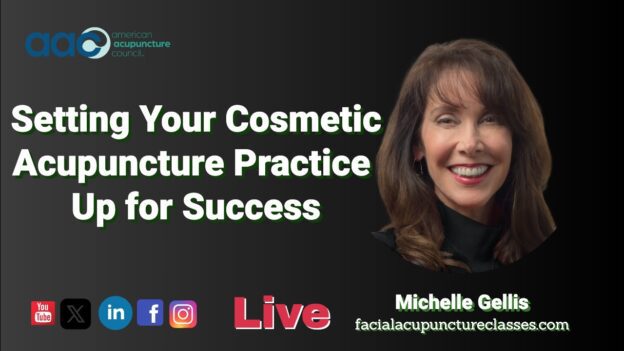
Setting Your Cosmetic Acupuncture Practice Up for Success


What are the foundations for really building success in your practice? Number one, strong diagnostic skills. Number two, really understanding your patients cosmetic goals and their therapeutic goals.

Click here to download the transcript.

Disclaimer: The following is an actual transcript. We do our best to make sure the transcript is as accurate as possible, however, it may contain spelling or grammatical errors.  Due to the unique language of acupuncture, there will be errors, so we suggest you watch the video while reading the transcript.

Hi, my name is Michelle Gellis. I want to thank the American Acupuncture Council for giving me this opportunity to present for you today on setting your cosmetic acupuncture practice up for success. Please go to the first slide.

Click here for the best Acupuncture Malpractice Insurance

So cosmetic acupuncture practice is very much a growing field in our industry, and I have been teaching cosmetic acupuncture classes for well over 20 years. I am an author and have recently. Published a 500 page hard cover, full color book on treating the face. And I am on the doctoral faculty at Yoong University in Los Angeles.

And before that I worked at the Maryland University of Integrative Health for almost 20 years. I teach facial and cosmetic acupuncture classes internationally. Here are some of the classes that I teach, and you can check them out on my website, facial acupuncture classes.com. So as you can see, all of these classes have to do with treating the face.

Get a Quick Quote and See What You Can Save

And one of the things that can happen as a student, as a practitioner is you take a training and then you want to incorporate it into your practice, but you’re not quite how to handle the. Maybe the aesthetics of the practice and the marketing of this new offering that you have. So that’s what we’re going to talk about today.

Oh here is my book and you can see all of the different chapters, and it is a comprehensive book, as I mentioned, full cover color. You can also check that out on my website as well. So when you’re thinking about so let’s say you’ve just taken a cosmetic or a neuromuscular facial acupuncture class, or maybe microneedling, red light therapy, facial cupping and gu sha.

What are the foundations for really building success in your practice? Number one, strong diagnostic skills. Number two, really understanding your patients cosmetic goals and their therapeutic goals. Because cosmetic acupuncture is not just about treating the skin. Also maintaining safety and ethics is very important, especially when you’re working with the face.

The face is very unique and in my book I have. Safety sprinkled throughout the book and ethics, and I teach individual classes on CEU classes on safety and ethics that will satisfy your requirements for your licensure. So investing in continuing education is really important. A lot of our patients are getting Botox fillers, having cosmetic surgery, lasers, and a lot of other procedures done to their face.

There is definitely a shift to more holistic beauty. People are tired of not looking like themselves, not being able to move. Their faces looking a little weird, and holistic facial care has become extremely popular. It’s all over social media. And what does holistic. Beauty mean? It means moving beyond just the aesthetics and thinking about the whole person wellness.

So when I perform cosmetic acupuncture, facial cupping, microneedling, any of these techniques, I always include a full body acupuncture treatment. This will work with the emotions which show up on our faces, which can leave wrinkles and make us look more worried, frightened, or grief stricken than we need to look.

Also sustainable. Natural looking beauty is very much in demand now by offering these services in your practice, you are gonna differentiate your practice from other practices maybe that are just treating pain or other sorts of disease. How do you get people to come to your practice? First and foremost is your online presence and your website should be a hub for information and connection.

Showing your services, your products, of course, your credentials. You can use videos and blog posts, testimonials, and in many places, not everywhere, but in many places, you can use before and after images as a way to show people the effectiveness of your treatments. And weave throughout all of the trainings that I do.

And again, throughout my book, I spend a lot of time emphasizing this because it really is very important. So what are some of these marketing essentials? You have to think about who your target audience would be that you’re marketing to. Of course. Clients. Maybe other acupuncturist and other professionals that you can partner with using your social media, your website, and blog posts or newsletters, and.

Having a consistent branding, so colors and aesthetics that will show up throughout all of the platforms that you’re advertising on. Having patient testimonials can really build trust and credibility those along with the before and after photos that are taken in the same lighting. In the same position at that really showcase how well the procedures you’re doing work can really go a long way.

And then perhaps having case studies, things that you can share with your patients, maybe in a binder in your waiting room. Or with other practitioners that maybe are just doing pain or infertility. They don’t wanna get involved in aesthetics, but they know you are the go-to person. Case studies can really help with your marketing and with your with your patients.

One of the things that I emphasize when I’m teaching is how to set realistic expectations, because you never want to over promise and learning how to look at the whole person, their lifestyle, their genetics, their health history. Falls from A TCM and a Western medicine perspective. How much sleep are they getting?

Do they smoke? What are they drinking? What are they eating? How much stress do they have? How old are they? How dark is their skin? How thin is their skin? These are all things that are going to play into what sort of results they will have Also. Educating them about timelines and realistic outcomes within a certain amount of time.

If someone comes to you and they say, I have a wedding next week and I wanna look like my photo from when I was 18 and they’re 58 years old, they have to understand that’s not going to happen. And part of this is experience, and part of this is going to be training. Documenting their goals and any progress that you’re making along the way.

Sometimes people don’t notice these things and it’s up to you to point them out. And then really, this all goes to building trust and not coming off as. Someone who’s just trying to sell them something, but really being professional, having good listening skills. When I was teaching at Maryland University of Integrative Health, I taught a full semester listening skills class as part of our traditional diagnosis class.

It was a whole section on listening skills. Really learning how to listen beyond the words. Additionally, what are the short-term results they can expect? What are the long-term results they can expect? And then looking at not just the cosmetic. Improvements, but their overall health, the way that I teach cosmetic acupuncture incorporates some auricular points.

I’ve had patients quit smoking, stop drinking sleeping better, so many other things, better digestion. Just calmer because. Of the cosmetic acupuncture that they’re coming for. So they get unexpected results and it’s important to point that out. Don’t just listen and say that’s great, but really point it out.

Pricing your services is going to be dependent on a lot of things. I see a lot of practitioners. Undervaluing their practice and you really wanna set pricing that reflects both where you are to a point. Because if you’re buying an iPhone costs the same in Idaho as a dozen New York City.

That is important, but not as important as you think your experience. Your knowledge, your training and your ability to get results is going to go very far when you’re thinking about how to set pricing for your treatments. Some states allow you to create packages and that can help to make it more cost effective for people and really don’t put yourself on the sale rack.

Communicate your pricing confidently and clearly. So there’s no, oh, I thought you said this or I thought you said that. Once your practice is started in order to grow your practice, you definitely want to develop referral networks. This can go from attending in person. Networking events, going to seminars, workshops maybe you’re going to offer a little happy hour, healthy happy hour where you do some red light therapy or having little classes where you teach your patients how to do their own cupping in gu and sell them a cupping in gu sha set.

And as I mentioned, collect those testimonials and case studies. Sending newsletters are a great way to stay connected, as I just mentioned, workshops, collaboration and storytelling. People love to hear other people’s stories. So in conclusion, the success of your cosmetic. Your neuromuscular facial acupuncture practice is going to be built on a strong foundation across audiences, people with acne, people with scars, people with aging, and all sorts of different neuromuscular disharmonies.

Affect their face, head and neck. Communication and setting realistic goals are key, and having a business strategy, not just winging it, but having a business strategy will ensure long-term growth. This is how you can find me on social media. I’m under my name on Facebook, and I also have a Facebook group.

With over 10,000 health professionals and acupuncturists full facial acupuncture on Instagram, you can find me under my name and my website is facial acupuncture classes.com. Thank you so much for tuning in and I’ll see you next time.

Click here for the best Acupuncture Malpractice Insurance

Get a Quick Quote and See What You Can Save

AACGrasek08202025HD Thumb

5 Common Marketing Mistakes and How to Fix Them – Michelle Grasek


Click here to download the transcript.

Disclaimer: The following is an actual transcript. We do our best to make sure the transcript is as accurate as possible, however, it may contain spelling or grammatical errors.  Due to the unique language of acupuncture, there will be errors, so we suggest you watch the video while reading the transcript.

Hi there. My name is Michelle Grasek. I am the host of the Acupuncture Marketing School podcast and the instructor for the online class of the same name, acupuncture Marketing School. And today we’ll be talking about five really common marketing mistakes that I see among my. Marketing clients and my marketing students.

Click here for the best Acupuncture Malpractice Insurance

And luckily, most of these have relatively easy fixes, so you can quickly improve your marketing to get more patients. And before we dive in, I’d like to take a moment to thank the American Acupuncture Council for the opportunity to be here with you today. All right, let’s get into the slides.

So again if you find that you are doing any of these things, please just know that these mistakes are super common. I think that. Most of us had very little or no marketing education in acupuncture school. So we’re just all learning as we go along. And what I wanna provide you with today really are easy ways to improve your marketing so that you can consistently get more patients.

Get a Quick Quote and See What You Can Save

So a lot of the things we’re going to be talking about will help you build out marketing and. Really build out a stronger brand so that your marketing is working for you in the background so that you can focus on treating your patients and put less energy and effort into your marketing on an everyday basis.

Okay, so basically we want to use these tips to make your marketing more effective and more efficient. So the very first thing that I see is that people are either not collecting emails at all. Some people are still not collecting emails on their websites, or they’re collecting emails and then they’re not doing anything with them.

They’re not sending them. So let’s talk really briefly about the debate on whether you should put more time and energy into your email list or social media. So something to think about is that. You own your list of email subscribers in a way that you will never own your social media followers. We know that social media algorithms change all the time.

The way that our content shows up in front of our audience or doesn’t show up is in many ways out of our control, right? So we don’t really control the delivery of our message to our social media subscribers And social media has crashed in the past, which. Really terrified. A lot of influencers whose primary way of making money was through their followers, right?

So email in contrast to that, you do own your list of email subscribers and you have a lot more control over. How and whether your message gets delivered to those people. Now, you could argue you can’t control whether they open your email, right? But at least you know that 95% of the time it’s landed in their inbox.

Okay? So I always advocate for people to put just as much energy into collecting emails and. Staying in contact with their email list, but sending an email newsletter as they do with building out content for social media and being engaged on social media. So think about these two. Worlds of digital marketing, email and social media, and just try to divide your time and energy evenly between them.

Because I personally think that building an email list is in some ways a better long-term plan than social media. It also depends on, if you love social media, just keep going. But I really always advocate for acupuncturists to lean more into. Collecting emails purposefully and sending at least one email newsletter a month.

Because this is such a low lift way for us to stay top of mind with our audience. And again, then we have more control over our message and whether it’s delivered to our audience. Plus, with email, you don’t have to dance around like you might on TikTok. Something to consider if you love dancing.

Totally. Cool. So I would recommend if you don’t already have a newsletter, opt-in box on your website, please put one in. A lot of people are doing that, so you could upgrade your email opt-in box instead of it just saying, join our newsletter. You might learn tips about like women’s health.

Or whatever it is that you specialize in, you could create a PDF download. It could even be one page that explains something like solves a problem for your audience, or it just gives them information that they find really valuable that they’d be willing to give you their email in exchange for. So a really popular one page.

Lead magnet I that I have found for many people if you like, treating digestion, is to create a PDF that just says how to reduce belly bloating using traditional Chinese medicine because people are very interested in their appearance, right? And belly bloating is uncomfortable and a lot of people.

Would download that because they’re really curious to know how can they naturally reduce belly bloating. Okay, so just one idea. Think about your target market and the things that they are struggling with, and if you could create a one page PDF that you could deliver to them to help them solve a problem, give them a tip they could do at home, and make sure that you include a call to action on that PDF lead magnet.

Where you say, okay, if this worked for you or you found it helpful, the next step for to really help with your problem is for you to get acupuncture. And here’s the link to make an appointment. Okay? So the call to action’s important and if you are collecting emails. Please email your subscribers. I advocate for two emails a month.

I do not think that’s too much. That is a polite number of emails. It helps you stay top of mind and you really only need one reason to send an email. Okay. Like one topic or one message. So it could be as simple as, think about your specialty and answer a frequently asked question. Or if you have updated office hours for the summer, or if you’re going on vacation and you want people to get on your calendar, all of those could be individual emails, right?

But try to email them consistently, at least once a month to stay top of mind so they remember that they intended to make an appointment with you. So the second mistake that I see is people not sharing their face really anywhere, but especially not on social media. So we’re not introducing yourself on social media.

So think about it this way, at its core, part of what we’re trying to do with marketing is to build up enough trust and potential patients that they feel safe and comfortable making a financial investment with us, telling us their. Very personal health history and their story and letting us put needles in them.

So I always like to say that. Marketing for acupuncture is very different for, than marketing for something like a pizza because people already know and trust pizza, whereas not as many people are familiar with acupuncture or prepared to take the plunge and sign up for a series of treatments, make that financial investment.

So we just have to, we have to build up more trust and we’re putting needles in people right. Someone orders a pizza and they know exactly what they’re getting and they know it’s going to be like a. It’s gonna be pure pleasure, right? It’s, they trust that experience is going to be great very much.

Whereas we’re putting needles in people, we’re asking them to talk about difficult health situations. We need to show up in a way that actually helps them build a connection with us and feel like, okay, I feel safe making an appointment with this person. I think I can tell them my story and I trust them to put needles in me.

So for me, part of that, at least what I have seen as a marketing coach in the past 11 years is that when you are willing to share your face, even just occasionally, it helps build that connection and helps people, really helps improve the return on your investment for your marketing making people. Click the book now button more often.

Okay, so on social media, I recommend reintroducing yourself once a month, you’ll probably have new followers and you’ll not all of your previous followers will have seen your introduction post to begin with. And you can always start this post by saying, for all of our new followers, I wanted to introduce myself, or if we haven’t met before, I wanted to introduce myself.

And you can repurpose content that you have. Created in the past. So you could take a snippet from your about page and repurpose it as the caption for an Instagram post. So there’s no need to reinvent the wheel here. If you’ve already written something similar, like maybe you introduced yourself on your email newsletter years ago, dig back and find it and see if you can repurpose it as an introductory post for social media.

You would just be amazed by the number of social media accounts like Instagram accounts for acupuncturists that I visit on a regular basis where they’re, they don’t have their name in their bio and there’s no photos of them at all. And then when I go to their website. On their about page, still no photos.

So nowhere can I easily find a picture of this person who would potentially be taking care of me. And just remember that we’re such social animals. I wanna put my eyeballs on your eyeballs to help me decide if I trust you. Okay, so I also wanted to provide a really quick and easy introductory reel that you could create.

If you have, you could even have a patient that you really like and have a good relationship with. You could have them take this video, so you just sit at your desk in your office. Or maybe at the reception desk, and you just smile and wave at the camera and count to five and have the other person record.

All you’re doing is smiling and waving, and then your caption can be, you’re introducing yourself. If you are savvy, you can put text on the video. On the reel that just says, introducing the acupuncturist or welcoming new followers so that people know what this entire reel is about, what the caption’s gonna be about.

Okay. But it’s super simple. It takes no time to record. And I think you’d be amazed how good the engagement is because it’s a video and because you are in it, people want to see you. You’d be amazed how cheerful they are. Just to say hello to you on Instagram. Okay. So definitely worth your time. Mistake number three is setting up your Google business profile and then pretty much ignoring it.

Google really appreciates and prioritizes. Business profile accounts that are regularly updated that it considers active. So what I recommend is making monthly updates to your Google Business profile. So there’s a lot of ways that you can do this, but some easy ones are each month you can add a new photo.

You could also add A post, so it’s a little confusing ’cause it sounds like social media or it sounds like a blog post, but it’s not. So if you’re familiar with your Google business profile, if you scroll down, you can add a post. Sometimes it’s also referred to as an update, but you can add an image and not a ton of text.

It’s not meant to be long like a blog post. It’s really most meant to be, sorry. It’s really meant to be an update. So 300 words, 200 words, but you can. Share a blog post that you wrote in the past and you could just summarize it, and then you get a link. You get a call to action, click through to read the entire blog post.

But really the idea here is that Google wants to feel confident whenever it provides. A business as the answer to someone’s query. And the way that you help Google feel confident is by regularly updating your Google business profile and your website. But that’s something different. But the reason is Google has more confidence in profiles where they’re active because it looks like your businesses.

Relevant. It looks like it’s open. It looks like it’s legitimate. Remember that Google’s goal is the user experience and answering a search query in the best way possible. And let’s think of a comparison. Let’s say that there’s your profile that you’re updating once a month, and then there’s an acupuncturist down the street who hasn’t updated their profile in three years, and you both treat fertility and someone types in fertility.

Acupuncture near me. Obviously, Google is going to rank you higher because you are active and it. It just gives it a ton more confidence that your business is the most relevant answer because you keep showing up in that way. Okay? So don’t underestimate how important this is. Most people are finding us, like from a search.

They’re finding us through Google, right? It’s huge. You. You just have to remember that the Google Business profile is owned by Google and Google controls all of the search algorithms related to Google. And if you wanna show up at the top of a search engine results page, your Google Business profile needs to be a, is an important part of that.

Okay? Excuse me. Tip number four is, or I’m sorry. Mistake number four is having a really vague messaging on your website. I am a huge advocate for niching down even just a little bit, even if you wanna be a general practitioner, because when you have a really broad message, it doesn’t. Speak to any particular person or group of people, and so instead the message feels really watered down and vague.

It might leave people with more questions than answers. So the example that I always like to give is, that big list of the conditions that the World Health Organization supports the use of acupuncture for. And I know people don’t do this as often as they used to, but when I graduated acupuncture school about 15 years ago, it was very common to just copy and paste that list onto your website and save.

I treat everything. Here’s what the WHO says, acupuncture is good for. Pick your thing off the list. It’s overwhelming for people to see that. It feels broad and vague, and a lot of people will read that list and even if. Let’s say they’re there for carpal tunnel and they see that carpal tunnel’s on the list, they might still have questions like, okay, that’s good that it’s on there, but does it pertain to me and my particular situation or experience with carpal tunnel?

And so it helps a lot to pick. We’ll say three broad categories that you love to treat and feature those on your website. Imagine imagine your landing page and then if you scroll down a little bit, maybe you could have three columns, right? Or three images next to each other. And they could be like pain management, women’s health and cosmetic acupuncture, or whatever the top three things are.

Sorry, I just banged into my desk. Whatever the top three things are that you really like to treat, because if you are just saying on your website, acupuncture for everybody and every situation and every symptom, it isn’t really going to. Peak the interest or grab the attention of any individual people.

So I recommend, even if you’re a general practitioner, just pick three things that you wanna highlight or feature. And you are still going to get plenty of patients who fall outside of those categories. But it just helps give your website some structure and it gives people who visit some. Some guidelines to help them know if they’re in the right place.

And ultimately, you are gonna end up with more of the patients that you are really aligned with and that you love to treat, which I find generally. Leads to better outcomes for patients. Leads to better patient reviews. Leads to more referrals. It’s a cycle. Okay? So I really hope that you will consider getting specific and niching down on your website, even just a little so that you can build a connection with your visitors so that they feel like, oh yes, this sounds like exactly what I need.

Alright. And then the last mistake that I see is just not repurposing content. I talk a lot about creating content, especially if you have a specialty. You want to talk about the frequently asked questions. Who’s a good fit, what’s your experience like? And you do have to talk about the same concepts over and over again, but that does not mean that you have to keep rewriting the same Instagram post of frequently asked questions.

All the time. You can go back and you can copy and paste a caption from seven months ago and give it a new image or a new video, and you can republish it. Okay? You could make some tweaks if you don’t wanna do something identical, but. The definition of repurposing content is taking something that you wrote or created for one platform, we’ll say Instagram, and repurposing it either for the same platform to publish it a second time or for a totally different platform, for example.

An email newsletter, right? So you are just tweaking the text to have it make sense for this other platform. And of course the idea here is that you, it just cuts down the amount of time that it takes to. Create and publish content, and I believe very strongly that the best way to maintain your sanity in the digital marketing world is to repurpose content.

If you’re not repurposing content, you are working way too hard. I encourage you to take a look at the content you’ve created on your website. So frequently asked questions if you have service pages, if you have a specialty, and you. Have a specialty page, like maybe you do orthopedic acupuncture, and you have a whole big long page where you talk about what are the symptoms?

Who’s it for? How many treatments do I need? Do I take insurance? Et cetera, et cetera. All of that is considered evergreen content, meaning it, it doesn’t really, it doesn’t really get stale or go out of style or become irrelevant. It’s always going to be. True and useful to your audience. That’s core content on your website, and that is always great to repurpose for email newsletters, for social media captions, or post inspiration.

And I really recommend if you’ve written blog posts. Again, no matter how old they are, they’re probably still partially evergreen content. Think about repurposing those as well. I bet you’ve already written or created a lot of content that you could repurpose into something else to allow you to stay visible in front of your audience today.

Okay.

And lastly, I’ll just say that you don’t need to make all of these changes today. I recommend maybe pick one thing per month. I work with a lot of acupuncturists and wellness business owners and I know that, having too many assignments leads to often not doing anything right. It’s a bit of overwhelm.

Everyone has lives. So just pick one thing for this month and make a list for things that you wanna update in the future. Okay? It will make a difference in your marketing effectiveness even if you don’t do it today. So if you have questions, you are always welcome to shoot me an email, michelle@michelleGrasek.com.

I love getting your questions clearly. I love talking about marketing and I have a brand new membership for wellness professionals that you are welcome to join. It’s called the Snack Size Marketing Club. It is a low cost marketing membership where once a week I pretty much tell you here’s what to do for your marketing this week.

It’s a five minute audio. Keep it very simple. You can visit my website, Michelle Grasek dot thank you fake.com to check that out. All right. Thank you so much for being here, as always, many thanks to the American Acupuncture Council for the opportunity to be here with you today. Have a good one.

Click here for the best Acupuncture Malpractice Insurance

Get a Quick Quote and See What You Can Save